Embracing January: Celebrating with Garnet, the Birthstone Gem of Beginnings

January, the gateway to a new year, brings with it a gemstone as rich and deep as the month itself: the garnet. Known for its mesmerizing shades that range from fiery red to deep burgundy, garnet is not just a symbol of a new beginning but also a token of love and friendship. This gemstone, with its warm tones, perfectly complements the cold January days, making it an ideal birthstone for those born in this month.

The Allure of Garnet: A Gemstone with a Rich History

Garnet, derived from the Latin word ‘granatum,’ meaning pomegranate, owes its name to the striking resemblance its deep red crystals bear to the pomegranate seeds. This gemstone has been cherished throughout history, with its roots tracing back to ancient Egypt, where pharaohs adorned themselves with garnet jewelry, and even further to the Bronze Age. The Romans, too, were fond of this gemstone, crafting signet rings with garnets that were used to stamp the wax that secured important documents.

Beyond its historical significance, garnet is believed to possess several mystical properties. It is said to bring peace, prosperity, and good health to the home. Some even believe it has the power to prevent nightmares and provide guidance in the dark. This makes garnet not just a beautiful gemstone but also a symbol of protection and a beacon of light in the darkness.

Garnet: A Versatile Gemstone for Every Style

One of the most appealing aspects of garnet is its versatility. It is not confined to one shade; rather, it spans a spectrum from vibrant orange to deep green varieties like Tsavorite and Demantoid. This versatility makes garnet jewelry a perfect match for various styles and occasions, whether it’s a casual day out or a sophisticated evening event.

Celebrating January Birthdays with The Irish Jewelry Company

For those seeking the perfect gift for a January birthdayThe Irish Jewelry Company offers an exquisite collection of garnet jewelry, inspired by the rich culture and heritage of Ireland. Their collection includes a variety of designs that incorporate iconic Irish symbols such as the Claddagh and Clover, adding a touch of Irish charm to each piece.

The range of January Birthstone Jewelry at The Irish Jewelry Company includes earrings, rings, pendants, and bracelets, available in both sterling silver and gold. Each piece is handcrafted in Ireland, ensuring not only the highest quality but also a connection to Irish traditions and craftsmanship.

The Claddagh Ring: A Symbol of Love, Loyalty, and Friendship

A standout piece in their collection is the Garnet Birthstone Claddagh Ring, a fusion of the traditional Claddagh design with the rich garnet stone. The Birthstone Claddagh ring, a symbol of love (heart), loyalty (crown), and friendship (hands), when combined with the garnet, becomes not just a piece of jewelry but a meaningful symbol of affection and connection.

Garnet Jewelry: A Timeless Gift

Gifting a piece of garnet jewelry from The Irish Jewelry Company is more than just giving a beautiful accessory. It’s an offering of a timeless piece that carries with it a story, a heritage, and a symbol of enduring affection. Whether it’s a pair of garnet earrings, a pendant, or a Claddagh ring, each piece is sure to be cherished by the recipient, making their January birthday even more special.

Conclusion

The garnet, with its deep red hues and rich history, is more than just January’s birthstone. It’s a symbol of enduring beauty, protection, and warmth. Coupled with the unique Irish designs from The Irish Jewelry Company, garnet jewelry becomes an ideal gift, embodying both elegance and meaning. Celebrate a January birthday with a piece of this enchanting gemstone, and let it be a reminder of the warmth and love that endures even in the coldest of months.

Woman’s Christmas: A Celebrated Irish Tradition on the Feast of the Epiphany

In Ireland, a unique and cherished tradition known as “Women’s Christmas” (Nollaig na mBan in Irish) is observed on January 6th, coinciding with the Feast of the Epiphany. This tradition, deeply rooted in Irish culture, offers a distinct way of celebrating the conclusion of the Christmas season.

Origins and History of Women’s Christmas

Women’s Christmas originated in a time when Irish society was predominantly agrarian, and the roles of men and women were rigidly defined. Women, traditionally responsible for the household, rarely had a day off from their domestic duties. The Feast of the Epiphany, marking the end of the Christmas season, presented an opportunity to honor and offer respite to these hardworking women.

Celebrating Women’s Christmas

The essence of Women’s Christmas is to give women a well-deserved break from their household responsibilities. Men would take over the household chores, cooking, and childcare, allowing the women to gather with their female friends and relatives. These gatherings often involve going to local pubs or restaurants, holding parties at home, or simply enjoying a quiet day of rest and reflection.

Modern Observance and Cultural Significance

In contemporary Ireland, Women’s Christmas has evolved but still holds a special place in the cultural calendar. While modern lifestyles may not always mirror the traditional gender roles of the past, this day continues to emphasize the importance of recognizing and celebrating the contributions of women in society. It serves as a day for women to relax, reconnect with friends, and enjoy their festivities, separate from the family-centered celebrations of Christmas.

The Feast of the Epiphany: A Broader Perspective

The Feast of the Epiphany, also known as Three Kings’ Day, is a significant Christian celebration marking the visit of the Magi to the Christ child. In Irish traditionWomen’s Christmas adds a unique cultural layer to this religious observance, blending the spiritual significance of the Epiphany with a celebration of womanhood.

Conclusion

Women’s Christmas is more than just a day off for Irish women; it’s a symbol of appreciation and respect for their contributions, both within the family and the wider community. This tradition, steeped in history and culture, continues to evolve, reflecting changes in society while maintaining its core ethos of honoring and celebrating women.

In embracing Women’s Christmas, Ireland not only preserves a cherished tradition but also highlights the importance of recognizing and appreciating the roles of women in shaping family and societal dynamics. This day serves as a reminder of the value of rest, celebration, and the enduring strength of community bonds.

Top 8 Irish New Year Traditions: Celebrate with Good Luck and Joy

The New Year is a time of celebration and tradition around the world, and in Ireland, it holds a special charm with its unique customs that blend folklore, history, and a touch of magic. Here’s a look at eight terrific good luck traditions that the Irish follow to ring in the New Year.

Irish New Year’s Eve Guide8 Lucky Traditions to Welcome 2024

  1. Opening the Back Door at Midnight: This is perhaps one of the most symbolic Irish traditions for New Year’s Eve. Just before midnight, the back door of the house is opened to release the old year and bid it farewell. This act is believed to usher out any bad luck or negative energy that might have accumulated over the past year.
  2. Opening the Front Door for the New Year: Immediately after the back door is closed, the front door is opened. This gesture welcomes the New Year, inviting good fortune, health, and happiness. It’s a physical and symbolic way of letting the fresh, positive energy of a new beginning into the home.
  3. First-Footing: This tradition involves the first person who steps into your home after midnight. Ideally, this should be a tall, dark-haired man, as this is considered very lucky. He should bring gifts like bread for the kitchen, a drink for the head of the household, and coal to ensure the fire never goes out, symbolizing warmth and sustenance for the year ahead.
  4. Banging Bread Against the Walls: To ward off evil spirits and bad luck, Irish families sometimes bang Christmas bread against the walls of their homes. This ritual is also thought to invite good spirits and luck into the dwelling.
  5. Cleaning the House: A thorough house cleaning, or ‘spring cleaning’, is a common tradition before the New Year arrives. It symbolizes sweeping out the old year and making room for new and positive experiences.
  6. Honoring the Deceased: In Ireland, there’s a tradition of remembering deceased family members during New Year’s Eve. An empty chair is often left at the dinner table, and a glass of wine is poured for the departed souls, inviting them to join the celebrations in spirit.
  7. Wearing Something New: The Irish often wear a new item of clothing on New Year’s Day to bring good luck. It could be anything from a new pair of socks to a full outfit. The idea is that new clothes bring new luck.
  8. The ‘Lucky Dip’: This involves filling a basket or container with small gifts or treats and letting each member of the family pick one at random. The surprise element is thought to bring luck and joy to the household.

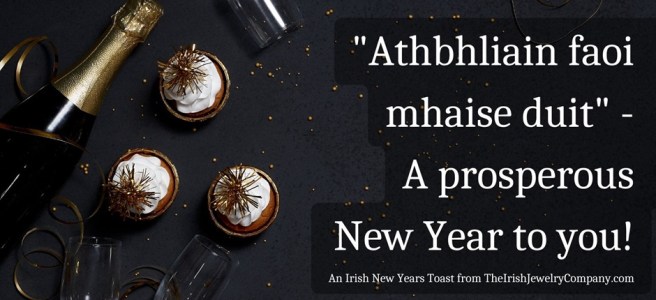
These traditions, steeped in history and superstition, are a charming and integral part of Irish culture during the New Year. They reflect a deep sense of community, a respect for the past, and a hopeful look toward the future. As the Irish say, “Athbhliain faoi mhaise duit” – A prosperous New Year to you!

Next

 December Birthstone: Meaning, History, and the Elegance of Blue Topaz Jewelry

Related Posts

  1. Women’s Christmas in Ireland
  2. Valentine’s Day Meaning & History
  3. 10 Perfect Celtic Inspired Valentine’s Day Jewelry Gifts
  4. 5 Meaningful Celtic Jewelry Gifts for Valentine’s Day
  5. Romantic Ireland and Valentine’s Day Celebrations

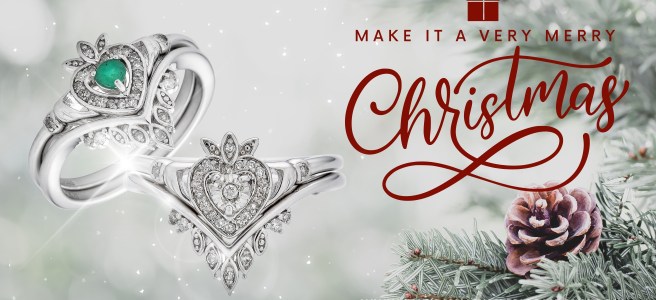
Top 10 Christmas Gifts for Women from The Irish Jewelry Company

As the festive season approaches, the quest for the perfect Christmas gift becomes a central focus, especially when it’s for the special women in your life. The challenge is to find something that is both delightful and meaningful. The Irish Jewelry Company, celebrated for its exceptional range of Celtic-inspired jewelry, presents an array of traditional Irish jewelry Christmas gifts. These pieces are not just accessories; they are a testament to Ireland’s rich heritage and craftsmanship.

Their collection, featuring everything from Connemara marble jewelry to contemporary Irish designs, offers unique and creative Irish gifts. Each item is carefully crafted to capture the essence of Irish tradition and artistry, making them ideal as Irish Christmas gifts for women. Below is a handpicked selection of the top 10 Christmas gifts from their exquisite range, ensuring you find something truly memorable for your loved ones this holiday season.

Celtic Crosses: A symbol of faith and heritage, Celtic crosses from The Irish Jewelry Company are not just religious icons but also pieces of art. These crosses, intricately designed, make for a thoughtful and meaningful gift.

Claddagh RingsThe Claddagh ring, a symbol of love, loyalty, and friendship, is a quintessential Irish gift. This traditional ring is a heartfelt way to express your affection and is perfect for someone special in your life.

Celtic Wedding Ring Enhancers: For the married woman, a Celtic wedding ring enhancer can be a beautiful way to add an Irish touch to her wedding band. These ring enhancers symbolize eternal love and are a unique way to celebrate your bond.

Celtic Engagement Rings: If you’re planning a holiday proposal, a Celtic engagement ring could be the perfect choice. These rings, inspired by Irish tradition, are not only stunning but also carry a deep meaning of commitment and unity.

Celtic Mother’s Knots: Celebrate motherhood with the Celtic Mother’s Knot, a symbol of the enduring bond between a mother and her child. This piece is a touching tribute to the strength and love of all mothers.

Mother’s CladdaghThe Mother’s Claddagh combines the traditional Claddagh design with a maternal twist, making it an ideal gift for mothers. It represents the unbreakable bond and love between a mother and her children.

Personalized Family Claddagh Birthstone Necklace: This necklace allows for personalization with birthstones, making it a unique and sentimental gift. It’s a beautiful way to keep loved ones close to the heart.

Irish Proverb Bracelets: Engraved with meaningful Irish proverbs, these bracelets are not just jewelry pieces but also daily reminders of wisdom and heritage. They make for a thoughtful and inspiring gift.

Celtic Sisters Knot: For a sister or a friend who is like a sister, the Celtic Sisters Knot is a beautiful symbol of your unbreakable bond. This piece celebrates sisterhood in a unique and elegant way.

Celtic Talisman Jewelry: These talismans are not just decorative pieces but are imbued with meanings and beliefs rooted in Celtic tradition. They make for a mystical and intriguing gift, perfect for someone who loves history and culture.

Each piece from The Irish Jewelry Company is a blend of tradition, craftsmanship, and artistic expression, making them more than just gifts; they are treasures that carry deep meanings and stories. This Christmasgive a gift that resonates with the heart and soul, reflecting the beauty of Irish heritage.

November’s All Souls’ Day: Tracing its Celtic Roots and Traditions

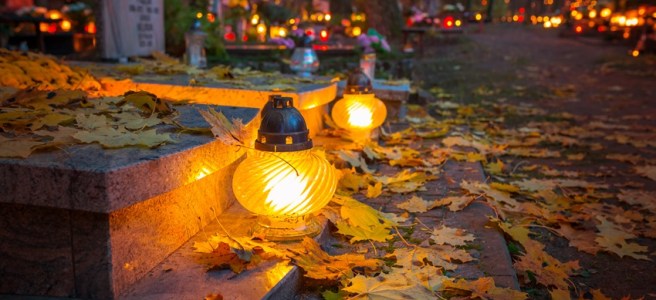
As the golden hues of October give way to the somber tones of November, a spiritual depth envelops many cultures worldwide. Central to this sentiment in the Christian calendar is All Souls’ Day on November 2nd. While this day is dedicated to the remembrance of the departed, its origins and traditions are deeply rooted in the ancient Celtic festival of Samhain. One such tradition, the placement of a chair near the fireplace, offers a poignant symbol of this connection. Let’s delve into this rich tapestry of history and tradition.

Samhain: The Celtic New Year and the Veil Between Worlds

Before the Christian era, the Celts, spread across regions now known as Ireland, the UK, and parts of France, celebrated Samhain (pronounced “sow-in”) from the evening of October 31st to sunset on November 1st. This festival, marking the end of the harvest season and the onset of winter, was also the Celtic New Year. More than a mere seasonal marker, Samhain was a spiritual gateway. The Celts believed that during this period, the boundary separating the living and the spirit world became permeable, allowing spirits to walk among the living.

All Souls’ Day: A Christian Observance with Celtic Echoes

As Christianity spread through Celtic territories, there was a conscious effort to weave local traditions into the Christian fabric. While November 1st was designated as All Saints’ Day, a day to honor all saints and martyrs, the subsequent day, November 2nd, was chosen as All Souls’ Day. This day was set aside to pray for the souls of the departed, particularly those believed to be in purgatory.

The alignment of All Souls’ Day with the tail end of Samhain was strategic. It allowed the Celts to continue their ancestral practices of honoring the dead, albeit within a Christian context.

The Celtic Tradition of the Chair by the Fireplace

Among the many customs associated with Samhain and later, All Souls’ Day, one of the most evocative is the tradition of placing an empty chair near the fireplace. This chair, often referred to as the “chair for the departed,” served multiple symbolic purposes:

  1. A Warm Welcome: By placing a chair near the fireplace, the warmest spot in the house, families extended a gesture of welcome to ancestral spirits, inviting them to join in the evening’s observances.
  2. A Symbol of Remembrance: The empty chair served as a poignant reminder of family members who had passed on, ensuring their memory remained a part of the family’s daily life.
  3. A Protective Measure: The Celts believed that by offering a designated spot for spirits, they could prevent any malevolent entities from causing mischief or harm.

In Conclusion

The tradition of All Souls’ Day, with its Christian significance, is beautifully intertwined with the ancient customs of Samhain. The practice of placing a chair by the fireplace encapsulates this blend of faiths and cultures. It serves as a tangible link to the past, a symbol of the enduring bond between the living and the departed, and a testament to the rich tapestry of traditions that November brings.

November 1st: All Saints’ Day and its Celtic Connection to Samhain

November 1st, celebrated as All Saints’ Day in many Christian traditions, is a day of reverence and remembrance. While it holds a significant place in the Christian calendar, its origins, and the date’s significance are deeply intertwined with the ancient Celtic festival of Samhain. This article delves into the relationship between these two observances and the traditional ways in which All Saints’ Day was celebrated.

Samhain: The Celtic Precursor

Before the widespread adoption of Christianity, the Celts, who lived across what is now Ireland, the UK, and northern France, celebrated Samhain (pronounced “sow-in”). This festival marked the end of the harvest season and the onset of winter. More importantly, it signified a time when the veil between the living and the spirit world was believed to be at its thinnest.

During Samhain, the Celts would light large bonfires, believing that the flames, smoke, and ashes had protective and cleansing powers. It was also a time for divination and communicating with the deceased, who were believed to return to the earthly realm during this period.

The Christianization of Samhain: Birth of All Saints’ Day

As Christianity began to take root in Europe, there was a concerted effort by the Church to overlay Christian meanings onto pagan festivals. This was done to make the transition to Christianity smoother for the local populations.

In the 7th century, Pope Boniface IV introduced the Feast of All Martyrs, which was initially celebrated on May 13th. However, in the 8th century, Pope Gregory III expanded the festival to include not just martyrs but all saints. He also moved the observance to November 1st, aligning it with the date of Samhain. This strategic move was likely an attempt to Christianize the widely observed pagan festival.

All Saints’ Day: Traditions and Celebrations

With its new Christian significance, All Saints’ Day became a day to honor all saints and martyrs, both known and unknown. Here’s how it was traditionally celebrated:

  1. Church Services: Special masses and services were held in churches, where saints were venerated, and prayers were offered.
  2. Visiting Graves: It became customary for people to visit the graves of their loved ones, leaving flowers and lighting candles to honor the deceased.
  3. Feasting: Families would often come together to share a meal, sometimes leaving out a place setting for deceased family members in remembrance.
  4. Bell Ringing: In some cultures, bells were rung in honor of the saints and to guide the souls of the deceased.
  5. Soul Cakes: In medieval Europe, ‘souling‘ was a popular custom. Children and the poor would go door-to-door, offering prayers for the household’s dead in exchange for soul cakes or other treats.

Conclusion

The celebration of All Saints’ Day on November 1st is a testament to the blending of ancient pagan traditions with Christian observances. While its roots are intertwined with the Celtic festival of Samhain, its evolution as a Christian holiday has given it a distinct identity. Today, it serves as a poignant reminder of the saints’ sacrifices and offers a moment to reflect on the transient nature of life and the eternal promise of the hereafter.

The Origins and Superstitions of the Jack O’Lantern in Irish Tradition

The Jack O’Lantern, a symbol now synonymous with Halloween, has its roots deeply embedded in Irish folklore. Far from the playful and decorative pumpkins we see today, the original Jack O’Lanterns carried a weight of superstition and served as a beacon between the realms of the living and the supernatural.

Stingy Jack: The Tale Behind the Jack O Lantern

The story begins with a man named Stingy Jack, notorious for his deceitful ways and penchant for trickery. One fateful evening, Jack managed to trap the Devil, and in exchange for his release, he made the Devil promise not to take his soul when he died. However, when Jack’s time on Earth came to an end, Heaven did not want such a deceitful character, and the Devil, true to his word, would not allow him into Hell.

Left with nowhere to go, Jack was condemned to wander the Earth for eternity. The Devil, showing a rare moment of mercy (or perhaps just to mock), gave Jack a burning ember to light his way through the endless night. Jack carved out a turnip, placing the ember inside, creating the first Jack O’Lantern.

Turnips: The Original Lanterns

Before pumpkins became the go-to canvas for carving in America, the Irish used turnips. So literally the first Jack O’ Lanterns were turnips. These carved turnips were placed on window sills and doorsteps to ward off evil spirits, particularly during Samhain, a Celtic festival marking the end of the harvest season and the onset of winter. It was believed that during Samhain, the veil between the living and the dead was at its thinnest, allowing spirits to roam freely.

Superstitions and Beliefs

The Jack O’Lantern wasn’t just a decorative element; it was steeped in superstition. Here are some beliefs associated with it:

  1. Protection from Spirits: The primary purpose of the Jack O’Lantern was to protect homes from malevolent spirits. The carved face, often grotesque, was meant to scare away any evil entities that might be wandering during Samhain.
  2. Guiding Lost Souls: Some believed that the light from the Jack O’Lantern would guide lost souls back to the underworld, preventing them from lingering in the world of the living.
  3. Symbol of a Wandering Soul: The tale of Stingy Jack became a cautionary one. The wandering light of the Jack O’Lantern served as a reminder of Jack’s fate, warning others not to lead a life of deceit.

When Irish immigrants arrived in America, they brought the tradition of the Jack O’Lantern with them. Finding that pumpkins, native to the Americas, were more abundant and easier to carve than turnips, the tradition evolved into the pumpkin carving we know today.

Conclusion

The Jack O’Lantern is a testament to the rich tapestry of Irish folklore and tradition. Its eerie glow, once a symbol of a damned soul and a beacon against dark spirits, has transformed over the centuries. Yet, even today, when we carve pumpkins and place them outside our homes, we echo the ancient practices and beliefs of a culture that saw magic and mystery in the changing of the seasons.

Irish Christmas Pudding: A Sweet Tale of Irish Christmas Tradition and History

The festive season in Ireland is a heartwarming blend of rich traditions, with none quite as indulgent and emblematic as the iconic Irish Christmas Pudding. With its deep, treacly flavors, dense texture, and ceremonious presentation, this dessert captures the essence of an Irish Yuletide. Beyond its delicious taste, the Christmas Pudding holds a special place in the hearts of the Irish because of its storied history and the traditions enveloping its creation.

A Historical Delight

The roots of Christmas pudding trace back to medieval England, but Ireland embraced and adapted the dessert with characteristic warmth and ingenuity. The original version was more of a porridge, known as ‘frumenty,’ made of meat, grains, and wine. With time, as more ingredients became available and culinary tastes evolved, the savory porridge transformed into the sweet, rich, fruit-laden concoction we know today.

In the 16th century, prunes became a key ingredient, and by the 17th century, the pudding had evolved into something closely resembling the modern-day dessert, brimming with dried fruits and spices. However, the Catholic Church associated the rich, sumptuous nature of the pudding with the extravagance and decadence of the Feast of Epiphany. As a result, the dessert was banned for a time. But like all good things, it made a triumphant return, with the Victorians refining and popularizing the pudding as a centerpiece of the Christmas feast.

Irish Touches to a Classic

While the broader outlines of the pudding’s history are shared with the English, the Irish gave it distinctive touches. Unique local ingredients like Irish whiskeystout, or treacle, and specific fruit combinations became emblematic of the Irish version.

One key aspect that sets the Irish Christmas Pudding apart is its preparation time. Many Irish households commence the making of the pudding on “Stir-up Sunday,” which is the last Sunday before Advent (usually five weeks before Christmas). This provides ample time for the pudding to mature, allowing the flavors to meld beautifully.

Entwined Traditions

The preparation of the Irish Christmas Pudding is a family affair. Everyone, from the youngest to the eldest, takes a turn at stirring the mixture, making a wish as they do so. This act of communal preparation binds the family in shared hopes and aspirations.

Another delightful tradition is the inclusion of small tokens or coins in the pudding batter. Historically, a variety of items were hidden within, such as a coin (for wealth), a ring (for marriage), or a thimble (for thrift). Discovering one of these in your slice of pudding was seen as a harbinger of things to come in the new year.

Irish Christmas Recipe

Ingredients:

  • 225g raisins
  • 225g currants
  • 225g sultanas
  • 110g mixed peel
  • 175g breadcrumbs
  • 175g flour
  • 175g brown sugar
  • 175g suet or butter, grated
  • 3 eggs
  • 1 small apple, grated
  • Juice and zest of 1 lemon and 1 orange
  • 1 tsp mixed spice
  • 1/4 tsp nutmeg
  • A pinch of salt
  • 250ml Irish stout or beer
  • 50ml Irish whiskey or brandy

Instructions:

  1. In a large mixing bowl, combine all the dry ingredients.
  2. Add the grated apple, zest, and juice of the citrus fruits.
  3. In a separate bowl, beat the eggs and then add them to the mixture.
  4. Gradually mix in the stout and whiskey until you have a moist, dropping consistency.
  5. Stir well, ensuring every family member gets a chance to stir and make a wish!
  6. Transfer the mixture into a greased pudding basin, covering the top with a circle of parchment paper.
  7. Place a cloth over the basin, tying it securely with a string.
  8. Steam the pudding for about 6 hours, making sure the water doesn’t boil dry.
  9. Once done, let it cool and store it in a cool, dark place. On Christmas Day, steam again for 2 hours before serving.
  10. Serve flaming with brandy and accompanied by brandy butter or fresh cream.

In conclusion, the Irish Christmas Pudding is more than just a dessert; it’s a sensory tapestry of flavors, a bond of family unity, and a sweet embodiment of Irish Christmas traditions. Every bite carries with it the echoes of history and the warmth of cherished memories.

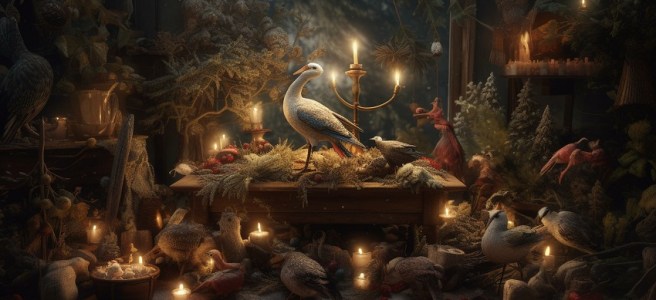
Experience the Magic: 12 Days of Irish Christmas Blessings

Christmas is a time of joy, love, and reflection. In Ireland, a land known for its rich traditions, folklore, and heartfelt sentiments, Christmas is celebrated with a unique blend of merriment and spirituality. One of the most cherished traditions is the sharing of blessings. These Irish blessings are not just words; they are heartfelt wishes that carry the warmth of the Emerald Isle. Here, we delve into 12 days of Irish Christmas blessings, one for each day leading up to the grand celebration.

12 Days of Irish Christmas Blessings

1. First Day: Blessing of Hope “May the Christmas star shine brightly in your world, guiding you to the places where your dreams and hopes come to life.”

2. Second Day: Blessing of Joy “As the Christmas bells chime, may laughter and joy be yours, echoing the merriment of the angels above.”

3. Third Day: Blessing of Family “May your home be filled with the love of family, the warmth of togetherness, and the stories of generations past.”

4. Fourth Day: Blessing of Health “May the chill of winter be offset by the warmth of a healthy heart and the strength to face the morrow.”

5. Fifth Day: Blessing of Prosperity “As the Three Kings brought gifts to the manger, may your New Year be filled with the treasures of prosperity and success.”

6. Sixth Day: Blessing of Nature “May the beauty of the Irish landscape, the green hills, and the serene lakes, bring peace to your heart this Christmas.”

7. Seventh Day: Blessing of Friendship “Like the warmth of a Yule log, may the glow of friendship keep the cold away and brighten your festive days.”

8. Eighth Day: Blessing of Gratitude “May your heart be filled with gratitude for the blessings of the past and the promise of the future.”

9. Ninth Day: Blessing of Memories “May the memories of Christmases past bring a smile to your face, reminding you of the love and joy shared over the years.”

10. Tenth Day: Blessing of Faith “May the birth of Christ rekindle your faith, and may His presence be your guiding star.”

11. Eleventh Day: Blessing of Peace “In the stillness of the Christmas night, may peace envelop you and remain with you throughout the year.”

12. Twelfth Day: Blessing of Love “As the Twelve Days of Christmas come to an end, may the greatest gift of all, love, fill your heart and home.”

In Ireland, these blessings are more than just words. They are a testament to the spirit of the season, a reflection of the country’s deep-rooted faith, and a reminder of the importance of love, family, and gratitude. As you celebrate Christmas, whether in Ireland or anywhere else in the world, may these Irish Christmas blessings resonate with you, bringing warmth, joy, and peace to your festivities.

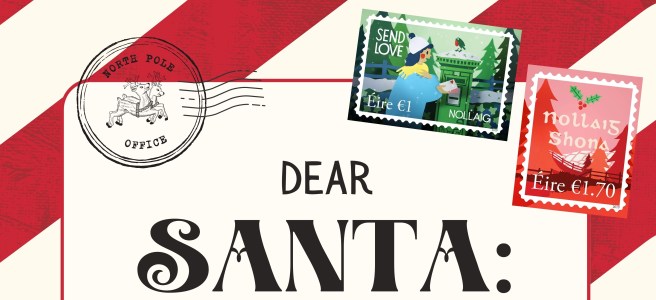
The Ultimate Guide to Getting What You REALLY Want for Christmas: The Santa Wish List

Ho, ho, ho! Christmas is just around the corner, and if you’re anything like me, you’ve probably been dropping hints to your partner about that gorgeous piece of jewelry from the Irish Jewelry Company you’ve been eyeing. But let’s face it, sometimes our partners are a bit… well, clueless. They might think that a vacuum cleaner or a new frying pan is the perfect gift. And while practical gifts have their place, sometimes we just want a little sparkle!

Enter the Exclusive Santa Wish List. This isn’t just any wish list. Oh no, this is the ultimate tool in your Christmas hint-dropping arsenal. Our Santa’s Wish List is your golden ticket to a sparkling Christmas morning. LOL!

  1. Subtlety is Overrated: Why leave things to chance? With this Christmas wish list, you can list SKU numbers and even the names of the jewelry pieces you adore. It’s like giving your partner a treasure map, but instead of “X marks the spot,” it’s “This is the necklace I want.”
  2. Avoid the Awkward “Oh, you shouldn’t have… really” Moment: We’ve all been there. Unwrapping a gift, hoping for that shiny piece of jewelry, only to find… socks. With the Santa Wish List, those days are behind you!
  3. It’s Pure Joy! Let’s be honest, there’s something incredibly satisfying about creating a wish list. It’s like being a kid again, flipping through toy catalogs and dreaming of Christmas morning.

But Wait, There’s More!

The Irish Jewelry Company isn’t just about stunning jewelry. They’re also about making your holiday shopping a breeze!

  • Flat Rate Shipping: No surprises at checkout. Just straightforward, flat-rate shipping.
  • FREE Shipping Extravaganza: Orders over $150 get FREE shipping if ordered by December 18th. So, not only do you get to dazzle, but you also save!
  • Free Gift Wrap: Because unwrapping a gift is half the fun, and they’re making sure your gift looks as stunning outside as it does inside.

And as the cherry on top, when you download the wish list, nestled at the bottom of the page is an exclusive promo code just waiting to be used.

In Conclusion:

If you’re ready to swap those “hmm” gifts for some “WOW” ones, it’s time to take the reins. Download the Exclusive Santa Wish List, drop those unmistakable hints, and prepare to sparkle brighter than a Christmas tree this festive season! Remember, a hint dropped with the Santa Wish List is worth a thousand unsaid wishes. Happy hinting and Merry Christmas!