Lambs Wool

lambs-wool

After you feast on traditional Irish foods on Halloween you will need to wash it down with an old drink called Lambswool. The name Lambswool is believed to be derivative of the Irish Gaelic, “La Mas Nbhal” meaning ‘Feast of the Apples. The Gaelic saying was pronounced “Lammas-ool”. This ultimately evolved into Lambswool. There are several of recipes for Lambswool that exist. But the drink basically consists of baked crushed apples(cored and crushed without skins), which are added to milk, and hot spiced ale, hard cider and or wine. Grate in nutmeg and some ginger. Add sugar according to taste.

About This Recipe

“This is a traditional cider drink that was made and enjoyed on Twelfth Night (January 16-17) in Elizabethan England. It is said that it gets its name from the whiteness of the roasted apples as they fluff out of their skins while they cook. I haven’t made it yet, but I cant let go of the recipe every time I go to clean out my recipe box.”

Ingredients

    • 4 pints real ale ( Newcastle or similar)
    • 2 -3 large apples
    • 1 cup hard alcoholic cider ( such as Woodchuck or Hornsby’s)
    • 1 cinnamon stick
    • 3 cloves
    • sugar

Directions

  1. Preheat oven to 180°C: 350°F: Gas 4.
  2. Core the apples and bake in 350 degree oven for about 40 minutes until very soft.
  3. Squeeze all of the pulp from the apples and discard the skins then fluff the puree with a fork.
  4. Heat the ale and cider with the cinnamon stick and cloves.
  5. Add the apple puree and sugar to taste.
  6. Serve immediately.

Recipe courtesy of Food.com

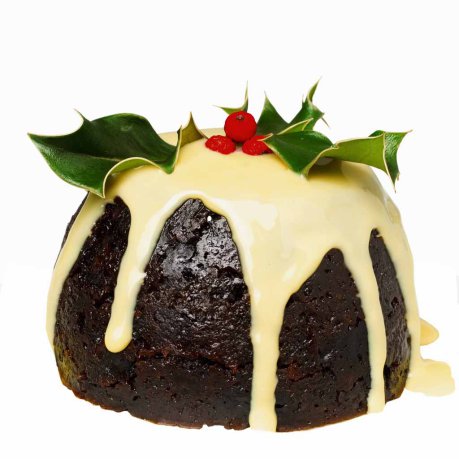
Traditional Irish Christmas Plum Pudding

Our traditional Irish Christmas Plum Pudding has had humble beginnings. Plum pudding was originally a porridge flavored with scraps of meat or fish, thickened with bread crumbs and bound together with eggs, fruit and spices. During the Tudor and Stuart period dried prunes were added to the pudding which became known as plum porridge.

Today it is simply known as Christmas Plum Pudding. Although Plum Pudding is not the type of food generally thought of as a pudding today by commercial standards. It is exactly what one would expect of a traditional old fashioned Irish pudding. Plum Pudding drizzled with Brandy Butter is the essence of Christmas in Ireland and is deliciously served with a fresh cream sauce or Brandy Butter.

Irish Christmas Plum Pudding Serving Ideas…

christmas pudding with custard --- Image by © Royalty-Free/Corbis
christmas pudding with custard — Image by © Royalty-Free/Corbis

Nutmeg Sauce

2/3 cup sugar*
1 1/2 teaspoons cornstarch
1/8 teaspoon salt
1 cup boiling water
1 tablespoon butter
1/2 teaspoon nutmeg

In a large saucepan over medium-high heat, combine sugar, cornstarch and salt. Add boiling water and cook, stirring constantly, 3 minutes until ingredients are well blended.

Brandy Butter

4 tbsp softened, unsalted butter
1/2 cup superfine sugar
3 tbsp brandy
1/2 tsp vanilla extract

Combine all the ingredients in a bowl and beat with an electric beater until smooth and well blended. Refrigerate at least 4 hours or until firm. Brandy Butter may be sprinkled with nutmeg before serving.

http://www.theirishjewelrycompany.com/irish-christmas-pudding.html

Women’s Christmas in Ireland

Have you ever heard of “Women’s Christmas”?
In Ireland on January 6, the Feast of the Epiphany, it is when traditionally the Irish finish celebrating Christmas. It is also known as Nollaigh na mBean in Irish (Women’s Christmas).

Tradition has it that women get the day off and the men of the house get to do the housework, cooking and take down the Christmas decorations. Women meet up have a day out and treat themselves.
Are you celebrating Women’s Christmas this year?

1451451_10153608957655245_810225938_n

THE CANDLE IN THE WINDOW

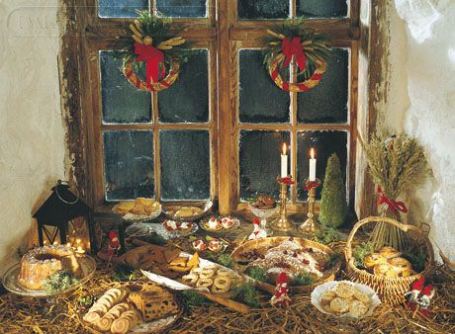
The placing of a lighted candle in the window of a house on Christmas eve is still practiced today. It has a number of purposes but primarily it was an symbol of welcome to Mary and Joseph as they traveled looking for shelter.

The candle also indicchristmas-around-the-world-06ated a safe place for priests to perform mass as, during Penal Times this was not allowed.

A further element of the tradition is that the candle should be lit by the youngest member of the household and only be extinguished by a girl bearing the name ‘Mary’.

THE LADEN TABLE

dessertbuffet

After evening meal on Christmas eve the kitchen table was again set and on it were placed a loaf of bread filled with caraway seeds and raisins, a pitcher of milk and a large lit candle. The door to the house was left unlatched so that Mary and Joseph, or any wandering traveler, could avail of the welcome.

THE WREN BOY PROCESSION

During Penal Times there was once a plot in a village against the local soldiers. They were surrounded and were about to be ambushed when a group of wrens pecked on their drums and awakened the soldiers. The plot failed and the wren became known as ‘The Devil’s bird’.

On St. Stephens day a procession takes place where a pole with a holly bush is carried from house to house and families dress up in old clothes and with blackened faces. In olden times an actual wren would be killed and placed on top of the pole. St. Stephen’s Day, or the Feast of St. Stephen, is a Christian Saint’s day to commemorate Saint Stephen, celebrated on 26 December

This custom has to a large degree disappeared but the tradition of visiting from house to house on St. Stephens Day has survived and is very much part of Christmas.

St. Stephen’s Day, or the Feast of St. Stephen

St. Stephen’s Day, or the Feast of St. Stephen, is a Christian saint’s day to commemorate Saint Stephen, celebrated on 26 December in Ireland.

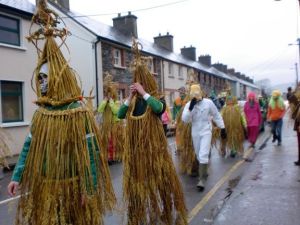
St. Stephen’s Day (Lá Fhéile Stiofáin), or the Day of the Wren (Lá an Dreoilín), is an occasion to commemorate the life of St Stephen, a Christian martyr. Most people in Ireland today spend the day quietly with close friends or family.

On “Wren’s Day”, in some areas of Ireland like Dingle, groups of musicians, figures dressed in straw suits and followers in fancy dress or st-stephens-day-green-goldparade-dingle-ireland+1152_13326480249-tpfil02aw-19422disguise can be seen moving about the streets and lanes “hunting the wren”.

During Penal Times there was once a plot in a village against the local soldiers. They were surrounded and were about to be ambushed when a group of wrens pecked on their drums and awakened the soldiers. The plot failed and the wren became known as ‘The Devil’s bird’.

On St. Stephens day a procession takes place where a pole with a holly bush is carried from house to house and families dress up in old clothes and with blackened faces. In olden times an actual wren would be killed and placed on top of the pole.
This custom has to a large degree disappeared but the tradition of visiting from house to house on St. Stephens Day has survived and is very much part of Christmas.

This custom has to a large degree disappeared but the tradition of visiting from house to house on St. Stephens Day has survived and is very much part of Christmas.

St. Stephen’s Day is a national holiday in Ireland, but, the celebrations have little connection to the Saint.

An Irish Christmas Tradition… “Wren’s Day”

St. Stephen’s Day, or the Feast of St. Stephen, is a Christian saint’s day to commemorate Saint Stephen, celebrated on 26 December in Ireland.

St. Stephen’s Day (Lá Fhéile Stiofáin), or the Day of the Wren (Lá an Dreoilín), is an occasion to commemorate the life of St Stephen, a Christian martyr. Most people in Ireland today spend the day quietly with close friends or family.

On “Wren’s Day”, in some areas of Ireland like Dingle, groups of musicians, figures dressed in straw suits and followers in fancy dress or st-stephens-day-green-goldparade-dingle-ireland+1152_13326480249-tpfil02aw-19422disguise can be seen moving about the streets and lanes “hunting the wren”.

During Penal Times there was once a plot in a village against the local soldiers. They were surrounded and were about to be ambushed when a group of wrens pecked on their drums and awakened the soldiers. The plot failed and the wren became known as ‘The Devil’s bird’.

On St. Stephens day a procession takes place where a pole with a holly bush is carried from house to house and families dress up in old clothes and with blackened faces. In olden times an actual wren would be killed and placed on top of the pole.
This custom has to a large degree disappeared but the tradition of visiting from house to house on St. Stephens Day has survived and is very much part of Christmas.

This custom has to a large degree disappeared but the tradition of visiting from house to house on St. Stephens Day has survived and is very much part of Christmas.

St. Stephen’s Day is a national holiday in Ireland, but, the celebrations have little connection to the Saint.