
LUCKY IRISH HORSESHOE
Irish brides used to carry a real horseshoe turned up for g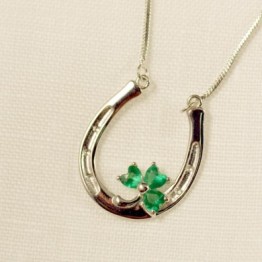 ood luck. During the wedding ceremony Then after the wedding the groom would hang the horseshoe in their home, turned up preserving the luck of the home. Every Irish house needs this charming Irish horseshoe plaque to welcome all who enter their home.
TYING THE KNOT, THE CELTIC KNOT
TYING THE KNOT
Did you know the phrase “Tying the Knot” originated with the ancient Celtic ceremony of hand fasting? This old Celtic tradition symbolizes the joining of two as one similar to the exchanging of rings today. The couple clasps their hands together and a brightly colored cord in the bridal party colors is wrapped around their hands as a symbol of their unity in marriage.
THE MAKE UP BELL
MAKE UP BELL
It is a tradition in Ireland to present a couple with a “make-up” bell for their wedding or anniversary, even engagement. The chime  of bells is thought to keep evil spirits away and to restore harmony if a couple is fighting. The sound of the bell, much like a church bell is to remind a couple of their wedding vows. This bell is also rung when one partner is ready to “make up” and end any little quarrel. Each partner should take turns ringing the bell, lest a quarrel begin again.
IRISH WEDDING LACE
IRISH LACE
Irish lace began in the 1800’s many families in Ireland lived in small thatched cottages on land called crofts producing crops for the Lord of the Manor. Crofters were “dirt poor” with little money for necessities. Then the potato blight hit between 1845 and 1851 destroying the crops and causing thousands of families to starve. The Ursuline nuns were familiar with Venetian lace, brought over from France. The nuns used their skills in crocheting lace to help save the people from the famine. They began schooling women to produce the fine crochet that has come to be known as “Irish lace.” The more affluent Irish families that could meet the expense to buy the lace earned the name of “lace curtain Irish.” Families had their own designs and motifs and closely guarded their patterns which were passed from mother to daughter. The particulars were kept so secret that many of them vanished as the families either died or fled the poverty for other lands.

Irish Wedding Tradition Info Graphic

The Origins of Samhain and Its Traditions
Halloween originated with an ancient Celtic festival called Samhain (pronounced Sah-ween or Sow-in). The Celtic New Year began on November 1. On the last day of the Celtic year, October 31, the Celts believed that ghosts roamed the world that night, causing harm to crops and creating mischief. So on October 31, the Celts dressed in scary costumes, parading around the village in the hopes of scaring away the mischievous spirits.
When Christianity arrived in Ireland, the church named November 1 as All Saints Day to honor saints and martyrs in an attempt replace or over shadow Samhain. Trick-or-treating originated from an All Souls Day tradition. People walked from village to village begging for “soul cakes.” In exchange for the “soul cakes,” a prayer would be said for the giver of the bread. The more bread they gave away the more people they had praying for their souls. In the 1500s, All Saint’s Day becomes All Hallows’ Day, and Samhain had become known as All Hallows’ Evening. Then eventually Hallow Evening became Halloween.
The Gray Man a Samhain Legend for Halloween
Creepy Irish Creatures…The Gray Man or Far Liath appears as a fog and covers land and sea with  his mantle. He obscures rocks so ships crash upon them and darkens the road so that travelers unwittingly stumble over cliffs to their deaths.
Irish Halloween Folklore….. Have you ever heard of a pooka?
The “Pooka” or in Irish púca (Irish for spirit/ghost), is primarily a goblin like creature in traditional Irish folklore. The pooka is considered to be both a bringer of good and bad fortune. The pooka could 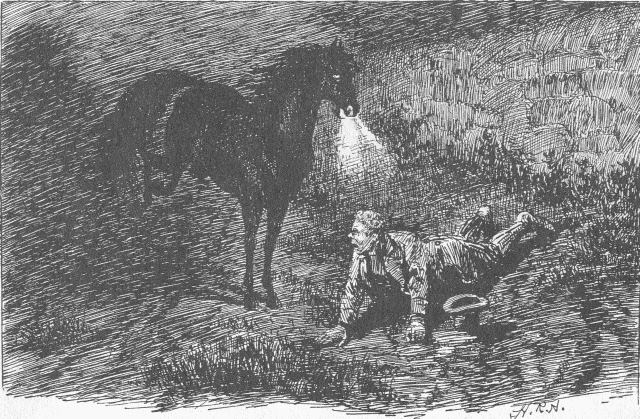 either help or hinder rural and mariner communities. The goblin like creatures were said to be shape shifters which could take the appearance of black horses, goats and rabbits.
Celtic Autumn Equinox
September 23rd, the Autumn Equinox. To Celts – this is the Second Harvest, when the ripe Acorns fall from the wild Irish Oaks and we plant them in fertile soil. This wonderful time is the time when day and night are equal in length. Equinox meaning “equal night”.
In Ireland there is an ancient Irish equinox temple at Knowth, near Newgrange (Brú na Boinne). Knowth has a 100-foot long passage that only is light by the Sun on the morning of the Spring and Autumn Equinox.
The Irish Banshee
The Banshee, bean-sidhe (woman of the fairy may be an ancestral spirit appointed to forewarn members of certain ancient Irish families of their time of death. According to tradition, the banshee can only cry for five major Irish families: the O’Neills, the O’Briens, the O’Connors, the O’Gradys and the Kavanaghs. Intermarriage has since extended this select list.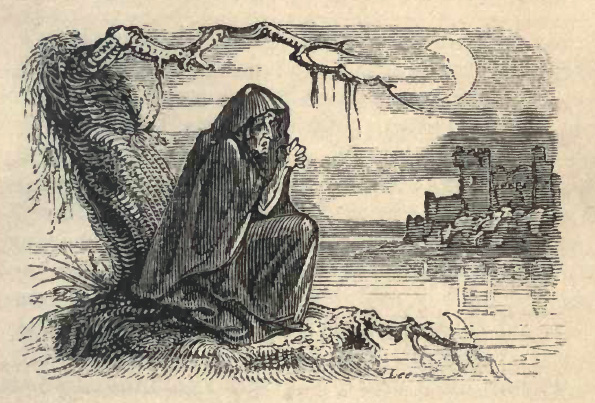
Whatever her origins, the banshee chiefly appears in one of three guises: a young woman, a stately matron or a raddled old hag. These represent the triple aspects of the Celtic goddess of war and death, namely Badhbh, Macha and Mor-Rioghain.) She usually wears either a grey, hooded cloak or the winding sheet or grave robe of the unshriven dead. She may also appear as a washer-woman, and is seen apparently washing the blood stained clothes of those who are about to die. In this guise she is known as the bean-nighe (washing woman).
Although not always seen, her mourning call is heard, usually at night when someone is about to die.
 irish culture and traditions