A Guide to Cleaning Your Jewelry Like A Pro

There’s a high possibility that all of your jewelry, from the more casual pieces you wear on a daily basis to the more formal ones you save for special occasions, might benefit from a thorough cleaning. While some don’t clean their jewelry very much at all, other folks are obsessive about keeping it sparkling clean. When it comes to cleaning your Celtic jewelry, you should proceed with caution due to the fact that jewelry may be easily damaged. Too much rinsing and rubbing may cause additional damage and early wear, yet not washing it enough might lead your cherished items to deteriorate over time. Depending on the piece of Irish jewelry in question, there are a few different considerations to make. The following are a few of the tried-and-true methods and suggestions for keeping your jewelry from The Irish Jewelry Company safe and ensuring that it always looks its best.

Using An Ultrasonic Cleaner

Even while ultrasonic cleaners for jewelry are fantastic for cleaning metals, diamonds, and even certain gemstones, you shouldn’t use them in the following situations:

  • Pearls, coral, turquoise, and ivory are all examples of biological jewels.
  • A crack in a gemstone that has been filled with oil, resin, or glass. For example, since the majority of emeralds include fracture filling, they must not be cleaned with an ultrasonic cleaner.
  • Gems that have had a coating applied to them. For example, since Mystic Fire Topaz had been treated with an azotic coating, they must not be cleaned with an ultrasonic cleaner.
  • Gemstones that have been subjected to heat treatment.
  • It is not a good idea to clean gemstones in an ultrasonic cleaner if they are the kind that is easily damaged by heat or sudden shifts in temperature, such as tanzanite, iolite, opal, and so on.

Simple and Risk-Free Cleaning Methods for Jewelry

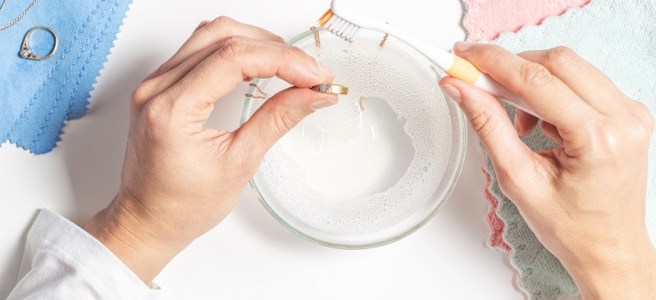
The process of cleaning and polishing jewelry using cloth, some warm water, a little dish soap, and a gentle bristle brush are all you need to clean precious stones like diamonds and gemstones. To clean your jewelry, place it in a dish of warm soapy water, then rinse it completely. Use a clean, lint-free cloth to dry your work.

Cleaning Pearl Jewelry

Pearls and other softer gems are susceptible to scratching because of their softness. Pearls should be cleaned in warm water that has a very little amount of dish soap added and a very gentle brush. After thorough rinsing, put your pearls out to dry on a chamois or a clean towel. Due to the fact that silk thread may stretch, it is advisable to let the pearls rest until the strand is totally dry.

Instructions For Making A Jewelry Polishing Solution

Simply following these procedures will allow you to produce your own jewelry cleaner at home, which will help keep the luster of your diamond and gold jewelry. Note: this should not be done on rhodium plated or gold plated jewelry. 

  • Combine 1 milliliter of dishwashing liquid with 1 liter of hot water.
  • Add a half teaspoon of a home cleaner that is based on ammonia (like a glass cleaner such as Windex)
  • After letting your jewelry sit in the solution for about five minutes, clean it carefully with a soft toothbrush.
  • Dry by exposing them to air or patting them dry with a paper towel or a standard cloth.
  • Observe how it glistens and ignites in the sunlight.
  • (It is very important that you do not clean jewelry with chlorine or rubbing alcohol.)

PRO JEWELRY CLEANING TIPS

  • For areas that are difficult to access, you might try using dental floss that is not waxed or a toothpick.
  • You might also think about obtaining a diamond polisher, which comes in the form of a cream most of the time, in order to bring out the full brilliance of your diamonds.

Caring for Your Jewelry

Do you know how to take care of jewelry and clean your jewelry? The pieces of fine jewelry, such as Celtic jewelry you own are investments in more ways than one: financially, emotionally, and symbolically. If you take good care of your diamond, gemstone, silver, gold, and pearl jewelry, it will not only continue to look stunning, but it will also assure that it will be passed down from generation to generation.

Keep Jewelry Out of the Sunlight

Just as the sun’s rays may be harmful to the skin, the sun’s heat and light can also be harmful to some gemstones. Amethyst and topaz may be damaged or faded if exposed to an excessive amount of sunshine. When exposed to an excessive amount of sun, pearls may become brittle and peel. And there are other precious stones, like opal, that may get darker if they are subjected to an excessive amount of light. Put your valuables away in a velvet bag or a closed jewelry box to avoid any confusion.

Limit Exposure to Household Chemicals

Exposure to typical daily home chemicals, including ammonia or bleach, may harm both metals and gemstones. Especially chemicals that are used on the body such as hairspray, perfumes, sunscreen, and lotions may damage metals, finishes, plating, and dull gemstones. It is preferable to apply any fragrances, lotions, or hairspray before putting on jewelry. This will help your jewelry retain its pristine appearance for a longer period of time. In addition, it is usually a good idea to remove beautiful jewelry before going swimming or before using any kind of cleaning in the home.

Sterling Silver Jewelry Care

Since silver is a very lightweight metal, it is comfortable to wear and use in a variety of applications. The reflecting properties of silver surpass those of any other metal. Silver is the perfect metal for crafting jewelry that is both elegant and breathtaking in its beauty.

The purity of silver is measured in parts per thousand, and it is often alloyed with copper in order to make it more robust and resistant to wear. A minimum millesimal fineness of 925 is required for sterling silver to meet the standard. In other words, sterling silver is composed of 92.5% silver and 7.5% other metals.

The presence of Sulphur dioxide in the air causes a reaction with the surface of silver, which causes the metal to tarnish over time. A liquid cleanser or cloth, both of which are sold at jewelry shops, may be used to quickly and effectively clean this.

Simple Methods of Cleaning Jewelry That Are Risk-Free

Jewelry should be cleaned and polished with a soft cloth. Warm water, a dab of dish soap that isn’t too harsh, and a gentle bristle brush are all you need to clean gemstones and diamonds. You may clean your jewelry by placing it in a dish of warm soapy water, then giving it a good rinse. Use a cloth that won’t leave lint to dry your item.

Pearls and other softer gems are susceptible to being scratched easily. Pearls should be cleaned with a very gentle brush and warm water that has a very little amount of dish soap added. After giving your pearls a good cleaning, put them out to dry on a chamois or a towel. Because silk thread is elastic, it is in your best interest to let the pearls sit until the strand is totally dry before stretching it.

Properly Storing Your Jewelry

The best way to ensure that your jewelry remains in pristine condition is to keep each piece in its own compartment in a box or wrapped in tissue paper. Silver should be kept in a sealed bag. It is best to avoid keeping items together since doing so may lead to nicks, chipping, and knotting.

About Irish Hallmarks from the Dublin Assay Office

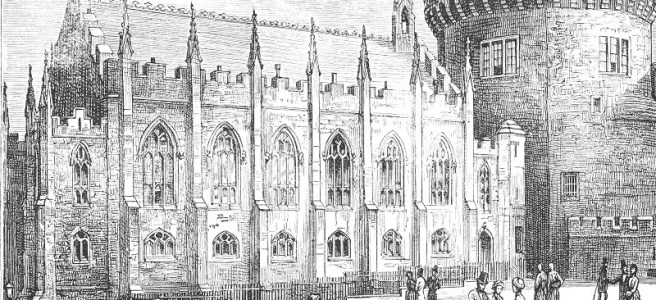
The Dublin Assay Office is considered to be one of the world’s oldest assay offices. It was established in 1637 with the purpose of ensuring that only the highest quality gold and silver were used in the production of jewelry throughout the whole of Ireland. The assay office is a sign of quality and trustworthiness, and it is still present today on the grounds of Dublin Castle. Each item of Irish fine jewelry that we sell and stated imported from Ireland continues to be hallmarked in the traditional manner by the assay office.

Irish Hallmarks from the Dublin Castle Assay Office

The presence of an Irish hallmark on an item indicates that it has been examined by an impartial organization and provides reassurance that the metal has at least one of the acceptable levels of fineness or purity. A hallmark identifies the material from which an item is crafted. For example, a 14K gold hallmark will have the numbers 14 and 585 stamped into it. The number 585 indicates that the item is composed of 58.5 percent pure gold. The remaining 41.5 percent will be comprised of various alloys and precious metals.

If the sterling silver or gold jewelry that was imported from Ireland has a hallmark from the Assay Office located in Dublin Castle, this information is included in the thorough description of the piece. When you buy any piece of silver or gold jewelry from The Irish Jewelry Company, you can rest confident that it is of the highest possible quality. This applies to all of the company’s products.

The Meaning of the Scottish Thistle

The thistle is Scotland’s national flower and one of the country’s most easily recognizable emblems. It has served as Scotland’s national symbol ever since King Alexander III, ruled the country.

The Mysterious Beginnings of the Scottish Thistle

In point of fact, no one can say for certain how the thistle with the violet-colored flowers came to hold such a high position. But according to one version of the story, a group of sleeping Scots soldiers escaped an ambush laid for them by an invading Norse army only when one of their attackers stepped on the spiny plant.

His agonized scream woke up the sleeping soldiers, who promptly defeated the intruder and chose the thistle as their emblem to represent themselves as a country.

Even if there is not the slightest scrap of proof to back up this allegation, it sure does make for an interesting tale.

What exactly does the flowering thistle signify?

Positive connotations are attached to the flower in Celtic nations, and it is seen as a sign of resiliency, strength, resolve, protection, and pride. The flower’s hues of purple and pink are symbolic of regal splendor. During the Victorian era in England, the thistle was a symbol of suffering, hostility, and encroachment.

Is the Thistle a Celtic Plant?

Since ancient times, the Scottish people have had a deep affection for the thistle, which is not only the nation’s symbol but also known as the “Flower of Scotland.” The Scottish thistle is an old Celtic emblem of the nobility of spirit as well as the nobility of birth, and the language of flowers considers it to be a noble flower.

A meritorious insignia

For more than five hundred years, the thistle has served as a significant emblem in Scottish heraldry. Additionally, it is one of the greatest honors that a government may bestow on a citizen or resident of the country. The Most Ancient and Most Noble Order of the Thistle is a chivalric order that was established in 1687 by James VII and James II. Its purpose is to recognize those who have made significant contributions to the culture and history of Scotland and the United Kingdom as a whole. HM The Noblest Order of the Garter is the only order with higher precedence than the Order of the Thistle, which may only be earned by being invested by the Queen.

Is plucking thistles a sign of good luck?

According to a number of different sources, the thistle has been employed as a good luck charm not just in Romania but also in other countries and regions all over the globe. The legend of a lucky thistle that is claimed to have saved the lives of Scottish soldiers just by being present on the battlefield led to the thistle being chosen as Scotland’s national emblem.

Poetry has been influenced by the Scottish Thistle.

Hugh MacDiarmid’s A Drunk Man Looks at the Thistle is an epic, stream-of-consciousness poem that touches on everything from the state of the nation and the mysteries of the universe to the wondrous joy that is whisky. Forget A Red, Red Rose, Rabbie Burns’ ode to romantic love. The thistle is responsible for one of the finest and most influential poems in the Scottish literary canon. Hugh MacDiarmid’s poem is considered to be one

In a nutshell, it is required reading for anybody who is thinking about taking a vacation to Scotland.

5 Important Celtic Crosses of Ireland

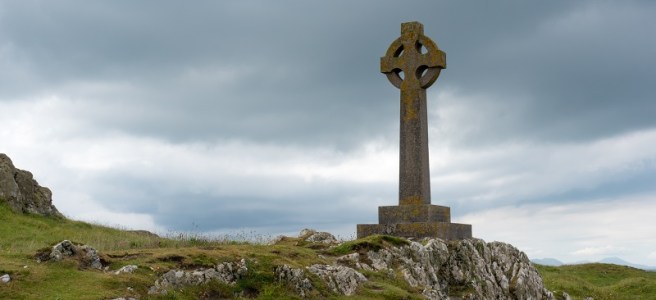
The Celtic cross is one of the most well-known Irish symbols and Celtic symbols. Other well-known examples are the Claddagh and the harp. They are significant reminders of our ancestry since they are steeped in history. It’s possible that their history, significance, and symbolism may blow your mind!

A minimum of sixty Celtic crosses can be found in Ireland, in addition to a number of ancient ruins. The majority of the Celtic crosses that are still in existence today were commissioned and built up until around the middle of the 12th century. After the end of the 12th century, hardly any new crosses were built, and this practice almost completely died out.

These magnificent crosses were often put up as boundary markers, such as at the intersections of parishes, or as memorials encircling monasteries, cathedrals, or churches. In certain cases, they were also utilized as a form of transportation. It is a common misconception that they were used as gravestones, although that was not the case. However, since the 1850s, modern crosses have seen an upsurge in favor of usage as gravestones.

The elaborate carvings that can be seen on many of these crosses add a great deal to their aesthetic value. The crosses’ fundamental form is not the only thing that makes them attractive. The degree of attention to detail and the high quality of the artwork are characteristics that are often reserved for priceless manuscripts like the Book of Kells.

What is the earliest known example of a Celtic cross?

Carndonagh, in County Donegal, is home to what is sometimes referred to as the Donagh or St. Patrick’s Cross. This cross is said to be one of the earliest free-standing stone crosses to have survived in Ireland. According to local folklore, Saint Patrick and his Irish missionaries established a church or monastery at this location sometime around the fifth century. One of the earliest examples of a Christian cross to be seen outside of mainland Europe, the St. Patrick’s High Cross, also known as the Donagh Cross, dates back to the seventh century. The stone, which formerly belonged to an early Christian monastery established by St. Patrick and can be located on Church Road next to the Carndonagh Community School, was removed at some point.

5 Important Celtic Crosses of Ireland:

  • The High Crosses of Kells, Co Meath
  • Celtic Cross of the Scriptures, County Offaly
  • Celtic cross in Drumcliffe, County Sligo
  • St. Patrick’s High Cross
  • Muiredach Celtic Cross, County Louth

CELTIC CROSSES OF IMPORTANCE ARE LOCATED IN IRELAND

The following are examples of some of the most significant Celtic crosses that can be found throughout Ireland. This brief list is not meant to be exhaustive; rather, its purpose is to provide a concise explanation of some of the crosses that are considered to be more noteworthy. If you can think of an important Celtic cross that we have neglected, by all means, please use the comment function at the foot of this page, and we will do our best to add information about the cross based on what you tell us.

The High Crosses of Kells, Co Meath

Monks from the monastery of Saint Colmcille on Iona have been credited for re-founding the Monastery at Kells in the year 804 CE. In addition to the Book of Kells, the town is well-known for the five High Crosses that can be found there. The Market cross is the fifth and most well-known of the crosses, and it is situated on the grounds of St. Columcille’s Church on the west side of town. Three of the crosses and the base of a fourth cross are also placed on the grounds of the church. At the moment, it may be found on the northern side of the old Navan Road, to the west of the old courthouse, at its original location.

The South Cross, also known as the Cross of St. Patrick and St. Columba, is regarded to be the oldest cross at Kells. It is the most well-known and well-recognized of all the crosses at Kells. Sandstone was used to sculpt this structure, which is 3.3 meters tall and made from a single piece.

The historic heritage of Clonmacnoise, Ireland


Celtic Cross of the Scriptures, County Offaly

Two whole High Crosses and the shaft of a third may be found among the various artifacts that were discovered at Clonmacnoise. The most well-known artifact, the Cross of the Scriptures, which is sometimes referred to as King Flann’s Cross, serves as the centerpiece of the recently constructed interpretative center. The monastic colony at Clonmacnoise was established in the sixth century and is comprised of the remains of a cathedral as well as seven churches and two round towers. Two high crosses are among the numerous ruins that can be seen in Clonmacnoise, and both of them are still in their original condition. Around thirty years ago, in order to ensure their continued existence, these two crosses were relocated inside of the interpretative center. Replicas of extraordinary quality have been installed in their former places outside the building. The Crucifixion is depicted in the middle of the Cross of the Scriptures on the west face of the structure. Other biblical scenes are also included.

High Cross of Drumciffe with sculptured panels of Adam and Eve, Cain and Abel, Daniel in the Lion’s Den, Christ in Glory, the Crucifixion


Celtic Cross in Drumcliffe, County Sligo

This exquisitely carved High Cross may be seen at Drumcliffe, which is located in County Sligo. Saint Colmcille is credited with establishing a monastery at this location in the sixth century. The Cross was most likely made in the 11th century. The church and cemetery where W. B. Yeats is buried may be seen in the background of this picture.

St. Patrick’s High Cross

One of the earliest examples of a Christian cross to be seen outside of mainland Europe, the St. Patrick’s High Cross, also known as the Donagh Cross, dates back to the seventh century. The stone, which formerly belonged to an early Christian monastery established by St. Patrick and can be located on Church Road next to the Carndonagh Community School, was removed at some point. This gorgeously ornamented Cross is a fusion of old Celtic art and Christian traditions, as seen by its use of biblical themes. The Cross of Saint Patrick is regarded as one of the most significant early Christian relics in Britain and Ireland and may be seen in the town of Carndonagh, which is located in the county of Donegal. It occupies the site of an ancient church that was established by Saint Patrick.

Muiredach’s Cross, Monasterboice Monastery in southern Ireland. Celtic High Cross in the historic ruins of Monasterboice, an early Christian settlement near Drogheda in County Louth, Ireland.


Muiredach Celtic Cross, County Louth

This stunning example of Celtic design is widely acknowledged to be among the country’s most outstanding examples. The towering crucifix reaches a height of only a hair under 18 feet. It is largely agreed upon that Muiredach mac Domhnaill, the individual responsible for the building of the cross, is the source of the name of the cross. He died in 923.

The depiction of biblical events on the cross panels had a significant impact on the overall design of the instrument. In broad strokes, the east side of the structure is influenced more by the Old Testament, while the New Testament is more apparent on the west side. Additionally, there are a few panels the significance of which is not quite obvious.

Considering we sell a number of different Celtic Crosses in the shape of jewelry and other types of Irish gifts, we are often questioned about the components that make up a Celtic cross. We have high hopes that you will find this post informative and entertaining, and that you will take away something new from reading it. Maybe even make plans to visit this religious monument one day. They are truly a sight to see. We hope you enjoy our collection of Traditional Celtic Cross Necklaces and Unique Celtic Cross Pendants in Gold and Silver. Celtic Cross Jewelry is inspired by Irish and Scottish Heritage.

Irish Blessings for All Occasions

Throughout its entire existence, Ireland has maintained a strong connection to several religions, despite the fact that this connection has not been without its share of difficulties. Up until a very recent period, the church exerted a significant amount of control over a variety of facets of Irish society.

One of our most well-known cultural festival, Saint Patrick’s Day, is celebrated in remembrance of the individual who, in the fifth century, was responsible for introducing Christianity to the island of Ireland.

In everyday conversation, you’ll probably still overhear individuals saying things like “please God” or “thank God” out of habit. The reaction of shouting “Jesus, Mary, and Saint Joseph!” in response to a distressing incident is still, for certain people, a somewhat frequent response.

Another notion about the Irish that has endured for a very long time is that we are a friendly country. Despite the fact that Irish people and our views as a culture have changed through time, our country is still widely regarded as being among the most friendly and hospitable nations in the whole world. If you enter the home of an Irish person, you are going to be offered a cup of tea regardless of whether or not you want one.

In addition to this, we have a deep and abiding affection for writing and verbally. Oscar Wilde, James Joyce, and W.B. Yeats are only three examples of illustrious Irish authors who have contributed to the literary canon throughout the course of history. This love of words and aptitude for poetry and music, together with our deeply ingrained connections to Christianity and religion, has resulted in something that is truly unique: an infinite tome of Irish blessings.

When are Irish Blessings Said?

Irish blessings are typically said during wedding ceremonies, family reunions, and other similar get-togethers as well as other important events. Because so many blessings have developed throughout the years, there is now an Irish blessing to cover almost every significant event that might occur in a person’s life.

What do Irish Blessings Do?

The majority of Irish blessings revolve around the concept of looking on the bright side of a difficult circumstance or focusing on the good aspects of a pleasant event. Everyone is aware, in today’s modern world, of the necessity of maintaining a good mentality for both our mental and physical health. We are certain that you will concur with us that many of these Irish blessings were already doing this many years before their time.

What exactly does it imply when someone gives you the Irish blessing?

To donate something from your heart, your feelings, and good energy that has been synthesized in a written poem as well as a plea for divine intervention, a prayer, and a link to God is to give an Irish blessing.

Where do the blessings of Ireland have their start?

This benediction was originally a prayer from Ireland and was originally composed in the Irish Gaelic language, which is the native language of Ireland. It had been translated into English, just like so many other books and stories from throughout the globe. The fact that several words were translated incorrectly caused it to lose part of its authenticity; for example, “rise” should have been “succeed.”

Where did the tradition of giving an Irish blessing originate?

The Irish blessing is a folk and druidic ritual that was eventually translated for the new Christian age. It dates back to the ancient days of the Celtic people. A great number of them have been translated into modern English from the ancient Irish, and it has been hypothesized that Saint Patrick was the author of the most famous and influential blessing, despite the fact that this is not entirely accurate.

The following are ten of the most inspiring and lovely Irish blessings that we were able to uncover.

We really hope you get a kick out of these popular Irish blessings !!!

Top 10 Popular Irish Blessings

Irish Wedding Blessings

May you have love that never ends,
lots of money, and lots of friends.
Health be yours, whatever you do,
and may God send many blessings to you!

May God be with you and bless you.
May you see your children’s children.
May you be poor in misfortune, rich in blessings.
May you know nothing but happiness.
From this day forward.

By the power that Christ brought from heaven, mayst thou love me.
As the sun follows its course, mayst thou follow me.
As light to the eye,
as bread to the hungry,
as joy to the heart,
may thy presence be with me,
oh one that I love,
’til death comes to part us asunder.

May your joys be as bright as the morning, and your sorrows merely be shadows that fade in the sunlight of love.

May you have enough happiness to keep you sweet, enough trials to keep you strong, enough sorrow to keep you human, enough hope to keep you happy, enough failure to keep you humble, enough success to keep you eager, enough friends to give you comfort, enough faith and courage in yourself to banish sadness, enough wealth to meet your needs and one thing more; Enough determination to make each day a more wonderful day than the one before.

Irish Travel Blessings

May the road rise up to meet you.
May the wind always be at your back.
May the sun shine warm upon your face,
and rains fall soft upon your fields.
And until we meet again,
May God hold you in the palm of His hand.

May good luck be with you Wherever you go, and your blessings outnumber the shamrocks that grow.

May your days be many and your troubles be few, May all God’s blessings descend upon you, May peace be within you, May your heart be strong, May you find what you’re seeking wherever you roam.

May you have the hindsight to know where you’ve been
the foresight to know where you’re going
and the insight to know when you’re going too far.

Saint Patrick’s Breastplate

The most well-known Irish blessing is reported to have been written on Saint Patrick’s breastplate, where it is believed to have originated from its namesake, the patron saint of Ireland. It is a very lengthy poem, so either Patrick was a giant or it was never put on a breastplate at any point; in reality, the concept that it was inscribed on a breastplate is probably more of a term to represent the fact that these were the principles he kept dear to his heart.

There is no evidence to suggest that Patrick really authored this poem personally; but, it does include his ideas and philosophies. The second-to-last stanza of the poem is the one that is most often cited, however the complete poem is included below for your convenience.

I arise today
Through a mighty strength, the invocation of the Trinity,
Through belief in the Threeness,
Through confession of the Oneness
of the Creator of creation.

I arise today
Through the strength of Christ’s birth with His baptism,
Through the strength of His crucifixion with His burial,
Through the strength of His resurrection with His ascension,
Through the strength of His descent for the judgment of doom.

I arise today
Through the strength of the love of cherubim,
In the obedience of angels,
In the service of archangels,
In the hope of resurrection to meet with reward,
In the prayers of patriarchs,
In the predictions of prophets,
In the preaching of apostles,
In the faith of confessors,
In the innocence of holy virgins,
In the deeds of righteous men.

I arise today, through
The strength of heaven,
The light of the sun,
The radiance of the moon,
The splendor of fire,
The speed of lightning,
The swiftness of wind,
The depth of the sea,
The stability of the earth,
The firmness of rock.

I arise today, through
God’s strength to pilot me,
God’s might to uphold me,
God’s wisdom to guide me,
God’s eye to look before me,
God’s ear to hear me,
God’s word to speak for me,
God’s hand to guard me,
God’s shield to protect me,
God’s host to save me
From snares of devils,
From temptation of vices,
From everyone who shall wish me ill,
afar and near.

I summon today
All these powers between me and those evils,
Against every cruel and merciless power
that may oppose my body and soul,
Against incantations of false prophets,
Against black laws of pagandom,
Against false laws of heretics,
Against craft of idolatry,
Against spells of witches and smiths and wizards,
Against every knowledge that corrupts man’s body and soul;
Christ to shield me today
Against poison, against burning,
Against drowning, against wounding,
So that there may come to me an abundance of reward.

Christ with me,
Christ before me,
Christ behind me,
Christ in me,
Christ beneath me,
Christ above me,
Christ on my right,
Christ on my left,
Christ when I lie down,
Christ when I sit down,
Christ when I arise,
Christ in the heart of every man who thinks of me,
Christ in the mouth of everyone who speaks of me,
Christ in every eye that sees me,
Christ in every ear that hears me.

I arise today
Through a mighty strength, the invocation of the Trinity,
Through belief in the Threeness,
Through confession of the Oneness
of the Creator of creation.

This is still another well-known blessing that is appropriate for any event; in addition, it is considerably simpler to recite than the one that refers to Saint Patrick’s breastplate.

May love and laughter light your days,
and warm your heart and home.
May good and faithful friends be yours,
wherever you may roam.
May peace and plenty bless your world
with joy that long endures.
May all life’s passing seasons
bring the best to you and yours!

Irish Friendship Blessings

Wishing you a rainbow
For sunlight after showers—
Miles and miles of Irish smiles
For golden happy hours—
Shamrocks at your doorway
For luck and laughter too,
And a host of friends that never ends
Each day your whole life through!

May God give you…
For every storm, a rainbow,
For every tear, a smile,
For every care, a promise,
And a blessing in each trial.
For every problem life sends,
A faithful friend to share,
For every sigh, a sweet song,
And an answer for each prayer.

May the friendships you make,
Be those which endure,
And all of your grey clouds
Be small ones for sure.
And trusting in Him
To Whom we all pray,
May a song fill your heart,
Every step of the way.

May your home always be too small to hold all your friends.

Irish Blessings for the Home

May you always have walls for the winds,
a roof for the rain, tea beside the fire,
laughter to cheer you, those you love near you,
and all your heart might desire.

May joy and peace surround you,
Contentment latch your door,
And happiness be with you now,
And bless you evermore.

Bless you and yours
As well as the cottage you live in.
May the roof overhead be well thatched
And those inside be well matched.

May your neighbors respect you,
Trouble neglect you,
The angels protect you,
And heaven accept you.

Irish Blessings about Ireland

Hills as green as emeralds
Cover the countryside
Lakes as blue as sapphires-
And Ireland’s special pride
And rivers that shine like silver
Make Ireland look so fair-
But the friendliness of her people
Is the richest treasure there.

May the Irish hills caress you.
May her lakes and rivers bless you.
May the luck of the Irish enfold you.
May the blessings of Saint Patrick behold you

May the enemies of Ireland never meet a friend.

May luck be our companion
May friends stand by our side
May history remind us all
Of Ireland’s faith and pride.

Good Luck Irish Blessings

May the blessing of light be on you—
light without and light within.
May the blessed sunlight shine on you
and warm your heart
till it glows like a great peat fire.

May your home be filled with laughter
May your pockets be filled with gold
And may you have all the happiness
Your Irish heart can hold.

May your blessings outnumber
The Shamrocks that grow
And may trouble avoid you
Wherever you go.

May luck be a friend to ye,
And be with ye in all yer days,
And may trouble be to ye,
A stranger, always

May the lilt of Irish laughter lighten every load, may the mist of Irish magic shorten every road, may you taste the sweetest pleasures that fortune ere bestowed, and may all your friends remember all the favors you are owed

Long Life Irish Blessings

May you live as long as you want,
And never want as long as you live.

May you live to be a hundred years, with one extra year to repent.

May God grant you many years to live,
For sure He must be knowing
The earth has angels all too few
And heaven is overflowing.

Here’s to a long life and a merry one
A quick death and an easy one
A pretty girl and an honest one
A cold beer and another one!

Irish Blessings for Children

Lucky stars above you,
Sunshine on your way,
Many friends to love you,
Joy in work and play-
Laughter to outweigh each care,
In your heart a song-
And gladness waiting everywhere
All your whole life long!

May you have:
A world of wishes at your command.
God and his angels close to hand.
Friends and family their love impart,
and Irish blessings in your heart!

May God grant you always a sunbeam to warm you, a moonbeam to charm you, a sheltering Angel so nothing can harm you. Laughter to cheer you, faithful friends near you And whenever you pray, Heaven to hear you.

O Thou, to whom to love and be are one,
Hear my faith cry for them

Who are more thine than mine.
Give each of them what is best for each.
I cannot tell what it is.
But Thou knowest.
I only ask Thou love them and keep them
With the loving and keeping Thou didst
Show to Mary’s Son and Thine.

Next

 The Wedding Ring: Everything You Need to Know

Related Posts

  1. Traditional Irish Wedding Blessings, Wedding Vows and Wedding Toasts
  2. An Irish Blessing and Sayings for Saint Patrick’s Day
  3. Blessings for Mother’s Day in Ireland
  4. Irish Easter Tradition and Blessing
  5. Irish Blessings for Thanksgiving
Newgrange and the Winter Solstice

Among the passage tombs and megalithic structures that may be discovered at Bru Na Boinne, which is a holy site located in County Meath along the banks of the River Boyne, Newgrange is the most significant one. The monument is located on a small hill on a bend in the river approximately five miles inland from the ancient Norman city of Drogheda and a couple of miles upstream from the site of the Battle of the Boyne. Both of these locations are roughly the same distance from the mouth of the river.

Is it True that Newgrange Predates the Pyramids of Giza?

Yes. Since it was constructed circa 3,200 BC, Newgrange is older than the Great Pyramid of Giza and is also older than Stonehenge by around one thousand years. When we take into account that it was built during the Stone Age, when metal had not yet been found in Ireland, the building is an impressive accomplishment.

Who exactly constructed Newgrange remains a mystery to historians. There is no way that it was constructed by the Celts since the first known arrival of Celtic tribes to Ireland was not until about the year 500 B.C., some 2,700 years after the structure was constructed.

In the year 1699, the local landowner Charles Campbell gave instructions to his laborers to remove stones from the mound, and as a result, they found the entrance to the passage tomb while doing so.

Who was laid to rest at the Newgrange burial site?

It is stated that the Tuatha Dé Danann were the people that controlled Ireland back in ancient times. It is also said that they were the ones who constructed Newgrange as a burial site for their ruler, Dagda Mór, and his three sons. It is common practice to refer to one of his sons, whose name is Aonghus, as Aonghus of the Brugh.

Why was Newgrange built in the first place?

In spite of the fact that Newgrange was at one time thought of as a passage tomb, more recent research has shown that it was really a monument whose objective, which did involve the act of interring the dead, was far more important and widespread.

What kind of discoveries were made at Newgrange?

The majority of the bodies that were buried in those tombs had been cremated. Excavators working at Newgrange in the 1970s discovered the uncharred remains of a man, identified as NG10, is a niche inside the structure that was embellished with stones that had been intricately carved. DNA was successfully extracted by Cassidy and her co-authors from the petrous bone of NG10, which is a dense component of the inner ear.

Did Celts construct Newgrange?

When you take into account that it was built during the Stone Age, when metal wasn’t even known to exist in Ireland, you have an impressive accomplishment on your hands. About the people who erected Newgrange, little is known. There is no way that it was constructed by the Celts since the first evidence of Celtic tribes in Ireland does not appear until approximately 500 BC, which is some 2,700 years later!

Newgrange Contains a Decoration Based on a Celtic Spiral

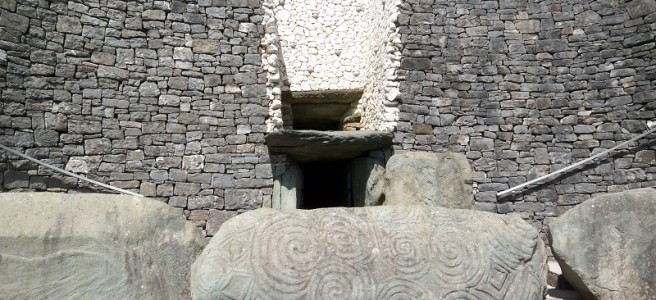
The base of the mound is encircled by ninety-seven big rocks that are known as kerbstones. Many of these kerbstones are lavishly ornamented with sculptures that have been etched into the stones. Circles, spirals, arcs, chevrons, and lozenges are some of the more typical motifs that are employed. However, a broad variety of patterns are used. It is speculated that these recurring geometric patterns have some kind of symbolic meaning. Regardless of what significance these designs may have had in the past, they continue to serve as outstanding examples of Neolithic art in Ireland.

NEWGRANGE SWIRL RING SILVER 10K GOLD

What was the Carving Technique Used at Newgrange?

The kerbstone that serves as Newgrange’s entry is the one that has the most elaborate ornamentation. The pattern is centered on a massive triple helix that is encircled by many smaller spirals as well as lozenges. The carvings, according to the opinions of the specialists, were created utilizing two distinct methods. In the beginning, a sharp stone or flint was used to carve out the groove in a crude fashion. The pattern was then refined using a pebble, which was used to make it deeper and smoother. This is how intricate patterns were cut into the stone using this method.

The sculptures at Newgrange served as inspiration for our extensive collection of handcrafted Celtic Spiral Wedding bands, which can be purchased on our website at TheIrishJewelryCompany.com.

The winter landscape of sun shines through the branches of frozen trees against the surface of the frozen lake. Winter solstice.

Newgrange’s Celebration of the Winter Solstice

Professor Micheal O’Kelly, an archaeology professor at University College Cork, oversaw the excavation of Newgrange from 1962 to 1975. He was in charge of the project during its whole. 

Local residents would inform the professor in the early years of the dig that at some moments, even the deepest depths of the chamber would be illuminated by light from the rising sun. This was something that would happen at particular periods. 

A hunch led the professor to visit the chamber on the morning of the winter solstice, which occurred on December 21, 1967. He was astounded to see the dawn light begin to enter the passageway and travel inwards, “lighting up everything as it came until the whole chamber – side recesses, floor, and roof six meters above the floor – were all obviously illuminated.” 

At Newgrange, he was the first human to see the winter solstice since the site was first inhabited thousands of years ago.

The winter solstice heralded the beginning of a new year and represented fertility and rebirth for the people who constructed Newgrange. This event took place on the 21st of December. 

Not only was Newgrange used as a cemetery, but it was also an important ritual location for the people who lived in the vicinity.

Next

 July’s Birthstone Ruby: Jewelry Guide

Related Posts

  1. The Gray Man a Samhain Legend for Halloween
  2. Colcannon (I love this stuff) A traditional Halloween meal
  3. The Irish Legend of the Banshee
  4. The Halloween Samhain Bonfire in Ireland
  5. The Celtic Origins of Halloween and Halloween Traditions

The Irish Flag Meaning and History

Perhaps one of the best-known symbols of Ireland is the Irish flag. It doesn’t take a rocket scientist to figure out why the flag of the Republic of Ireland is called the tricolorThe Irish flag consists of three different colors. The flag is a rectangle with three broad vertical stripes in the colors green, white, and orange.

Whenever the flag is flown, it is always flown such that the green stripe is closest to the flagpole. Each band is required to be of the same proportions, and the overall size of the Irish flag should be proportionately double its height. There is no question that each of the three colors on the Irish flag represents something significant.

Meaning of the Irish Flag Colors

What do the different colors on the Irish flag represent and what do they stand for? This is perhaps the topic that comes up the most frequently when people ask us about the Irish flag.

The color green is associated with Roman Catholics. On Saint Patrick’s Day, did you happen to notice how many people were wearing emerald or shamrock green? Orange is the color associated with Irish Presbyterians. Because of their allegiance to the protestant William of Orange, King William III of England, they are popularly referred to as “Orangemen,”, particularly on the Northern Irish side of the border. This moniker originated in Northern Ireland. The yearning for unity and peace between the two communities is represented by the single white stripe in the center of the flag. During this time when the Irish tricolor was first flown, the country was deeply divided between Catholics and Protestants.

A Wee Bit O Irish Flag History

The history of the flag that represents Ireland is a fascinating one. The present version of the Irish tricolor was conceived of and created by a collective of French ladies who were sympathetic to the Irish struggle.

They gave Thomas Francis Meagher, who was the head of the political Irish Nationalist Movement at the time, the tricolor in the year 1848. Meagher was the face of the movement at the time.  When he was presented with the flag, he is reputed to have made the following statement: “The white in the center signifies a lasting truce between Orange and Green and I trust that beneath its folds the hands of Irish Protestants and Irish Catholics may be clasped in generous and heroic brotherhood.”

When Meagher hoisted the tricolor in Waterford, it proudly fluttered for eight days and nights until it was brought down by the British. Meagher was responsible for hanging the flag.

The uprisings that occurred across Europe in 1848 served as an inspiration for Meagher and the other members of the Young Irelanders. In April of 1848, a group of them went to France to offer their congratulations to the revolutionaries there on the successful toppling of King Louis Philippe I. There, Meagher was given a tricolor Irish flag that had been fashioned out of French silk as a gift.

The Irish Flag did not appear in Dublin until Gearóid O’Sullivan raised the tricolor for the first time at Dublin’s General Post Office in 1916, during the Easter Rebellion. Prior to that, the flag had not been flown there since 1848.

It encapsulated the spirit of the revolutionary cause, and from that point on, the tricolor was considered to be the flag of the Republic of Ireland or Sinn Féin. Even though the flag of Ireland was flown proudly across the land from that point forward, it wasn’t until 1937 that it was given constitutional recognition as Ireland’s official national flag.

The official name for the flag that flies over Ireland.

Bratach na hÉireann is the Irish term for the tricolor flag and ensign, “bratach” being the Irish word for flag. This name was given to the flag and ensign by the Irish.

What does it mean when you see the Irish flag?

The following is the simple and clear interpretation of the Irish flag color meaning:

  • Green: Roman Catholics are represented by the color green.
  • White: The color white stands for the harmony and concord that both of these parties are hoping to achieve.
  • Orange: Orange is the color that signifies the Irish Protestants.

Great Irish Pubs of Ireland

Are you planning a trip this year to Ireland? If so you will definitely want to check out this list of must-see Irish pubs in Ireland. It is imperative that you pay a visit to these fabulous Irish pubs and bars at least once in your lifetime in order to experience traditional Irish music, the warmth of Irish hospitality, Irish beers, and much more.

Seáns Bar in Athlone, County Westmeath, which was built in the 10th century, has the distinction of “oldest bar in Ireland.” Irish pubs have been around for close to a millennium, making it the clear frontrunner for the title of “oldest pub in Ireland.” The Brazen Head, located in Dublin City, is recognized as the “oldest bar in Dublin” due to its foundation in the year 1198. With that being said we have compiled a short list of a few other Irish pubs with think are worth seeing while traveling Ireland.

Famous Irish Pubs:

O’Connor’s Famous Pub, Co. Galway

O’Connor’s Famous Pub is located in County Galway and is the ideal setting for any Galway Girl. O’Connor’s Bar, which is located in the picturesque seaside location of Salthill, asserts that it was Ireland’s first singing bar. That might be argued either way, but thanks to Ed Sheeran, it is without a doubt the most popular pub in all of Ireland.

O’Connors makes an appearance in the music video that Ed Sheeran created for his smash single “Galway Girl,” which also features the actress Saoirse Ronan. If you are interested in going to O’Connor’s, you should know that it is a TRUE Irish bar, which means that it does not have any televisions, does not sell any food, and only opens at night. There is no way you should skip a night spent here.

Matt Molloy’s, Co. Mayo

A leader in both drink and music, Matt Molloy’s may be found in County Mayo. Where can you hear the greatest traditional Irish music performed live seven nights a week? That would be the Irish pub Matt Molloy in Westport.

The proprietor of this bar is also a member of the internationally acclaimed traditional Irish music group The Chieftains. The relationship to the great Irish band The Chieftains is the most effective form of advertising for the establishment. It is one of the most famous Irish pubs and bars in all of Ireland due to the wonderful nights filled with music and craic that can be enjoyed at this establishment. If you are in Westport we definitely recommend having a pint at Matt Molloy’s Pub. In a word, if you want to enjoy a night filled with craic and music in a lively bar, you should put Matt Molloy’s on your list of potential destinations.

Temple Bar in Dublin

The Temple Bar, Co. Dublin

Temple Bar, which is located in County Dublin, can be found smack dab in the middle of Dublin’s most well-known bar area. Temple Bar is a name that is recognized in many parts of the world, and you will be happy to learn that there is, in fact, a Temple Bar.

The Temple Bar is famous all throughout Ireland and is known for being the ideal location to unwind with a pint. It is impossible to adequately describe the vibe both inside and outside of the pub; it is simply something that one needs to feel for themselves. This year, you really must put a trip to The Temple Bar on your must-do list.

Tigh Neachtain, Galway City

Tigh Neachtain, which is located on the corner of Cross Street and has been selling pints of beer since 1894, is a popular establishment in Galway for both its cuisine and its drink. Try to get a spot inside for one of their live music sessions, or arrive early to have a better chance of getting a table outside in their sunny drinking area. If you are able to secure a seat inside, there is a chance that you will never want to leave. Since the bar is a huge supporter of music and art (it is located in Galway, after all), you can anticipate a lot of cultural events occurring around the time of the Galway Arts Festival in July.

The Crown Liquor Saloon, Co. Antrim

One of the most well-known pubs and bars in all of Ireland is located in the county of Antrim and is called The Crown Liquor SaloonThe Crown, which can be situated in the middle of Belfast city, was formerly thought of as the most powerful Victorian gin palace in the whole country. It still has many of the characteristics that were typical of the Victorian era, such as gas lighting, intricate wood carving, and polished brass. This bar is not only difficult to miss, but also not one you want to miss out on.

The Folk House, Co. Cork

The Folk House in Kinsale, which is located in the county of Cork, is a traditional Irish tavern. Due to its laid-back ambiance, blazing open fireplace, and exposed stone walls, the Folk House in Kinsale is the epitome of a traditional Irish bar in its purest form.  Additionally, the bar offers a wide variety of beers and whiskeys for patrons to pick from.

Fun Facts About Irish Pubs:

Why were bars originally called public houses?

A picture that illustrates the history of pubs in Ireland. It wasn’t until the latter half of the 17th century that the phrase public house was coined. Prior to that time, “alehouses,” “taverns,” and “inns” were the terms that were used to refer to establishments that were accessible to the general public.

Why do people associate Ireland with pubs?

The genuine atmosphere and friendly atmosphere of Irish pubs have contributed to their widespread popularity. People rave about how much fun the Authentic Irish Pub is, how inviting the staff is, and how much they want to be a part of the community there.

What are the origins of the Irish pub?

The Romans are responsible for the establishment of most aspects of life in the western world, including the bar. As the Roman Empire spread into Celtic Europe, its soldiers, traders, and colonists were able to travel more easily because of the construction of roads. Approximately every 20 miles or so along these highways, there would be a “Tabernae”…or “Tavern.”

What to Know When Visiting an Irish Pub …

One thing is for certain is that the traditional watering hole known as the Irish Pub plays a significant role in Irish civil society. Many of our most accomplished authors got their start in Irish pubs. All of these authors, James Joyce, Samuel Beckett, Oscar Wilde, and Brendan Behan, produced short tales in which the Irish pub served as the primary setting. In Ireland’s pubs, many of the world’s greatest authors have gone in quest of new ideas.

It is customary for the person who invites you to an Irish bar to pay for the first round of drinks upon entering the establishment. However, in order to maintain the spirit of the occasion, you should place the following order before the other customers have finished their beverages. The Irish Pub in Ireland is, and always has been, the most popular destination for vacationers.

A Guide To 12 Infamous Celtic Gods And Goddesses

The ancient Celtic mythology included more than 400 Celtic gods and goddesses, and their roles ranged from presiding over rivers to leading armies into battle. Worship of the Celtic gods was not widespread throughout Europe throughout the Iron Age, with the possible exception of Lugh. Instead, it was often confined to only a few provinces or a particular area.

Who are some of the most well-known gods and goddesses from Celtic mythology?

The legends that accompany each god and goddess of Celtic mythology are rich and varied, and often include tales of conflict, tragedy, and the exercise of supernatural or magical abilities.

Dagda – the good god…

Dagda is considered to be among the ‘good’ gods of Celtic folklore. He plays a significant role in Celtic mythology as a father figure. He is the father of Aengus, Bodb Derg, Cermait, Midir, and Brigit. His other children’s names are Midir and Brigit. In ancient times, Dagda presided over the powerful Tuatha Dé Danann clan of Celtic gods, which was said to travel all throughout the island of Ireland.

It is reported that Dagda possessed a number of potent weapons, one of which is a massive club that could kill ten people with a single strike. It also has the ability to bring the dead back to life. In addition, he possessed a cauldron that could be used to produce food and a harp that could be used to call the changing of the seasons. One of Dagda’s numerous lovers was the powerful Morrigan, the Celtic goddess of battle and fate. Dagda also had many more lovers.

Brigid – the enlightened one

There are still many people in Ireland who celebrate Saint Brigid’s Day. St. Brigid’s Day, also known as Imbolc, is observed beginning in the evening of February 1 and continuing through the evening of February 2. It is considered to be the first day of spring.

As a result, Brigid is recognized as one of the most popular Celtic goddesses in modern-day Ireland. Brigid is revered as the goddess of life, as well as springtime and fertility. She is also known as a skilled healer and poet. Brigid was a Celtic goddess who presided over the arts of poetry and prophecy, as well as healing, agriculture, and the element of fire. In reality, she was a member of the Tuatha de Danann and her father was Dagda.

It is thought that Brigid had a few domesticated animals at her home, including sheep, cats, and oxen among other creatures. Brigid was famous for three different facets of her life: as a poet, a healer, and a blacksmith. Some people think that Brigid was actually three gods in one.

Danu – the mother goddess…

Danu is one of the first legendary entities that have been associated with Ireland. This Celtic Goddess is typically shown as a stunning lady, and she is frequently linked to aspects of the natural world.

Danu is revered by her people as the embodiment of the holy mother (the tribe of Celtic Gods). Additionally, she embodies concepts related to rebirth, enlightenment, the afterlife, and wealth. Concerning the historical aspect of the situation, Danu was not only an important Celtic God in Ireland; her fame won her respect in Britain as well as in other parts of the world.

Lugh – a warrior god

In the Mythology of the Celts, this sun god of all trades and arts was indeed a prominent deity among the Celtic gods and goddesses, despite the fact that God Lugh was only sometimes referenced in inscriptions. Lugh was frequently depicted with his magic spear, Gae Assail, as well as his helmet and armor. He was also associated with ravens and thunderstorms. He was a fierce fighter who was responsible for the death of the one-eyed chief of the Formorii, the legendary Balor. One of the most celebrated heroes in Irish mythology was a warrior named Cuchulainn, and Lugh is said to have been his godfather, according to the tradition.

Badb – the Celtic Goddess of enlightenment…

Badb, the Celtic Goddess, was also thought to be a supernatural monster. She was Ernmas’ daughter and was revered by the Celts. According to Celtic eschatology, Badb is the one who will bring about the destruction of the world. According to the tale, she had the ability to foretell the destruction of the gods as well as the Great Famine that occurred in the 19th century. In Celtic mythology, the word “Crow” refers to Badb, who was also a goddess and whose name means “Crow.” Badb was the patroness of illumination, inspiration, life, and knowledge.

The Morrigan – the goddess of war

Morrigan, also known as the “Phantom Queen,” is revered as a potent female divinity who is linked with both the afterlife and the course of one’s life. The Morrigan is depicted in stories as both a singular being and a celestial triad consisting of three sisters who had the ability to morph into shrieking crows. The sight of the Morrigan was frequently seen as a warning that a soldier’s brutal end was near. As a result, the banshee figure from Irish legend is connected to her in some way.

The Morrigan is not only renowned as the Phantom Queen in Celtic mythology but she is also referred to as the “Goddess of War” and the “Queen of Demons.” According to the myth, she appeared on the battlefield in the appearance of a crow or a raven and watched over the action. The Morrigan was also capable of predicting who would emerge victorious from the conflict. She materialized in front of Cuchulainn, but he was unable to recognize her at first glance. Shortly after, C Chulainn was killed in a conflict. After he passed away, the Morrigan took the appearance of a bird and perched itself on his shoulder.

Cu Chulainn – the champion of Ulster

C Chulainn was the legendary hero of the Ulster Cycle in Irish mythology. He was also known by his original name, Setanta. Because he participated in so many fights, C Chulainn should be remembered as a valiant warrior by a great number of people. Cuchulainn was the protector of Ulster, and even today, he is considered to be the most well-known folk hero in all of Ireland. His deeds were valiant; yet, as indicated before, Cuchulainn was not able to recognize the goddess of battle, which ultimately led to his death. Many people know him as a warrior who gained his skills by training in Ireland and Scotland and went on to become one of the most formidable competitors of his era. Imagine him as Ireland’s version of the Greek hero Achilles.

Cailleach – the veiled One

Cailleach was also known as the Hag of Béara, and she possessed a really amazing power, which was the ability to control the weather as well as the seasons. Her legend is connected to the regions of Cork and Kerry, where she is said to have lived when she was one of the most powerful and oldest mythological entities in Ireland. According to the folklore, Cailleach took the shape of an elderly woman and was responsible for the development of several mountain landmarks in Ireland, including the Cliffs of Moher and Hag’s Head.

Cernunnos – the god of wild things…

Cernunnos is revered by a large number of people as the “god of wild creatures.” He was frequently considered to be the embodiment of nature. Julius Caesar linked the Celtic god Cernunnos with the Roman god Dis Pater, who represented the underworld.

Cernunnos was a horned god who was connected to nature, grain, riches, and creatures that had horns. Julius Caesar linked this fabled figure with the Roman god of the underworld, Dis Pater, and the Druids referred to him as the Honored God. Cernunnos held a reverence for a great variety of creatures, including horned serpents, bulls, stags, and ran. The fact that he is shown in ancient Celtic art as sitting nude in the lotus pose with either horns or antlers perched on his head is an interesting fact.

Aengus – the romantic…

The river goddess Bionn gave birth to Aengus, who was the son of the Dagda. He was the all-powerful deity of youth and love, and he was also known by the names Angus and Oengus of the Bruig. The tale of Aengus tells us how he traveled the length and breadth of the land in quest of a lovely young woman. He was fortunate enough to find one, and he decided to call her Caer. Since she was destined to become a swan along with the other 150 maidens, Aengus made the decision to change into a swan himself so that he may be united with the woman who had been the love of his life.

Medb Queen of Connacht

In Celtic legend, Medb, sometimes known as Maeve, was the queen of Connacht and the ruler of the western part of Ireland. As a powerful leader, she eventually came to govern a large portion of the island, and she frequently came into confrontation with the legendary hero of Ulster, Cu Chulainn.

Medb had a large number of partners, and she expected the same three things from each of her marriages and suitors. These were the fact that they do not feel fear, animosity, or jealousy toward her in any way. She was worshiped as a deity representing absolute power.

Eriu or Eire – the goddess of Ireland

It was impossible to compile a list of ancient Celtic gods and goddesses without including Eire, who is the personification of Ireland. After the Tuatha Dé Danann’s victory against the Milesians, Eire and her two sisters traveled to meet the victors, which is one of the reasons why Eire has come to represent their heritage. In exchange, they proposed to honor her by naming a nation after her.

Who are the best-known Celtic Mythology Gods?

Although there are a great number of gods and goddesses that are well known, DagdaBrigid, and Queen Mebh are probably the gods and goddesses that are the most well-known in modern times. In our expert opinion, the best-known Celtic Gods are as follows.

  • Brigid
  • Queen Mebh
  • Lugh
  • Badb
  • Dagda

Is there a Celtic Gods and Goddesses list?

  • Brigid
  • The Cailleach
  • Aengus
  • Queen Medb
  • Cernunnos
  • Cu Chulainn
  • The Morrigan
  • Badb
  • Lugh
  • Danu
  • Dagda

Who were the Tuatha de Dannan?

In Irish mythology, the Tuatha dé Dannan were a magical race of people who lived in Ireland before any of our Irish ancestors ever came to the island. This is according to the legends that have been passed down from generation to generation. According to the urban legend on the googleeeeeeeee, the progenitors of the magical race are said to be alive and well now in the shape of fantastic creatures.