Origins of Samhain the True Story of Halloween

The idea of night and day was central to everyday existence in Celtic cultureBealtaine and Samhain were two of their most important holidays. Their year was split between a dark half and a light half, and the transition from one to the other was celebrated with festivities. Samhain is a term that is often translated to mean “summer’s end,” and it was certainly a festival that took place during the darker half of the year.

It was considered more important than Bealtaine (and another two lesser festivals known as Imbolc and Lughnasadh) because the dark half of the year was more dangerous and more likely to be sorrowful. A 24-hour festival was held from sunset on October 31st to sunset on November 1st to say goodbye to the light and welcome the dark.

The Celts also held the belief that during this time of twenty-four hours, the deceased were able to travel between the world of the living and the world of the dead. Because of this, it was very necessary to treat the dead with respect and refrain from doing anything that would offend them.

Samhain was a festival that was observed not just by Irish Celts but also by their equivalents in Scotland and Manx, as well as by numerous variants of the festival with subtle modifications in Wales and Brittany. It is mentioned in some of Ireland’s earliest written documents, which date back to the 10th century, although it had already been in existence for a significant amount of time before then.

According to the opinions of those knowledgeable in the subject, it most likely began while the Celts were still pastoral people. They would have spent the summer cultivating crops and raising animals, and the winter gathering food and going into hibernation. Their life would have revolved around the seasons.

It was a crucial time of year for a variety of reasons, including the fact that the end of October would have been the period when commerce and fighting would have paused until the weather improved again. The date was often selected for the holding of significant tribal meetings and was also used as a jumping-off point for the creation of myths and stories.

The Hill of Tara

Tiachtga and the Hill of Tara are two hills in the Boyne Valley that are especially linked with Samhain. Of the two, Tiachtga is considered to be the more significant hill. The Great Fire festival, which was held there, was by a significant margin the largest event of its kind in the surrounding region. When the massive fire at Tiachtga was finally set ablaze, it was an indication that everything was in order and that further flames could be constructed.

In addition, it signaled the beginning of the enormous feast. Nevertheless, Tara was thought to be noteworthy due to the fact that the Mound of Hostages, which was located towards the top of the hill, was aligned with the rising sun during that time of year.

Celebration of the Festival of the Dead

It was believed that the veil that separates the world of the living from the world of the dead was at its thinnest during the holiday of Samhain. This allowed otherworldly spirits, both good and bad, to move freely back and forth between the two worlds. Because of this, things were fairly difficult for the surviving Celts, as they wanted to both welcome back their loved ones and keep off the bad spirits, which was a challenge given the circumstances.

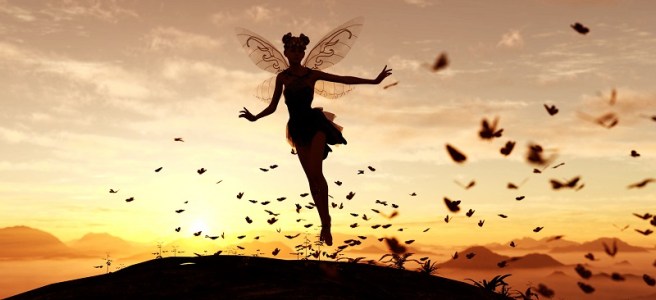
It was stated that the time from sunset to sunset was “between years,” which simply means that time did not pass during that period of time, making it possible for anything to take place. Around this period, the many different legendary beings and spirits from Irish mythology, such as the banshee, the pooka, and of course, the fairies, were all quite active.

According to urban legend, if a human apprehended a banshee at Samhain, they would be able to put an end to her suffering and ensure that she would never inflict it on another human again.

The homes of the fairies in the underworld as well as the fairies themselves were completely visible to humans, and humans were fully able to interact with them. However, if humans did anything that was considered offensive or disrespectful, or if they broke any rules, they would be cast into the “other” world and would never be allowed to return.

The walking dead also have the ability to converse with the living and to demand payment for obligations that had previously been owed. Burial grounds, as well as crossroads, bridges, and the borders of neighboring lands, served as portals for ghosts to go between dimensions as they passed through the area. Because of this, many individuals decided it was safer to remain indoors and face their fears than to go out into the world.

What exactly took place during the Samhain celebration?

It doesn’t seem like a very joyous holiday when you think about it, yet most of the Samhain events revolved around the fire and the dead. Every fire that was burning in people’s houses was extinguished, and a large bonfire was erected in the middle of each hamlet. It was believed that the fire has curative and protecting properties, and it served as the focal point of the celebration.

Afterward, everybody who want to carry this holiness into their own houses was required to start their fire using flames taken from the bonfire.

There were many other ceremonies that took place around the campfire, including the sacrifice of animals, music, and dancing.

According to some versions of the story, a purification ceremony consisted of individuals stepping in between two flames that had been constructed next to one other and guiding their animals through the process as well. Along with the skeletons of killed cattle, ‘wicker men’ were also thrown over the fire. Wicker men were composed of food, bones, or even animals (or maybe even people) enclosed in wicker cages.

A massive feast was another important component of the festivities, and it was held over the course of more than one day on either side of the actual day of the festival itself. It was a good chance to get rid of perishable items before the winter set in, and as it was often a time when large groups of people got together for big meetings, it made sense to host a feast regardless of the reason for coming together.

The rural Celts had a lot of work to do around the time of Samhain since they needed to bring their cows in from the pasture for the winter, decide which ones to the butcher for food, and get ready for the harvest. After all of that had been completed, it is safe to assume that all they want was a delicious lunch that was still warm.

All of the doorways to a house would have been left open so that the spirits may come and go as they pleased. A specific quantity of food and a seat at the table was reserved for any deceased family members who chose to come back to their homes for the celebration.

The food that was meant for the dead was not allowed to be touched by human hands between the hours of sunset and sunset because this was considered to be a terrible act of sacrilege and meant that the person who committed it would become a hungry spirit after they passed away and would never be allowed to participate in the Samhain celebration again.

The rituals and traditions of Samhain

There were also plenty of odd practices that were carried out throughout the time of Samhain. The Celts had an irrational dread of fairies, and since they were believed to be at their most powerful around Samhain, food offerings were often placed outside of people’s homes in the hope that the fairies would remain in a good mood. It was also standard practice for people to disguise themselves by wearing masks and switching up their wardrobes so that the fairies would have a difficult time distinguishing between individuals in the event that they chose to take any souls.

As a part of the festivities, the individuals in disguise would go from house to house singing in exchange for a small token of food; if the homeowner was not obliging, they threatened to cause all kinds of mischief in the vein of an evil spirit descending on the house. This sounds a little bit like trick or treating, doesn’t it?

In addition to hiding their identities with masks, pranksters would carry lanterns manufactured from vegetables such as turnips that had been hollowed out. These lanterns had two purposes: they provided light and offered safety (those evil spirits and fairies had no mercy). They would often carve monstrous faces onto their lanterns so that anyone walking by would think the lanterns belonged to demons.

Children and adults alike would participate in a variety of activities designed to keep the dead entertained. These activities would include rehashing the events of the previous year, with the hope that the dead would maintain an interest in the goings-on of the living, as well as incorporating a number of child’s games into the ritual practices themselves.

Additionally, obligations owed to both the living and the deceased were settled during the Samhain holiday. There was a general ceasefire observed, and during that time, conversations and amicable contests took place amongst tribes who would not have interacted with each other outside of the battlefield otherwise.

People from the communities in the area would remove some of the ashes that were left behind after the bonfires burned out because they believed that doing so would bring about a bountiful crop. The ashes did, in fact, make the soil better in spite of everything, so this was one notion that was proven correct each year.

How did the celebration of Samhain become Halloween?

Once Christianity was introduced to Ireland, traditional Celtic holidays such as Samhain and others were “Christianized.” Samhain, also known as the Festival of the Dead, was renamed the Festival of All Saints and Martyrs, also known as All Saints Day because the early Christians on the island were determined to do all in their power to eradicate pagan ceremonies and spread their religion all across the island.

When the Pope of the time moved it to November 1st, he did so in order to ‘incorporate’ the pagan feast, which had previously been celebrated in March. Even though people adopted the new holiday as their own, the traditional rituals and practices that were linked with Samhain continued to be practiced for many decades after the holiday had been replaced. There were even a few of them that survived all the way up to the current day!

Next

 A Guide To Fairies and Fairyland

Related Posts
  1. A Guide To Fairies and Fairyland
  2. The Celts – A Guide to Their Culture
  3. A Guide To Popular Halloween Traditional Customs
  4. Top 10 Scary Irish Mythological Creatures

A Guide To Fairies and Fairyland

Those of us who have lovely recollections of bedtime fairy tales about trolls, hobbits, and gossamer-winged spirits are usually the ones who would swear that fairies are real and that we have seen a genuine fairy.

Do fairies really exist?

Those who say that fairies do not exist almost often provide a rationale grounded in science to support their position. Although there are many things that have been shown by science, it would be irresponsible of us (not to mention egotistical) to presume that we have solved even a small portion of the mysteries that exist in the cosmos. If you are convinced in your belief that fairies do not exist, you are likely to be astonished to hear that many individuals do not share your viewpoint.

Is it possible that there are such things as fairies?

A fairy is a type of mythical being or legendary creature that can be found in the folklore of multiple European cultures (including Celtic, Slavic, Germanic, English, and French folklore). Fairies are a form of spirit that is frequently described as metaphysical, supernatural, or preternatural. Other names for fairies include fay, fae, fey, fair folk, and faerie.

What Exactly Are Fairies?

Due to the absence of a concrete and unchanging definition, providing a response to this topic is difficult. It differs from culture to culture, with many different countries having their own original stories. Let’s have a look at some of the definitions to see what they mean.

Where exactly do the fairies make their home?

Fairies have been known to make their homes in people’s homes, gardens, flower pots, and even trees; but, since they are very flexible creatures, they are able to make their homes almost wherever that strikes their fancy. Fairyland of course refers to the residence of fairies, but yet again, there are different versions of where and what it is.

What is Fairyland?

It should come as no surprise that the term “Fairyland” refers to the place where fairies live; yet, there are several interpretations of both its location and its nature. Believers point out that there are a number of other spiritual worlds, some of which, like Tár na ng, are reasonably near to us, while others are so rarefied that a human being would never be able to access them.

Fairyland is spoken about in a variety of ways across Cornwall, ranging from the sublime to the everyday. A little kid, in the epic story ‘The Lost Child,’ penned by Robert Hunt, follows lovely music, meets a beautiful lady, and is transported to a spectacular gleaming castle. All of this takes place after the child discovers a mysterious palace. On the other hand, according to another Cornish legend, Fairy land was nothing more than an ordinary location that goats frequented.

In Welsh folklore, Fairyland was said to have been seen by sailors who described lush meadows between Pembrokeshire and Carmarthenshire.Tár na ng was the home of the Tuatha de Danann, whereas Fairyland was said to have been seen by sailors. Old Norse mythology posits the existence of nine distinct worlds, or jötunnar, in which a variety of magical creatures, such as elves and fairies, may be found.

There are many famed Fairylands, perhaps none more famous than Tír na nÓg – Land of the Young.

The Fairy Bible Theory on Fairyland

Teresa Mooney, in her book titled “The Fairy Bible,” proposes an intriguing hypothesis in which she asserts that Fairyland is comprised of four towns, each of which is connected to one of the four elements.

The Four Towns of Fairland:

  • Gorias is a city located in the East that is connected to the element of Air. The residents all seem to have a feeling of peace and contentment, which makes this a fantastic location to call home.
  • Finias: Located in the South, this city is known for its association with Fire. Finias is blessed with a never-ending supply of daylight, and its residents are known for their generosity.
  • Murias: This city can be found in the Western region and is connected to the element of Water. It is situated close to the sea and is a bustling and active location.
  • Under this guise, this metropolis may be found in the North and is connected to the planet Earth. It is the polar opposite of Finias in that there is no respite from the darkness there at any time. Although there are no people living there, the planet Falias is covered with diamonds and has several structures made of metal.

What different kinds of fairies are there?

There is a wide variety of fairy races throughout Europe, with the majority of them appearing in the mythology and folklore of Germanic and Celtic cultures.
Dwarf. Dwarves were a humanoid species that appeared in Norse mythology. Before J. R. R. Tolkien popularized the word “dwarf,” the plural form of the word was “dwarfs.”

  • Elf
  • Gnome
  • Goblin
  • Leprechaun
  • Sprite
  • Troll
  • Pixie

What is the difference between a fairy and a faerie?

  • “Fairy” is a word that has been derived from Latin word “fatum,” which can mean “fate.”
  • Faerie” is a word that has been derived from Gaelic “fear shidhe,” which means “’man of the shee.” 2. Fairies are considered to be a group of young and pure spirits.

When someone sees a fairy, what does it mean?

A sign of an unfulfilled life: Some people believe that fairies, who are thought to be quite similar to ghosts, are really discontented souls that roam the world. According to this point of view, fairies are symbolic of individuals who are living their lives to their full potential but are stuck between the gates of heaven and hell.

Do fairies take names without permission?

It’s not easy to come up with fairy names. Fairies tend to keep their identities hidden from humans in order to maintain their power, but they are often negligent in doing so, which results in humans being able to outsmart them in the end.

What happens when you tell a fairy your name?

The power is in the fairy name. If a faerie asks for your name and you tell them, you are giving them the ability to govern you and perhaps handing up all of your autonomy to them. The most prudent action to do in this scenario is to bestow onto the faerie an alias or a fictitious name of your choosing. However, if you are able to call them by name and do so, they will leave you alone.

What special abilities do fairies possess?

It is theorized that all of them share a variety of similar qualities, such as magical knowledge (the ability to cast magic thanks to their knowledge and nature), invisibility (as they are able to hide from humans who have not been to the Fairy Realm), enhanced strength, possibly immortality, and telekinesis, among other possible abilities.

Who is the Fairy Queen?

There is a person in Irish and British tradition known as the Fairy Queen, sometimes known as the Queen of the Fairies. She is supposed to govern the fairies. Titania or Mab are common names given to her in English-speaking countries, perhaps as a result of the influence of Shakespeare.

So Are Fairies Real?

We really wish it were feasible to provide a resounding “yes” or “no” response to the subject of whether or not fairies exist. Negative thinkers will, of course, argue that there is insufficient proof to demonstrate beyond a reasonable doubt the existence of fairies. The most significant obstacle that must be overcome in order to provide such proof is the instantaneous derision that must follow its presentation.

In the end, demonstrating that fairies are real is very difficult, similar to the difficulty of showing the presence of ghosts and other forms of paranormal activity. On the other hand, one may argue that demonstrating beyond a reasonable doubt that these things are products of the mind is just as challenging. Do any of you readers have any faith in the existence of fairies?

Next

 About The Irish Poet W.B. Yeats and His Poems

Related Posts

  1. The Irish Legend of the Banshee
  2. Irish Fairies and Anti Fairy Measures
  3. Celtic Halloween Myths and Legends
  4. A Guide To 12 Infamous Celtic Gods And Goddesses

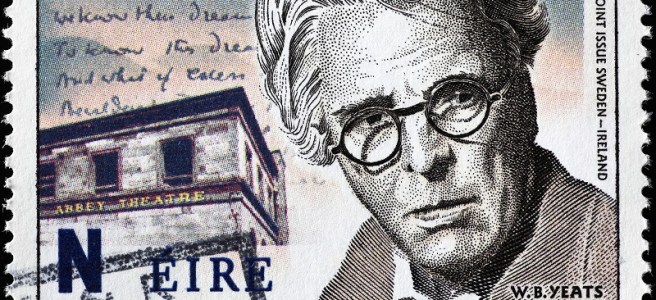
About The Irish Poet W.B. Yeats and His Poems

William Butler Yeats, who was born on June 13, 1865, is often regarded as one of the most accomplished poets to come from Ireland. His poetry is deeply ingrained in the national consciousness of Ireland. Some of his writings made reference to his unrequited love for Maud Gonne, who is generally regarded as his muse. Ireland was also a favorite subject for him to write about. It is also generally known that he has a curiosity about supernatural occurrences. People have a tendency to see him as a somewhat sad person due to the fact that he wrote wonderful poetry about the experience of continuously proposing to a lady who continually rejected him. (And after that, he proposed to her grown daughter, who likewise rejected him.) However, Yeats is not just the most poetically talented spurned suitor in the history of Ireland. He is also much more.

Which of William Butler Yeats’s works is considered to be his most well-known?

Yeats was just 21 years old when he wrote The Stolen Child in the year 1886. It is the most well-known poem from his very first book of poetry, which was published under the title The Wanderings of Oisin and Other Poems. It is also considered to be one of his most significant early works. Yeats had a significant interest in Irish mythology, and the poem that he wrote was inspired by Irish folklore.

What are the reasons why William Butler Yeats was awarded the Nobel Peace Prize?

William Butler Yeats was given the Nobel Prize in Literature in 1923 for his constantly inspiring poetry, which is a highly aesthetic form that gives expression to the soul of an entire people. This was the reason for the award.

How would you describe the writing of W.B. Yeats?

Yeats’ work was a shift from Romanticism to Modernism as an Artistic Movement. Yeats began his extensive creative career as a romantic poet, and during the course of his career, he progressively transitioned into a modernist poet. When he first started publishing his poetry in the 1880s, his poems had a lyrical and romantic tone, and the subject matter of his poems centered on love, yearning, and loss, as well as Irish mythology.

The Irish poet William Butler Yeats is largely regarded as one of the most significant literary figures of the 20th century.

Yeats’ Most Famous Poem, The Stolen Child

The Stolen Child is a ballad poem that tells a narrative. it consists of four stanzas and 53 lines, there are two types of rhyme schemes here.

The Stolen Child

Where dips the rocky highland
Of Sleuth Wood in the lake,
There lies a leafy island
Where flapping herons wake
The drowsy water rats;
There we’ve hid our faery vats,
Full of berrys
And of reddest stolen cherries.
Come away, O human child!
To the waters and the wild
With a faery, hand in hand,
For the world’s more full of weeping than you can understand.

Where the wave of moonlight glosses
The dim gray sands with light,
Far off by furthest Rosses
We foot it all the night,
Weaving olden dances
Mingling hands and mingling glances
Till the moon has taken flight;
To and fro we leap
And chase the frothy bubbles,
While the world is full of troubles
And anxious in its sleep.
Come away, O human child!
To the waters and the wild
With a faery, hand in hand,
For the world’s more full of weeping than you can understand.

Where the wandering water gushes
From the hills above Glen-Car,
In pools among the rushes
That scarce could bathe a star,
We seek for slumbering trout
And whispering in their ears
Give them unquiet dreams;
Leaning softly out
From ferns that drop their tears
Over the young streams.
Come away, O human child!
To the waters and the wild
With a faery, hand in hand,
For the world’s more full of weeping than you can understand.

Away with us he’s going,
The solemn-eyed:
He’ll hear no more the lowing
Of the calves on the warm hillside
Or the kettle on the hob
Sing peace into his breast,
Or see the brown mice bob
Round and round the oatmeal chest.
For he comes, the human child,
To the waters and the wild
With a faery, hand in hand,
For the world’s more full of weeping than he can understand.

W. B. Yeats – 1865-1939

The Celts – A Guide to Their Culture

Whenever you describe the Celts to many people, they think of Celtic warriors who passionately protected their homeland while simultaneously trying to expand and conquer new territory. This is the picture that comes to mind when you discuss the Celts. However, this is just a small portion of what the Celts were all about since, in actuality, they had a highly complicated culture that requires more research. In this article, we will present you with an in-depth look at ten facts about the Celts that you most likely did not know before reading this.

There is no evidence that the Celts kept written records of their history.

There is no evidence of any writing system that was used in Celtic culture; while there are occasional text fragments, there is no true record of events that occurred in the past. Caesar said in De Bello Gallico that the Druids did not want to commit their knowledge to write, despite the fact that they did utilize Greek script for the majority of their other works.

Rather than writing down their knowledge, the Celts kept alive an oral legacy of learning that was passed down via the druids and academics for hundreds of years. In the culture of the Celts, having a good memory and being able to learn things by heart were considered to be quite admirable traits.

On the other hand, archaeologists have discovered relics of inscriptions written in languages such as Greek and Latin in Celtic communities. The majority of documented records of the Celts were from Greek and Roman sources. These sources were inevitably prejudiced since the Greeks and Romans saw the Celts as their adversary. Since this is the reason why we have so many papers that suggest the Celts were barbarians, we need to take these assertions with a grain of salt considering the origin of the material included in these documents. The artwork of the Celts provides us with more insight into their culture and lifestyle.

The Celtic language survived to be spoken after the Roman occupation.

At one point in history, people believed that as the Romans invaded Celtic countries, their native languages died out along with them. Even though Manx and Cornish are no longer spoken, contemporary versions of Celtic languages are still used today. For instance, Manx was deemed to be extinct as a first language in 1974, yet modern forms of Celtic languages are still used today.

Ancient Celtic languages such as Pictish, Lusitanian, Celtiberian, and Lepontic are no longer spoken today but may have lasted for several hundred years after Celtic tribes were “Romanized.” Examples of these languages are Pictish, Lusitanian, Celtiberian, and Lepontic. In point of fact, Celtic languages were widely used up until the Middle Ages, but after that, their usage started to wane as a direct result of the lack of unity that existed among Celtic people. There were several different groups, all of which engaged in conflict with one another. While the Celts were busy fighting among themselves, the Anglo-Saxons managed to spread their civilization among the various Celtic tribes.

There is No Evidence That the Celts Lived in a Primitive or Savage State.

The Romans, the Greeks, and other sources represented the Celts as primitive savages. This portrayal of the Celts is essentially a blatant falsehood, as we indicated earlier. As was just said, the Celts were successful in establishing a complex and highly developed network of trade long before the Romans themselves managed to accomplish this objective.

The Romans used something called the Julian calendar, but the Celts used something called the Coligny calendar. This calendar got its name because it was discovered at Coligny, which is located in France, in the year 1897. It is made up of several different pieces of metal, all of which are engraved with various marks, such as numerals, lines, and holes. Around a century was necessary for the most knowledgeable people in the world to decipher the meaning of the symbols on this Celtic calendar.

In 1989, it was found that the discovery was a lunar-solar calendar that estimated the time of the year based on the cycles of the moon and the sun. A very precise clock, the calendar was able to forecast the location of the sun up to many months in advance. In point of fact, it is even more accurate than its Roman equivalent, which is “incorrect” by an average of 11.5 minutes every year.

The Celts were renowned for their skill as warriors.

We already know that the Celts enjoyed a good battle, but it is a common misconception that they lacked discipline in comparison to their Roman contemporaries. Despite this, the Celts were very well-trained and were then capable of competing on equal footing with any army they encountered. Because of their stellar reputation as fighters, King Ptolemy II of Egypt recruited Celtic mercenaries in the third century B.C. to assist him in his military campaigns. Ptolemy, on the other hand, thought that they were a little bit too excellent for his tastes; since he was afraid that they might turn against him, he had them exiled to an uninhabited island in the Nile!

As opposed to a deficiency in military preparation, the Celtic people’s lack of cohesion was one of the primary contributors to their defeat at the hands of the Romans. It was customary for Celtic tribes to battle among themselves, which provided the Romans with an opportunity to unite together and vanquish a formidable adversary.

By the way, the Celts did NOT engage in combat while nude. As a matter of fact, they protected themselves with metal plates, chain mail, and leather padding.

Celtic Women Were Fierce Warriors

Women Celt warriors were a sight to behold. Women in Celtic culture often battled alongside their male counterparts. Boudicca, the Warrior Queen of the Iceni, and her valiant soldiers were the most famous of the Iceni’s brave warriors on the battlefield.

The Celts Enjoyed Tremendous Wealth.

Julius Caesar’s desire to amass wealth was a significant motivating factor in his decision to engage in the Gallic Wars. Historians think that the mythical general’s primary objective was to seize control of the magnificent gold riches that were located in Celtic Gaul, despite the fact that he claimed that he was only pushing back barbarous bounds.

There is No Evidence That the Celts Originated in Ireland or Scotland.

In spite of the fact that the name “Celtic” has become associated with people of Scottish or Irish heritage, the Celts were really from an entirely other section of Europe in their original homeland. Although the Greeks had contact with them in the century before, the Celts do not appear in the historical record until the 5th century BC. This is despite the fact that the Greeks had met them in the century before.

By the time they are recorded in historical sources, the Celts had already expanded out throughout a number of nations in Europe’s ‘Alpine’ area, including Spain, France, and a number of others (Austria and Switzerland among others). However, many academics believe that the Celts came from Western Mid-Europe as a part of the Urnfield Culture, which started about 1300 BC.

The Celts Culture

The Celts were not only fearless warriors but also brilliant philosophers, inventors, builders, and makers of art and architecture. The lack of cohesiveness among them was the primary flaw in their organization, and it would eventually lead to their demise.

Next

 A Guide To Popular Halloween Traditional Customs

Related Posts

  1. Celtic Autumn Equinox
  2. Origins of the Celtic Cross from Ireland
  3. What is a Celtic Sisters Knot?

A Guide To Popular Halloween Traditional Customs

Some traditional Halloween customs associated with Halloween include going trick-or-treating in spooky costumes, pumpkin carving, and going door to door for candy. Samhain is a Gaelic term that is pronounced: “SAH-win.” It was a pagan religious celebration to welcome the harvest at the end of summer when people would light bonfires and wear costumes to ward off ghosts. Halloween has its origins in the ancient Celtic festival of Samhain. Pope Gregory III, who reigned in the seventh century, established the first of November as a day to celebrate saints. Not long after that, several of the customs associated with Samhain were incorporated into the celebration of All Saints Day. All Hallows Eve was the name given to the evening preceding All Saints Day; it was ultimately shortened to Halloween.

Here is a look into the background of some of the most well-known Halloween customs that are being practiced today.

Carving pumpkins into Jack-o’-lanterns

Jack-o’-lanterns were traditionally carved out of turnips rather than pumpkins in Ireland, where the custom first began. It is said that it is based on a tale about a guy called Stingy Jack who is credited with capturing the Devil on several occasions and only releasing him with the stipulation that Jack would never have to suffer in hell. But once he passed away, Jack found out that Heaven did not want his soul either, so he was condemned to spend eternity as a ghost chasing after people on earth. Jack was provided with a source of illumination by the Devil in the form of a glowing lump of coal housed inside a turnip that had been hollowed out. At some point in time, locals started carving terrifying faces into their own turnips in an effort to ward off bad spirits.

Dressing up in Spooky Costumes

The Celts would dress up in disguises at Samhain so that they would not be mistaken for the bad spirits who were said to be roaming the earth at that time. This would allow them to avoid being harassed by the spirits and allow them to celebrate the holiday in peace.

Going Trick-or-Treating

There is a lot of discussion over where trick-or-treating first started, but generally speaking, there are three different hypotheses. The first hypothesis proposes that in order to satisfy the spirits that were wandering the Earth at night, Celtic people would put food out during the holiday of Samhain. People then started dressing up like these otherworldly entities in return for similar donations of food and drink throughout the course of time.

Another idea postulates that the candy boom may have its origins in the Scottish custom of guising, which may be seen as a more secularized form of “souling.” On All Souls Day, throughout the Middle Ages, it was common practice for children and destitute adults to go door-to-door in their communities in exchange for food and money from those who were willing to pray for them. Prayers were replaced with non-religious pastimes such as singing, telling jokes, and other “tricks,” and the Guisers did away with the practice altogether.

Halloween Black Cats

The concept that black cats are terrifying originates from the Middle Ages when people believed that these dark felines were a representation of the devil. Since then, people have held the belief that black cats are terrifying. The fact that decades later, convicted witches were often discovered to have cats, especially black ones, did not help matters. People started believing that the cats were “familiars” of witches, who are otherworldly creatures that help witches in their practice of dark magic; ever since then, black cats have been associated with spooky things because of this belief.

Halloween Colors are Black and Orange.

Black and orange, the traditional colors of Halloween, have their origins in Samhain, a holiday that was celebrated in Celtic countries. Orange was the color that signified the harvest season in fall to the Celts. Orange is representative of the fire that burns during the festival of Samhain whereas black was thought to represent the “death” of summer and the dark months that come with winter.

The Snap Apple

In Ireland, apple bobbing is more commonly known as “snap apple.” This variation of the game typically sees players lunging teeth-first at apples suspended from strings rather than having them thrashing around in buckets of water. 

In his book Collectanea de Rebus Hibernicis, written in the 18th century, British military surveyor Charles Vallancey, who was stationed in Ireland at the time, discusses the game. He notes that young people who were not yet married would compete to see who would be the next to be married. The person who is the first to bite into a hanging apple will be able to stroll down the center aisle before anybody else. Bobbing for apples originated as a courtship ritual — a game for divining the future romantic entanglements of the players. 

Published by The Irish Jewelry Company

We at The Irish Jewelry Company take pride in making the Irish gift-giving experience modern and convenient. The Irish Jewelry Company celebrates their Celtic heritage and a love of Ireland through original Irish Jewelry design. Their beautiful Irish jewelry is steeped in Celtic symbolism and rich in Irish tradition.

Previous

The Celts – A Guide to Their Culture 

Next

 August Birthstone History And Meaning

Related Posts

  1. Colcannon (I love this stuff) A traditional Halloween meal
  2. The Gray Man a Samhain Legend for Halloween
  3. IRISH HALLOWEEN TRADITION – BARMBRACK
  4. The Celtic Origins of Halloween and Halloween Traditions
  5. The Halloween Samhain Bonfire in Ireland

August Birthstone History And Meaning

Give someone whose birthday is in August a piece of jewelry with their birthstone to help them celebrate their special day. Continue reading to find out more about the history of the birthstone for August. The unique characteristics of the peridot gemstones are what give them their allure.

What does the meaning of the birthstone for August mean?

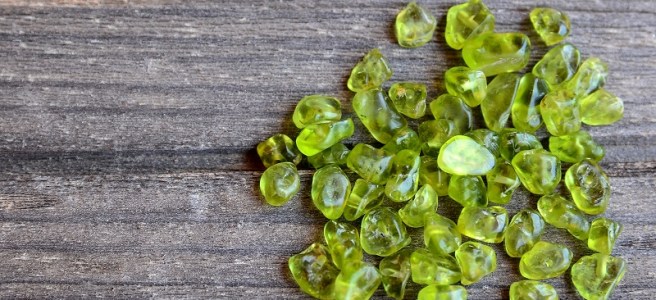
Peridot is traditionally recognized as the August birthstone. The peridot is a well-liked and well-recognized birthstone. Many people have a soft spot in their hearts for this brilliant yellow-green gemstone, which is also known as a sign of opportunity and fortune. Peridot is a stone that is said to provide its wearer with confidence, strength, general good luck, and health.

Peridot Birthstone History And Meaning

Since the dawn of time, peridots have been surrounded by legend and mystery. The Egyptians referred to peridot as the “jewel of the sun,” and some of them believed that it could even prevent dreams from occurring. It is said that peridots are the tears of the Hawaiian goddess Pele, who is the goddess of the volcano. Peridots have a strong cultural significance in Hawaiian society. Due to the high percentage of crushed olivine that makes up the sand of Papakolea Beach on the Big Island, the sand there has a stunning and unique green color.

Peridot is an extremely uncommon gemstone that only ever exists in a single hue in its native state. Olivine, often known as olive green, is a kind of mineral olivine, which is made of magnesium and iron. Certain types of gemstones are capable of occurring in every hue of the rainbow if they are exposed to sufficient amounts of outside substances. Peridot, on the other hand, can only be found in very delicate hues of green.

Because of its varied coloration, which may vary from pale lime green to deep, earthy olive tones, peridots are a very popular option for use in jewelry. Because some tones of peridot are readily mistaken for emeralds, these gemstones are a good choice for those who like green gemstones but are searching for a less costly alternative to emeralds. This is because certain hues of peridot may easily be fooled with emeralds. Peridots have a shine that is both fresh and lively, and it is best seen when set against the beautiful sheen of sterling silver.

Jewelry Maintenance and Cleaning for Peridot

Peridot is a somewhat soft stone, scoring a 7 on the Mohs scale of hardness. This means that it is hardy enough to be used in jewelry that is worn on a daily basis, but it should be handled with care to prevent scratches. To properly clean your peridot, we advise using a gentle soap and warm water and then patting it dry with a soft towel afterward.

August Birthstone Jewelry

If you are searching for a one-of-a-kind piece of jewelry for yourself or someone born in August (even if that someone happens to be you! ), continue on to The Irish Jewelry Company to learn more about some of our favorite pieces of August birthstone jewelry.

Published by The Irish Jewelry Company

We at The Irish Jewelry Company take pride in making the Irish gift-giving experience modern and convenient. The Irish Jewelry Company celebrates their Celtic heritage and a love of Ireland through original Irish Jewelry design. Their beautiful Irish jewelry is steeped in Celtic symbolism and rich in Irish tradition. 

Previous

A Guide To Popular Halloween Traditional Customs 

Next

 The Origins of Valentine’s Day

Related Posts

  1. Birthstone Chart and the Meaning of the Birthstone
  2. Birthstones Customs and Stone Types
  3. July’s Birthstone Ruby: Jewelry Guide
  4. April’s Birthstone is Diamond
  5. Claddagh Family Birthstone Necklace

Celtic Triskele Meaningful Ancient Celtic Symbol

There is indeed a story associated with each old Celtic sign, such as the triskele. The symbolism of the triskele is complex, multifaceted, and open to a great deal of interpretation.

Have you ever been curious about the significance of the symbol known as the triskele, which is also referred to as the triple spiral and the triskelion?

What Does the Symbol of a Triskelion Mean?

The Triskele, also known as the Triple Spiral, is a complicated old Celtic sign. Its name comes from the Greek word “Triskeles,” which means “three legs.” Many people refer to it as a Triskelion, although its origins can be traced all the way back to the Neolithic period. It was first constructed in Ireland’s Newgrange, and you can see it there today. From the year 500 B.C. onwards, the usage of the triskele became more common throughout the Celtic civilization. Symbolists think that this ancient sign is representative of many different aspects of civilization at the time it was created, making it one of the most difficult symbols to comprehend.

To begin, one interpretation of the triskele is that it represents mobility because of the way all three of its arms are arranged to give the impression that they are expanding outward from the middle of the symbol. Movement, or motion, is said to denote energy. More specifically, the motion of activity, cycles, progress, revolution, and rivalry are all thought to be represented by this particular Celtic Symbol.

The precise symbolic value of the triskele’s three arms is the second topic, and for symbolists, this is the region that presents the most challenge. It is possible for this to be different depending on the age, society, mythology, and history, which is why there are many different interpretations of what these three extensions in the triple spiral sign imply.

To mention just a few, some of these implications are as follows: life-death-rebirth; spirit-mind-body; mother-father-child; past-present-future; power-intellect-love; creation-preservation-destruction.

It is believed that when these two regions are combined, the meaning of the Celtic triskele may be distilled down to a single concept. It is said to reflect a story of making progress toward knowledge via forwarding movement. On the other hand, it is assumed that this is not the sole meaning, since it is also supposed to symbolize three different realms in Celtic culture: the spiritual world, the world we live in now, and the world in the heavens. The number three has a significant meaning inside the triskele, just as it does within the ancient Trinity knot.

The symbolism of the triskele is complex, multifaceted, and open to a great deal of interpretation. This particular Celtic sign is quite a little more complicated than the others, and it is used rather often in contemporary Celtic jewelry. Triskele Pendantstriskele earrings, brooches, and charms from Ireland and the Celtic region are the most common forms.

Next

 Slainté an Irish Toast’s Pronunciation, Meaning and Origins

Related Posts

  1. Celtic Symbols and their Meanings
  2. The Irish Harp – A Symbol of Ireland
  3. Celtic Cross Meaning and Symbolism
  4. The Celtic Tree of Life Symbolism and Meaning
  5. 6 Most Admired Irish Symbols in Celtic Jewelry

Top 10 Scary Irish Mythological Creatures

Addressing Scary Irish Mythological Creatures or Celtic Mythological Creatures is the topic of one of the most frequent inquiries that we receive in connection with Irish mythology.

However, once you’ve spent enough time reading about Irish folklore, you’ll know that there are quite a few Irish mythical creatures out there and that they differ in the sort of creatures that they are. This is something that you’ll know if you’ve spent any time reading about Irish folklore. Some of the animals that may be found in Irish mythology, such as the Pooka, are associated with a charming and humorous story, whilst others, are very terrible!

Since the beginning of Celtic mythology, old Irish creatures and demons have been used to scare members of the general public, particularly around the time of Halloween.

The Irish term for demon is “deamhan,” and it is surely widely utilized since bad powers, monsters, demons, and ghosts have long been feared in Celtic mythology. The word “deamhan” comes from the Irish language.

The ancient Celts believed in hundreds of different Irish legendary deities, but much like other nations, their society also had its share of demons. Some of the “monsters” who were worshiped in Celtic culture were, in fact, formerly gods who were subsequently recast as evil pagan beings when many Celts converted to Christianity.

The list of most terrifying beasts and spirits from Celtic mythology, just in time for Halloween.

  • Dearg Due – the Irish vampire
  • The Cailleach – the Celtic witch
  • Púca – the Irish Ghost
  • The Bánánach – Demons
  • Balor – Celtic demon king
  • The Sluagh – Celtic monster
  • Banshee – the Irish wailing ghost
  • Merrow– Sea fairy
  • The Dullahan – the Irish headless horseman
  • Ellén Trechend – Three headed monster

Dearg Due – the Irish Vampire

There is a vampire that dwells smack dab in the center of Ireland, but Dracula himself was created in Ireland (the monster was written about in Bram Stoker’s classic book, which was also written by an Irishman).

Dearg-due is an Irish word for a female demon that first seduces men and then drains them of their blood. The name literally translates to “red bloodsucker.” An Irish lady who was famous across the land for her beauty and who fell in love with a local peasant against her father’s disapproval is said to have been the subject of a tale that originated in Celtic culture.

Her father coerced her into entering into an arranged marriage with a wealthy guy who mistreated her, which led to her taking her own life in the end. She was laid to rest next to Strongbow’s Tree in Waterford, but one night she arose from her grave to exact her vengeance on her father and husband. She drank their blood until they were no longer able to breathe, and then she ate their bodies.

The vampire, who is now known as Dearg-due, comes to life once a year and uses her alluring appearance to entice men to their deaths. There is, however, a strategy that may be used to successfully combat Dearg-due. It is sufficient to construct a mound of stones on top of her grave in order to forestall the resuscitation of the dead. No, it won’t be enough to kill her, but at least it will buy you some time till the new year!

The Cailleach – Celtic Witch

The Cailleach, often known as the Celtic witch, is mentioned in a number of the old tales that have been passed down from generation to generation in Ireland. This particular school of witchcraft gets its name from the fact that its practitioners base their rituals and rites on numerous elements of Celtic folklore and mythology.

There are many legends told about the Cailleach, often known as the Celtic witch, in the folklore of Ireland. At Samhain, she would make her descent from the mountains, and from then until Beltaine, she would govern the earth. The oldest of all the tales comes from Celtic culture. The name Cailleach translates to “Old Wife,” and she is considered to be one of the most important figures in Celtic mythology. The Cailleach was worshiped as the goddess of the cold and the winds. The duration and severity of winter were both within the Cailleach’s control. She was also sometimes referred to as the Veiled One of the Queen of Winter. She is a heavenly hag and a creative goddess at the same time.

Púca or Pooka – the Irish Ghost

Púca is an Irish term that literally translates to “spirit” or “ghost,” and these legendary beings hail from Irish mythology. These legendary beings hailing from Irish folklore are fairies that are capable of assuming the form of a horse, goat, cat, dog, or hare. They are also capable of assuming a human shape, but one that retains certain animal characteristics such as a tail or ears.

They are said to have white or black fur or hair, and they are harbingers of both good and ill fortune, as well as communities that are either rural or sea. They may assist or harm these communities. They like playing tricks on people and will often try to get them to ride on their backs, after which they will take them on a wild and dangerous excursion before delivering them back to the location from whence they originally picked them up. It is stated that a rider may tame a Púca if they wear sharp spurs to either prevent themselves from being abducted by the monster or to direct it if they are already riding on its back. This story originates from the Irish tradition. It is stated that Brian Boru, the last High King of Ireland, was the only man who ever rode a Púca. 

Traditionally, the Púca is celebrated at Samhain, the harvest festival that takes place when the harvests are brought indoors. Anything that is left in the fields after harvesting is set aside for the Púca and is not fit for human consumption. There were some farmers who would appease the Púca by leaving some of the harvests out for it to eat.

There are further legends connected to the Púca, and allusions may be found in a variety of forms of literature, including poetry, music, and more. You could also come across the term phouka or pooka being used to refer to it.

The Bánánach – Irish Demons

The Bánánach brings us right back to the eerie beasts of Celtic mythology with their next appearance. The Bánánach is a supernatural race that is mentioned in Irish mythology. They are said to be able to be seen haunting battlefields.

These terrifying screeching demons that lived in the air may have had the appearance of goats. They were linked to acts of murder and death.

Balor- Celtic Demon King

In Celtic mythology, Balor is the name of the evil version of the god of death. The malevolent monster had only one eye and a single huge leg, yet it held the title of King of the Fomori, a race of demons who inhabited the murky depths of lakes and oceans. Because Balor can murder someone just by glancing at them with his evil eye, he kept it closed most of the time so he wouldn’t have to keep stumbling across dead corpses all the time.

This is one of a few mythological monsters from Ireland that actually terrified me as a youngster after hearing tales about them from my pals. These Celtic creatures were claimed to be restless souls that were considered to be neither accepted in hell nor heaven, therefore it was believed that they were permitted to wander the countryside on their own.

The Sluagh

This is one of a few mythological monsters from Ireland that actually terrified me as a youngster after hearing tales about them from my pals. These Celtic creatures were claimed to be restless souls that were considered to be neither accepted in hell nor heaven, therefore it was believed that they were permitted to wander the countryside on their own.

According to folklore, the Sluaghs were bitter about their plight and would steal the soul of anybody they came into contact with if given the opportunity.

The Banshee- A wailing ghost

Banshee is an Irish word for a ghost that howls. The Banshee is a well-known Irish monster, and legend has it that it often works in conjunction with the Dullahan.

The banshee is a female ghost whose scream, if heard outside of a home, foretells the death of one of its occupants. It is one of the most known Celtic monsters, having made a guest appearance in “Darby O’Gill and the Little People” and all.

According to a number of retellings of the Banshee tale, the terrifying specter traveled accompanied the Dullahan in a dark cart that was pulled by six black horses. It is stated that the two of them would beat the horses with a human spinal cord.

But the majority of tales agree that the Banshee, on her own, was already terrible enough. Her appearance has been described as anything from an ugly old hag to a lovely young lady; yet, everyone agrees that the creature’s bloodcurdling howl will be heard three times before someone passes away.

Merrow – Sea Fairy

When it comes to monsters from myth and legend, Ireland is home to a handful that aren’t as terrifying as others that have been described. It seems that one of them is a Merrow. In Irish tradition, a merman or mermaid might take the form of a merrow. It is stated that in order for them to move freely between the water and dry ground, they must first don a magical cap, which derives from the Irish term murch.

The term is used in two different stories; in the first, a Kerry man steals a green-haired merrow’s red magical cap so that he might marry her, and in the second, a green-bodied hideous male merrow who entertains a fisherman at his house beneath the sea uses the term to describe himself.

The merrow is often referred to as sea fairies and is sometimes shown as having the upper body of a woman but the lower body of a fish. The male merrow did not come close to matching the beauty of its female counterparts. They were generally gentle, but they may become hostile against those who were rude to them or who scared them.

The Dullahan – the Irish headless horseman

The Dullahan is another fabled Irish monster, and its name, which literally translates to “dark man,” describes this creature well. This grim reaper is the equivalent of the headless horseman in Irish folklore and is often featured in modern works of fantasy literature as well as in video games.

The head of the Dullahan is carried under one arm as he rides a headless black horse with burning eyes. When he finally gets off his horse, a person will be killed. In some telling’s of this tale, the Dullahan is said to attack those he passes by hurling buckets of blood at them, while in others, it is said that he merely yells out the name of the person who is about to pass away.

Gold is the Dullahan’s Achilles’ heel, as is the case with most malevolent powers. Because the monster shies away from the material, lone travelers would be advised to bring some with them just in case they come across this headless monstrosity and find themselves face to face with it!

Ellén Trechend – Three headed monster

Ellén Trechend was a genuine monster with Celtic roots. In point of fact, it was a Celtic monster with three heads! Now, the appearance of Ellén Trechend varies from story to tale, much like the appearances of other Irish legendary beings. In some versions of the tale, the beast is described as having the appearance of a vulture, while in others, it is a dragon that breathes fire.

In a story referred to as the Cath Maige Mucrama, it is said that Ellén Trechend would emerge from a cave and go on a rampage that will cause much damage.

Previous

The Reason Weddings Rings are Worn on the Left Hand 

Next

 Newgrange: Winter Solstice and Celtic Spirals

Related Posts

  1. The Gray Man a Samhain Legend for Halloween
  2. The Irish Legend of the Banshee
  3. The Legend of the Selkies

The Reason Weddings Rings are Worn on the Left Hand

If you and your significant other are getting closer to the idea of getting engaged, there’s a good possibility that you’ve already given a lot of thought and consideration to the topic of engagement rings. Perhaps there was even a time when you had to rearrange your regular rings in order to make room for your shiny new diamond band.

There is one thing that is always going to be constant about a ring, and that is that it is traditionally worn on the ring finger of the left hand. This is true regardless of the kind of ring that you choose. However, the right hand is the one on which people in India, Germany, Spain, Norway, and Russia typically wear their wedding bands.

Because this is all that most of us in the United States has ever known, everyone is aware of this time-honored practice, and the vast majority of us continue to carry it out. But what many people don’t know is that there is a historical reason why we wear our engagement rings on that particular finger on our left hand and that there are even societies whose members typically wear their engagement rings on the right hand. This is something that many people don’t know.

Everything You Need to Know About Ring Fingers

We will provide you with all the information you want about ring fingers. We are now investigating the origins of the time-honored practice of putting one’s wedding ring on the ring finger on the left hand.

What does it mean to wear one’s wedding ring on the left hand instead of the right?

The practice of exchanging wedding rings has its roots in ancient Egypt, but it was also common in ancient Greece and ancient Rome. Because they thought there was a vein in this finger that ran straight to the heart, people in all of these civilizations wore their wedding bands on the fourth finger of their left hand when they married.

The History and Meaning of the Ring Finger

Because it was thought that the heart was the source of all of our feelings, this vein was given the name Vena Amoris, which literally translates to “vein of love.”

If a pair were to wear a ring on this finger that symbolized their desire for one another, their destiny as a couple would be sealed, and their love would last forever. Even when scientific research disproved the existence of a single vein linking all of the body’s systems, the tendency continued to be so widespread that it evolved into a centuries-old custom.

DIAMOND TRINITY KNOT ENGAGEMENT RING SET

What is an Engagement Ring?

The promise of marriage is represented by the engagement ring, and the wedding band serves to reaffirm this pledge. Because it has neither a beginning nor an end, the circle that constitutes a wedding ring is often seen as a representation of eternity and unwavering commitment to a union that will last a lifetime.

Engagement rings and wedding bands are worn on the finger containing the engagement ring during the wedding ceremony that takes place in Western cultures. Considering this, you may be wondering what will become of your engagement ring. Just before the start of the wedding ceremony, the engagement ring is moved to the right hand so that the wedding band may be put on the left hand. This allows the wedding ring to be worn in a position that is most intimate to the wearer. Following the ceremony, the engagement ring is transferred to a position of prominence atop the newly acquired wedding band.

Which cultures traditionally place the wedding ring on the left hand?

The left hand often wears the wedding ring in the above image. In many Western countries, including North America and South America, as well as European nations like the United Kingdom, Italy, France, and Slovenia, couples wear their wedding bands on the left hand of their dominant hand.

What does it indicate if you wear the ring on your right hand instead of your left?

It is traditional for a husband to present his wife with a right-hand ring on special occasions, such as a renewal of their wedding vows or an anniversary. In addition, they may act as promise rings for couples who are pledged to one another or for those who have taken a vow of chastity.

What does the ring finger on the left hand represent?

The Left Ring Finger Reveals Your Relationship:

  • Marital Status
  • Engagement Status.

The following are some of the possible meanings of a ring worn on the left ring finger: Marital status – A wedding ring is traditionally worn on the left ring finger of the left hand by married people in most Western nations.

CELTIC TRINITY DIAMOND BAND

Do Men Wear Engagement Rings?

The obvious response is going to be yes, men wear engagement rings. Many men have been given engagement rings as symbols of commitment from their significant others because rings represent an intention to spend a lifetime together. Your love story is one of a kind, and even if there are many different customs that you may follow, you should never be afraid to blaze your own trail.

Many couples who share the same sexual orientation are also warming around to the concept of both partners wearing engagement rings. After all, marriage is supposed to be a collaboration, so why not?

A significant number of ladies have also presented their future husbands with engagement rings. You are free to pop the question whenever you choose throughout the year, even though it is often done on the 29th of February in a leap year, but there are no regulations around this.

A love that will continue through the ages…

It makes no difference if you wear your diamond engagement ring and wedding band on your right hand or left hand, your index finger, or your thumb; what matters is that you wear them on your ring finger. Your engagement ring and wedding band are more than simply lovely pieces of jewelry; they are also a pledge to one another that you will remain committed to one another throughout all of your shared future experiences and that you will remain together. They are a constant representation of your love, both for the now and for the foreseeable future.

In the end, the manner in which you choose to wear your wedding ring is entirely up to you. The wedding ring on the left hand or right hand is up to you. Even while custom dictates that you should wear it on the ring finger of your left hand, there is absolutely no reason why you can’t swap it up and wear it on the ring finger of your right hand instead if you so like!

Previous

The Wedding Ring: Everything You Need to Know 

Next

 Top 10 Scary Irish Mythological Creatures

Related Posts

  1. Irish Wedding Traditions and Superstitions
  2. Irish Claddagh Ring Meaning and Claddagh Ring Wedding Traditions
  3. Wedding Trends for 2021-2022
  4. The Meaning Behind Men’s Celtic Wedding Ring Designs
  5. 6 Celtic Wedding Rings Inspired by Ancient Irish Tradition

The Wedding Ring: Everything You Need to Know

New designs of engagement rings are introduced on an annual basis. It is recommended that you stay current with these trends if you are considering popping the question in 2022 or 2023. Even if selecting an engagement ring that is well-suited to the person who will wear it is the most crucial part of the process, it is still beneficial to be informed of the most recent fashion trends. If you are familiar with the current trends, you may be able to find a gorgeous design. It is also essential to be familiar with your spending plan and to adhere to it.

How much money should you put into a ring for your wedding?

The typical cost of an engagement ring is in excess of $5,000, whereas the typical cost of a wedding ring is close to $1,000. According to the findings of the Knot 2020 Jewelry and Engagement Study, the average cost of an engagement ring now exceeds $5,000. This is the price that is considered to be “normal” for a nation. According to the findings of research that was carried out in the United States in 2019, the average price of a wedding band for a woman was found to be $1,000, while the average price of a wedding band for a man was found to be $510.

Shop Early and Do Your Research

The organization of a wedding requires a significant amount of preparation, and the week leading up to the big day will be filled with a lot of little things to think about and stress about. You don’t have to put the wedding rings at the bottom of the list if you don’t want to. Finding the ideal wedding band requires the same amount of patience as searching for the ideal engagement ring. Because you want to keep this on your ring finger for the rest of your life, it is important that you choose the ideal ring for this purpose.

Set a budget for your wedding rings

When looking for wedding rings, you should go into the process with a firm idea of your spending limit. This will not only assist you in finding a wedding ring within your price range, but it will also assist you in avoiding disappointment. If you do not have a price range in mind while you are shopping for a ring online, you run the risk of falling in love with something that is very out of your price range. The Irish Jewelry Company recommends that prospective buyers “determine your budget before commencing your search.” “Then, while you are dealing with your online jeweler or shopping online, be honest and straightforward about what it is you are looking for. It is not impossible to get the wedding ring of your dreams while still sticking to your financial plan.”

When is the best time to purchase wedding rings?

So, when do you purchase your wedding rings? We suggest starting your wedding planning around three to four months in advance. This provides you with plenty of time to look at several designs of rings, make a few visits to the store to try them on, and discuss with your partner which bands are most suitable for you and the way you live your life.

Who gets to pay for the wedding band?

The customary approach to handle this situation is for the bride to pay for the husband’s wedding ring as well as a gift, while the groom is responsible for paying for the bride’s engagement ring as well as the wedding band that matches it. Today, a more contemporary approach that is used by many couples is to acknowledge the wedding rings as a shared investment by both parties involved in the marriage.

Include Your Own Unique Style in the Design.

Consider the pieces of jewelry you currently possess as well as the things that strike your attention while you’re out shopping. Do you consider yourself more of a person who prefers yellow gold, white gold, or sterling silver? Do you have any particular stones that you think are preferable to others? Is your style more classic and enduring, or more on the cutting edge of the latest trends? Which of these three traditional Irish wedding ring designs—the Claddagh, the triskele, or the Celtic knot—do you like best? You may utilize the knowledge you get from examining the jewelry you currently possess to assist you in defining your own unique sense of style. Going shopping together may also help you zero in on the ring style that is most suited to your own taste.

Considerations Related to Wedding Ring Style

Should we match or should we not match? The concept of matching may be construed in a few different ways.

  • Do you want the rings you wear on your wedding day to be identical? Even though this has always been the custom, over the years it has been less popular owing to a number of factors. One of these factors is a desire for a metal that is harder and less prone to scratching. Another factor is a shift in personal style.
  • Do you want the rings that you’re going to marry her with to match? It is not required by any requirement that the wedding rings match the design of the engagement ring, even if the engagement ring is of the same style. However, the two rings should complement each other, which means that you may get a wedding band that will “go with” the ring even if it was not intended for the ring specifically. Because you will be responsible for managing a whole set by yourself, this calls for a somewhat higher level of design sensibility.

Just Remember the Meaning of the Wedding Rings

The act of exchanging wedding rings as a sign of one’s commitment to their spouse during the wedding ceremony itself is a very memorable moment. Remember that particular time when you are faced with a number of options that appear overwhelming or start to blend together in your thoughts. Relax and take pleasure in the experience; there is no right or wrong answer when it comes to the wedding rings you choose. Go with whatever style your heart tells you and you and your partner decide works well in your budget and represents you as a couple.