St. Brigid’s Day – A Celebration of a Celtic Goddess and Saint

St. Brigid’s Day, which marks the beginning of spring in Ireland according to Celtic tradition and occurs on February 1st, is quickly approaching. This year, the celebration of Saint Brigid’s Day will be elevated to the status of a nationally recognized bank holiday in Ireland to honor her. In Ireland, this national holiday marks the first time a woman has been honored with a public holiday in her own right. So who exactly was Saint Brigid? Was she a goddess from the ancient Celts or a holy person from the Christian religion?

A Holy Person in Christianity

St. Brigid of Kildare, according to legend, was born into servitude in Dundalk, Ireland, in the year 451 AD. She became a nun, an abbess, and the founder of various monasteries, the most notable of which was in Kildare, as a result of her assiduous efforts and laser-like focus.

A depiction of Saint Brigid offering protection to the monastery at Kells is considered to be one of the most significant parts of her legacy. She declined an arranged marriage so that she might devote her life to helping others, and as a result, she educated hundreds of women who would have been illiterate otherwise.

The St. Brigid’s Cross

There are several versions of the tale that surrounds the beautiful cross that bears her name. In the version that has become the most well-known, Brigid is said to have woven a cross out of rushes that were carpeting the floor at the bedside of a dying pagan chieftain, who, in some versions of the story, is her father. Her words comforted the dying man, and he was moved to be baptized before passing away in peace as St. Brigid explained the meaning of the cross to him.

St. Brigid’s Day – Lá Fhéile Bríde

On the first of February in the year AD 523, it is stated that Saint Brigid died away in a calm and serene manner. In the years that followed, Irish people have commemorated her and the ancient Imbolc who came before her by constructing and displaying rush crosses to bless their homes each year on this day. This practice dates back to when the festival was first observed. Currently, Saint Brigid is considered to be one of the three patron saints of Ireland, together with Saint Patrick and Saint Colmcille. Her feast day was effectively recognized as a national holiday in 2023 as a result of a campaign that occurred not long ago.

Brigid the Celtic Goddess

Brigid was an ancient Celtic goddess who was associated with poetry, healing, fertility, domestic animals, and the forge. She existed eons before the saint. Goddess Brigid, the strong and well-liked goddess, was the daughter of the Dagda, the monarch of the faraway Tuatha Dé Danann. She was revered by her people.

Imbolc and the Feast of Saint Brigid

The festival of Imbolc is also known as the Feast of Saint Brigid. Imbolc, which occurs around halfway between the winter solstice and the spring equinox, was traditionally celebrated by paying homage to Brigid with feasts and bonfires in the expectation that the upcoming growing season would be prosperous. In old Irish, the phrase “Imbolc” literally translates to “in the belly,” and the holiday’s history is documented in both mythology and medieval writings.

In the Celtic calendar, the feast day of Brigid signified the beginning of spring and the beginning of fresh life. Rush crosses of many shapes and sizes, most often with three arms, and miniature statues of Brigid, also known as Brídeóg, were crafted and hung in homes and stables in order to preserve the health of humans and animals.

The Cross of Saint Brigid is a symbol of Ireland.

The St. Brigid’s cross, along with the shamrock and the harp, is a magnificent emblem of Ireland that can trace its roots back to Celtic mythology. The harp is another sign of Ireland that has its origins in Celtic mythology. The cross is weaved from left to right, following the path of the sun, and is made from rushes or straw that was gathered from the earth on the evening of January 31, which is the eve of Saint Brigid’s Day. In the middle of it is a layered square, and spreading out from there are four arms, each of which is linked at the ends.

Saint Brigid’s Blessing

A traditional Irish blessing for your St. Brigid Cross …

“May the blessing of God and the Trinity be on this cross and where it rests and on everyone who looks at it.”

Where do you put a St.Brigid’s cross?

The Brigid’s Cross is used to safeguard a home and ward off dangers like hunger, fire, and evil.  They are usually hung by the entry doorway and in the rafters of homes to protect the house. It is also said to be a symbol of peace and friendliness, and in the past, it was used to protect animals and encourage cows to produce more milk when it was kept in cowsheds.

When do we make St Brigid’s cross?

On the evening of January 31, which is known as Saint Bridget’s Eve, people used to build a St. Bridget’s cross by weaving rushes or straw together. In order to pay homage to the saint and to ask for her protection over the household and its animals, the crosses were nailed to the walls of homes and, on occasion, of cowsheds and stables as well.

Making a Saint Brigid’s Cross

In Ireland, it is traditional to make a St. Bridget’s Cross. Rushes, also known as Juncus effusus, are used to construct the St. Bridget’s Cross, which is hung over the doors of homes in an effort to summon the assistance of St. Bridget in the prevention of sickness. St. Bridget’s Day is observed annually on February 1st, and the crosses are often crafted in conjunction with this holiday. Rushes were the typical material used in the construction of the St. Bridget’s Cross. These were retrieved from marshes and then hacked into pieces measuring between 8 and 12 inches in length. Rushes might be difficult to come by, but regular drinking straws made of paper or pipe cleaners can serve as an acceptable and even preferable alternative. You may secure the loose ends using rubber bands.

If You Can’t Get Rushes You Will Need

  • 9 paper drinking straws or pipe cleaners
  • 4 small rubber bands

How to Make Your Own Brigid’s Cross

  1. Hold one of the straws vertically. Fold a second straw in half as in the diagram.
  2. Place the first vertical straw in the center of the folded second straw.
  3. Hold the center overlap tightly between the thumb and forefinger.
  4. Turn the two straws held together 90 degrees counterclockwise so that the open ends of the second straw are projecting vertically upwards.
  5. Fold a third straw in half and over both parts of the second straw to lie horizontally from left to right against the first straw. Hold tight.
  6. Holding the center tightly, turn the three staws 90 degrees counterclockwise so that the open ends of the third staw are pointing upwards.
  7. Fold a new straw in half over and across all the staws pointing upwards.
  8. Repeat the process of rotating all the straws 90 degrees counterclockwise, adding a new folded straw each time until all nine straws have been used up to make the cross.
  9. Secure the arms of the cross with elastic bands. Trim the ends to make them all the same length. The St Bridget’s Cross is now ready to hang.

A cross of Saint Brigid necklace to be cherished for all of time.

If you are looking for a St. Brigid’s day gift, try our collection of Brigid’s Cross necklaces and St. Brigid Earrings, and Brigid’s Cross brooch to choose an item that you will always cherish and can wear throughout the year. St. Brigid’s Cross Jewelry is one of the most stunning and enchanted pieces of Irish religious jewelry. It is worn as a strong Irish religious symbol to protect the heart and the house.

The Origins of Valentine’s Day and its Ties to Ireland

Valentine’s Day is a holiday that is observed as a time for love and affection in Ireland, as it is in a large number of other countries. Celebrations of Valentine’s Day all around the Emerald Isle include a variety of romantic traditions that provide an Irish flavor to the holiday. For example, the Claddagh ring tradition is practiced by many Irish couples when they exchange Claddagh rings as gifts with one another. Around the time of Valentine’s Day, love fills the air in Ireland. And there is no better way to enjoy the holiday than by spending time with the people you care about and partaking in some traditional romantic Irish activities.

Why is Valentine’s Day celebrated on February 14?

St. Valentine was the patron saint who inspired the name of this holiday. Many people think that the customs associated with Valentine’s Day may be traced back to the Roman festival of Lupercalia, which celebrated fertility. People also believe that Valentine’s Day commemorates the anniversary of Saint Valentine’s death, which occurred on February 14, 270 AD. Saint Valentine passed away on February 14.

Who was Saint Valentine?

In the first version of the story, which is the one that is most recognized and accepted, Saint Valentine worked as a priest in Rome during the third century. Valentine began performing clandestine weddings for couples who were courting after Emperor Claudius II outlawed marriage on the grounds that it was too distracting for his soldiers.

A second legend claims that Valentine was the first person to write a love letter signed “From your Valentine,” so initiating a practice that would go on to define romance for many years to come.

Even though there are a number of different stories about Saint Valentine, there are common threads that run through them, such as his unshakable belief in love, empathy, and passion.

The History of Valentine’s Day Celebrations

The history of Valentine’s Day is fraught with several myths and legends that contradict one another. Some people think that the day commemorates the death of Saint Valentine, while others believe that the Christian Church introduced the feast to replace the pagan Lupercalia celebration. Both of these theories are discussed in the following paragraphs.

Historically celebrated on the 15th of February, Lupercalia is a holiday dedicated to fertility that heralds the arrival of spring. It included a variety of rituals that were performed in honor of Rome’s progenitors, Romulus and Remus, as well as the Roman god of agriculture (Faunus).

In the year 498 A.D., Pope Gelasius issued an edict designating February 14 as Saint Valentine’s Day, so superseding the former pagan celebrations held by the Church on that day. Since that time, we have made a point of commemorating Valentine’s Day in a proper manner.

Ireland’s Connection to St. Valentine

Interestingly, Ireland has a bond with Saint Valentine that is unlike any other country in the world. In the year 1836, a distinguished Irish priest named Father John Spratt delivered a sermon in Rome that was met with universal acclaim and respect from members of the Christian world.

Many people expressed their appreciation for him by giving him a variety of presents, the most noteworthy of which came directly from Pope Gregory XVI himself. The gift consisted of a relic of Saint Valentine along with a note stating that the relic came from an authentic source.

He was given these magnificent holy treasures at the Carmelite Church in Dublin City, which is located on Whitefriar Street (which was once known as Aungier Street), and that is where they continue to be kept today.

The public is welcome to visit the shrine, which is known to possess relics of Saint Valentine. It creates an indelible connection between Ireland and the saint who is revered as the patron of lovers and the festival that is observed by millions.

Ireland and Valentine’s Day

The celebration of Valentine’s Day in Ireland has always been a wonderful match. The Irish people have come up with some very intriguing traditions in order to commemorate this romantic holiday over the years. It is a day packed with romance, from ladies writing love poetry to their spouses to proposing to one another. And let’s not forget the famous romantic, Irish tradition the Claddagh ringGiving a Claddagh ring on Valentine’s Day is without a doubt the most significant Irish custom, which is observed by many people across the world.

The Best Valentine’s Day Gift

The endearing Claddagh ring has gained popularity and recognition all over the world as a symbol of love. There are three distinct components that make up a Claddagh ring, and each one conveys a different message. A heart that has been crowned and is being grasped by two hands. In terms of symbolism, the heart is a representation of love, the crown is a symbol of devotion, and the hands are a symbol of friendship.


Next

 Romantic Ireland – Irish Leap Day Proposal Tradition

Related Posts

  1. Romantic Ireland – Irish Leap Day Proposal Tradition
  2. Romantic Ireland – Lisdoonvarna Irish Matchmaking Festival
  3. Choosing A Romantic Celtic Wedding Ring Design as a Couples Ring
  4. The Romantic Translation of Mo Anam Cara: Pronunciation and Meaning of Mo Anam Cara
  5. The Romantic Legend of the Luckenbooth

Romantic Ireland -Leap Day Proposals

One of the most well-known Irish customs is celebrated during leap years, which are years with 366 days instead of 365. Irish folklore is full of fantastic, amusing, and unusual traditions, but some of them are also somewhat old.

It is well known that the last leap year was in 2020. Leap year, also known as a “bliain bhisigh” (pronounce: “blee-in vis-ig”), to use the Irish phrase. But did you know there is a well-known Irish custom associated with Leap Day that is still being observed today (and was made more popular by the film Leap Year, which was released in 2010)?

Leap Year, the movie was a romantic comedy starring Amy Adams and was released in 2010. Adams’s character takes matters into her own (left) hand after another anniversary passes without a proposal, and she travels to Dublin to partake in the Irish custom of “Leap Year” proposals. As luck would be it the next Leap Year is just around the corner, February 29th, 2024. The leap day holiday is still celebrated in Ireland.

According to a local urban legend, on February 29 of even-numbered years in Ireland, women muster the bravery to drop down on one knee and propose to their significant others. Contrary to the conventional gender roles that were expected of them, women in the past were permitted, during the duration of the 24-hour period that encompassed Leap Day (February 29), to make marriage proposals to males.

What happens if the man refused the leap day proposal?

There are also traditions for if the proposal was refused, namely that the man would have to give recompense to the woman. The spurned suitor is customarily given money by her would-be fiancé, which typically takes the shape of articles of luxurious attire, such as silk or fur. This practice dates back to ancient times.

The Origins of Irish Leap Day Proposals

On Leap Day, February 29th, as part of the Irish tradition known as Bachelor’s Day (also known as Ladies’ Privilege), women are permitted to make marriage proposals to males. This custom is said to have originated from a legend about Saint Bridget and Saint Patrick.

St. Patrick, the patron saint of Ireland, granted Brigid’s request for permission to propose on behalf of women. She presented her argument, and after some back-and-forth, they came to an agreement in which St. Patrick would give women the opportunity to propose marriage—but only on one day, once every four years, and that day would be February 29. Scotland and England formerly used to have a legal foundation for leap day proposals.

While the battle between St. Brigid and St. Patrick is a wonderful tale the real origins more than likely have to do with the church’s tradition of not allowing wedding ceremonies during lent. Whatever its origins, the Leap Year tradition in Ireland seems to have been well-established by the 1800s.

Shrovetide Marriages

In Ireland, traditional weddings used to take place during the period known as Shrovetide, and Shrove Tuesday was considered to be the best day of the week for such an event. People attempted to be married right before the start of the penitential season of Lent since, traditionally, weddings were not allowed during the season of Lent. Since the sixth of January, also known as Little Christmas, matchmakers would have been hard at work setting up marriages, and the entire community would have been looking forward to attending the wedding ceremonies of those couples who were able to find a suitable partner.

Who was the first person to propose while kneeling?

How did the custom of proposing while kneeling come about? The custom of medieval knights bending before noblewomen are thought to have been the inspiration for the modern practice of a man (or woman) proposing on one knee. The person who is proposing to their spouse will first get down on one knee and then ask their partner the question “Will you marry me?” after getting down on one knee.

What is a traditional Irish wedding ring?

A Claddagh ring, also known as a fáinne Chladaigh in Irish, is a traditional Irish piece of jewelry in which the three intertwined symbols of love, loyalty, and friendship are represented by a crown, a heart, and two hands clasped together.

If you are intending to propose to your significant other on February 29th, you might want to think about whether or not the Leap Year itself is a good time to be married. Because couples of different genders tend to become more evenly balanced over time with regard to who pops the question first, the traditional setting for proposing on February 29th is up for discussion. In Ireland, the tradition of celebrating Leap Year is viewed by some as an archaic and patriarchal practice, while others consider it to be historically uplifting.

Romantic Ireland – Lisdoonvarna Matchmaking Festival

Who can forget that cute and kitschy rom-com from the 90s called The Matchmaker film starring Janeane Garofalo. Her character Marcy works as an assistant for Senator John McGlory, who is running for re-election but is experiencing some difficulties with his campaign. Marcy is dispatched to Ireland by Nick, McGlory’s chief of staff, in an effort to locate McGlory’s relatives or forebears in the hope of winning over Irish voters. When Marcy first arrives in the picturesque Irish town of Ballinagra, residents are getting ready for the annual Matchmaking Festival that is held there. As a young woman from the states who is attractive, well-dressed, and unattached, she quickly becomes the focus of interest for Dermot and Millie, both of whom are professional matchmakers, as well as for Sean, who tends bar.

Where exactly in Ireland does the festival of matching take place?

Lisdoonvarna is where the matchmaking festival takes place. The month of September sees the little town of Lisdoonvarna, located on the Wild Atlantic Way in Ireland, play host to the largest singles festival in all of Europe.

About the Irish Matchmaking Festival

More than a century ago, Lisdoonvarna, which is located in County Clare, became popular with tourists after a well-known surgeon from Limerick found that the mineral waters there had curative properties. All walks of life were represented among the tourists who came to soak in the mineral waters and consume them.

In September, once the crop was safely in their hands, single male farmers hurried to Lisdoonvarna in the hopes of finding a wife. This celebration, which is now known as the “Matchmaking Festival,” has become so well-attended that it now takes place over the course of five consecutive weekends!

The Matchmaking Festival is widely regarded as one of the most successful singles events on the planet. Since it began over 150 years ago, it has brought approximately 40,000 people to the town in the hopes of finding love. Willie Daly, a matchmaker who comes from a family that has been in the business for four generations, is presently running the show.

Are there matchmakers in Ireland?

The practice of arranging marriages is one of the oldest customs in Irish culture. It all started in Lisdoonvarna, when visiting gentry came to “take the waters” in this spa town and attempted to match their children with someone appropriate from the upper classes. This town is known as “the birthplace of arranged marriage.”

What is the common term for a matchmaker in Ireland?

The word “matchmaker” comes from the Irish word “Babhdóir.” The “Shrovetide” holiday, which corresponds to the “marrying season” in Ireland, was the time of year when the matchmaker had the most business.

Where exactly can one find the Matchmaker Bar in Ireland?

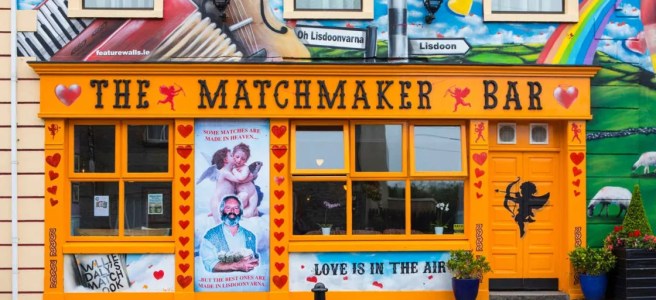
The Matchmaker Bar in Lisdoonvarna is an establishment that is quite unique. You can’t miss this pub with the cupid on the door. Willie Daly, a traditional Irish matchmaker who is in his third generation, is currently employed there. At The Matchmaker Bar, anyone looking for relationships may talk to him. Channel your inner Celtic archer with Celtic Arrow Jewelry. Our beautiful Celtic Arrow Jewelry Collection aims straight for the heart. It’s a fun and stylish token of Celtic love. As though being struck by Cupid’s arrow she’ll be smitten by the Celtic Arrow Jewelry Collection. 

Is There Still a Matchmaking Festival in Ireland?

Even if dancing, chatting, and drinking are all a bit of fun today, the primary allure of the event is still the chance to find a romantic partner. Willie Daly, a traditional matchmaker, and his mysterious “lucky book” of client profiles come into action at the Matchmaker Bar. Daly is a matchmaker who has been helping individuals find love for the past half a century. She is a third-generation matchmaker. It has been whispered that if you so much as touch this love book, you will fall in love within the next half a year.

In spite of the fact that the Lisdoonvarna Festival was first conceived as a method for bringing singles together in romantic relationships, the dynamic energy that is generated over the month-long celebrations is the primary reason why the event is still held.

The Irish High Cross of Durrow

Around the year 550, Saint Columcille established one of the first and most significant monasteries in the world at the location now known as Durrow. The illuminated Gospel manuscript known as the Book of Durrow comes from an earlier time period than the Book of Kells. Both may be observed in Trinity College Dublin, which is located in Dublin. The important Pattern of Durrow continues to take place every year in June, despite the fact that the Early Christian monastery is no longer in existence. The first documented evidence of Pattern dates back to 1463, and it has flourished from the 1880s up until the present day. It is now one of the few remaining patterns in Ireland. The High Cross of Durrow and a number of Cross Slabs are currently shown within a modest exhibition that is located on-site within a church that has been preserved. This is a magnificent cross that stands 3.60 meters tall. A holy well known as St. Colmcille’s well can be found around 500 meters to the north of the high cross. A plaque with the year AD550 engraved on it can be found hanging over the entrance to the well, which is reached by steps going down to it.

Durrow High Cross

The Durrow Celtic cross may be seen in Durrow Abbey, which is located in County Offaly. It is highly recommended, if you are ever in the neighborhood, to make it a point to pay a visit to the astounding intricate artwork that was created on the crosses centuries before its time. You will be astounded just by the sight of the crosses. It comes as a surprise to learn that the carvings on the cross were done a thousand years ago since they are so easy to make out. The cross illustrates a number of biblical events. The cross and St. Columcille’s well are the only remnants of the early Christian colony, standing about four meters tall. The embellishments on the Durrow high cross are intricately cut into the stone and significantly enhance the cross’s splendor.

Durrow High Cross Necklace

The Durrow High Cross Necklace is a hand-made sterling silver Celtic Cross. This is an exquisitely produced piece of jewelry that symbolizes the robust Christian tradition of Ireland via a design that is both contemporary and modern.  The Durrow High Cross Necklace is a replica of the High Cross at Durrow Abby. This stunning necklace has a Celtic cross that has been meticulously recreated down to every breathtaking detail of the original Cross of Durrow. This necklace is a part of our line of necklaces that feature replicas of crosses. Gain a deeper understanding of the significance behind the symbolism of the Celtic Cross.

Panels of the High Cross of Durrow

The warrior with the plaited beard and two hounds may be seen on the south side of the High Cross.

Adam and Eve as well as Cain and Abel are depicted on the south side of the shaft.

The Heads with the intertwining serpent are located on both the northern and southern edges of the ring.

The Flight into Egypt may be found directly under the eight spiral bosses on the north side of the High Cross.

The east face features the last judgment and the interlace panel.

St. Colmcille’s Holy Well

A holy well known as St. Colmcille’s well can be found around 500 meters to the north of the high cross. A plaque with the year AD550 engraved on it can be found hanging over the entrance to the well, which is reached by steps going down to it.

About the Durrow Abbey

Saint Columba, who also created 26 other monasteries by the age of just 25, is credited with founding the monastery that is now known as the Abbey of Durrow in the year 553 or 556 AD. Before departing for Scotland in the year 563 A.D., Saint Columba served as abbot of the monastery for a brief period of time until he appointed his second cousin as his successor. It was very common for monks to make a pilgrimage to Durrow not only for religious reasons but also for the opportunity to learn to read and write both in Latin and Irish as well as have access to beautiful illuminated manuscripts such as the book of Durrow, which was written around the ninth century AD. Durrow was known for being a beacon for education. The name Durrow comes from the Irish word daru, which translates to “plain of oaks.” Therefore, this name means “grove of oak trees,” and it is now the location of Ireland’s sole pre-medieval oak trees, which helps put the age of the monastery into perspective.

The Story of Our Lady of Knock and Knock Shrine

The beginning of the story of Our Lady of Knock may be traced back to the 21st of August, 1879 in the little village of Knock, which is situated in the western region of Ireland. Since early Christianity gained hold in Ireland, the Irish people have always had a particularly deep devotion to the Blessed Virgin Mary. This devotion has been passed down from generation to generation. During the 19th century, people’s devotion to Mary became even more widespread. Ireland was going through a difficult time marked by hunger as well as religious persecution. On that gloomy day in August, a vision of Mary Immaculate provided spiritual solace to members of the Catholic Church who were being persecuted in Ireland. Knock Parish Church was the location of the apparition in which Our Lady, Saint Joseph, and Saint John the Evangelist appeared. There were a total of fifteen persons, both young and elderly, who saw this apparition. Because of this miraculous incident, the Knock Marian Shrine, which is located in County Mayo in Ireland, has gained a reputation on a global scale as a Marian Shrine.

Our Lady of Knock, Queen of Ireland

This stunning medal honoring Our Lady of Knock Medal is a superb way to pay respect to the Irish people’s unwavering faith and tenacious spirit. She is depicted wearing a crown on the Our Lady of Knock necklace, which also has Saint Joseph and Saint John the Evangelist standing on each side of her. The material used to craft this medal of Our Lady of Knock is sterling silver.

About Knock Shrine:

The word Knock comes from the Irish word “cnoc” meaning hill, historical evidence shows the village had been named as far back as 1625. Since the Apparition at Knock on the 21st of August 1879, pilgrims and visitors have been welcomed to Knock ShrineKnock Shrine is a unique and sacred place, set in over 100 acres of landscaped gardens. We offer a peaceful, contemplative space to pray, reflect and reconnect.

Knock Cross

The Knock Cross Crucifix Necklace is an exquisite representation of faith as well as Irish culture and history. The Knock Cross is an excellent choice for anybody looking to purchase a present with an Irish theme.

A prayer to “Our Lady of Knock, Queen of Ireland”

Our Lady of Knock, Queen of Ireland, you gave hope to your people in a time of distress and comforted them in sorrow. You have inspired countless pilgrims to pray with confidence to your Son, remembering His promise: “Ask and your shall receive, seek and you shall find.” Help me to remember that we are all pilgrims on the road to heaven. Fill me with love and concern for my brothers and sisters in Christ, especially those who live with me. Comfort me when I am sick or lonely or depressed. Teach me how to take part ever more reverently in the holy Mass. Pray for me now, and at the hour of my death. Amen.  Our Lady of Knock, pray for us.

My Irish Jeweler is The Irish Jewelry Company

Jeweler crafting jewelry on his workbench

I constantly get questioned about the Irish jewelry that I’m wearing and who my Irish jeweler is. People are quite curious. To put it succinctly, The Irish Jeweler Company is the name of my Irish jeweler hands down. My stackable claddagh ring and my Celtic moms knot cuff bracelet are two of my most treasured pieces of jewelry. When it comes to jewelry that is not only of high quality but also within my price range, my go-to brand is without a doubt The Irish Jeweler Company. I wear their items almost exclusively. Since stacking has become the standard, one of my favorite ways to wear necklaces is layered. I combine and match them with a variety of jewelry, including bracelets, earrings, and more. They are the jewelry company that I turn to whenever there is an occasion for presenting a gift and I want to find something that is not only conventional but also meaningful.

The service provided by The Irish Jewelry Company is unmatched in quality, friendliness, and dependability. They feature some of the most breathtaking examples of Celtic jewelry that I have ever seen! I have several of their special designs, which I acquired through online shopping, and I have them all in my possession. I have never experienced any issues with the goods that I have purchased, the communication that I have received has been wonderful, and I have always received exactly what is described on the website.

I am constantly getting compliments on my jewelry purchased from The Irish Jewelry Company. I am one very happy customer of my Irish jeweler. Thank you and I will be shopping online again.

— Brianna P

My Irish Jeweler is The Irish Jewelry Company

Jeweler crafting jewelry on his workbench

I constantly get questioned about the Irish jewelry that I’m wearing and who my Irish jeweler is. People are quite curious. To put it succinctly, The Irish Jeweler Company is the name of my Irish jeweler hands down. My stackable claddagh ring and my Celtic moms knot cuff bracelet are two of my most treasured pieces of jewelry. When it comes to jewelry that is not only of high quality but also within my price range, my go-to brand is without a doubt The Irish Jeweler Company. I wear their items almost exclusively. Since stacking has become the standard, one of my favorite ways to wear necklaces is layered. I combine and match them with a variety of jewelry, including bracelets, earrings, and more. They are the jewelry company that I turn to whenever there is an occasion for presenting a gift and I want to find something that is not only conventional but also meaningful.

The service provided by The Irish Jewelry Company is unmatched in quality, friendliness, and dependability. They feature some of the most breathtaking examples of Celtic jewelry that I have ever seen! I have several of their special designs, which I acquired through online shopping, and I have them all in my possession. I have never experienced any issues with the goods that I have purchased, the communication that I have received has been wonderful, and I have always received exactly what is described on the website.

I am constantly getting compliments on my jewelry purchased from The Irish Jewelry Company. I am one very happy customer of my Irish jeweler. Thank you and I will be shopping online again.

— Brianna P

Frequently Asked Questions About Claddagh Rings

Purchasing in a Claddagh ring is a momentous occasion that should be treasured. Customers often have many questions about what makes this iconic Irish ring so distinctive, regardless of whether you are purchasing it for yourself or as a present for someone else. In order to make the process of purchasing a Claddagh Ring easier for you, we have created a list of questions that are often asked at the time of purchase.

Claddagh Ring FAQsWhat to Know About Choosing the Perfect Claddagh Ring

What Is a Claddagh Ring?

A Claddagh ring is a circular band made of gold or silver that displays two hands holding a heart and placing a crown on top of the heart. It is versatile enough to serve as a gift between friends or as an engagement ring or wedding band.

What is the significance of wearing a Claddagh ring?

There are three distinct components that make up a Claddagh ring, and each has an important symbolic role: A symbol of love, loyalty, and friendship all rolled into one: a crowned heart supported by two hands. The heart stands for affection, the crown for fidelity, and the hands for companionship.

What is the correct way to wear a Claddagh ring?

How to Wear A Claddagh?

  • On the right hand with the heart worn outwards it indicates that the wearer is single and available for courtship.
  • Worn on the ring finger of the left hand with the heart outwards it shows that the heart is occupied, but not yet married.
  • Worn on the left ring finger with the heart facing outward symbolizes an engagement.
  • Worn on the left ring finger with the heart facing inwards the Claddagh Ring declares that the wearer is married.

Is it possible for someone who is not Irish to wear a Claddagh ring?

Friendship is represented by the Claddagh ring’s two outstretched hands. The Claddagh ring is a sign of love and loyalty; its heart represents love, and its crown represents fidelity. Since Roman times, people have been wearing the Claddagh! Because of the lovely sentiment symbolized by the ring, the Claddagh band has become a popular choice for couples to exchange as a romantic token of their affection around the globe.

Who is it that gives the Claddagh Rings?

In Irish culture, a Claddagh Ring is traditionally given to the oldest daughter by the mother. However, in more recent times, the claddagh ring has been associated with the coming of age gift that is given to a child by either their parents or grandparents. Rings with the Claddagh design may also be given as engagement or wedding bands to the couple.

Although a ring is traditionally presented from one love partner to the next, a Claddagh ring is not exclusively designated for a boyfriend, girlfriend, husband, or wife. Instead, it may be presented to any other romantic relationship. This Irish ring is a lovely token of affection that may be presented not just by family members but also by friends.

Is there a spiritual significance to the Claddagh ring?

The Claddagh, in contrast to many of Ireland’s other emblems, has no religious connotations whatsoever. To the best of our knowledge, Joyce was a Christian; nonetheless, this did not play a role in the creation of his work. It is not connected to any of Ireland’s pre-Christian emblems, since its origins may be traced back to the Fede ring.

Can you wear a Claddagh band as a wedding ring?

Depending on how the piece of fine jewelry is worn, the Claddagh band may be worn as a friendship ringa promise ringan engagement ring, or as a Claddagh wedding ring. These are all traditional uses for the ring.

Is the Claddagh traditionally worn by the bride, the husband, or both?

They are worn by both men and women, that is correct. It is fairly common to see men wearing it as their wedding ring. On the day of the wedding, in combination with a Celtic hand-fasting ritual, the couple may give each other the claddagh wedding bands and exchange vows with them.

Can you purchase yourself a Claddagh ring?

There are a few misconceptions floating around about the history of Irish Claddagh rings. It is a common misconception that you shouldn’t purchase the ring for yourself, yet in today’s world, many individuals do just that. It is not inappropriate in any way for you to purchase a ring for your own use.

If you purchase your own Claddagh ring, would it bring you bad luck?

Purchasing your own Claddagh ring is not considered unlucky in any way. This is an amazing and one-of-a-kind present that you may give to yourself as a memento of your Irish heritage.

Is there more than one kind of claddagh ring, and how much do they vary in price?

The Claddagh ring hands, heart, and crown are always fashioned in the same manner, hence its most recognizable feature is its consistency. You may have a claddagh ring in gold or silver, and if you want something really unique, you can get one with platinum and valuable stones. A simple Irish ring made of sterling silver can be purchased for less than fifty dollars, a ring for men made of 18-karat gold can be purchased for less than seven-hundred dollars, and a ring made to order with precious gems like emeralds, diamonds, rubies, and sapphires set in platinum can be purchased for thirty-thousand dollars. These prices are averages.

Where can you get Claddagh rings?

If you are going to be in Western Ireland, you might consider purchasing a Claddagh ring from Ireland. These rings are crafted with the symbol of the Claddagh. However, there are a number of fantastic internet jewelers situated in the United States, such as The Irish Jewelry Company, that import straight from Ireland or can custom create your ring for you.

Do you have more questions about the Claddagh Ring Tradition?

Please do not be reluctant to contact us if you have any more inquiries about this famous Irish ring. We are quite knowledgeable about the history of this one-of-a-kind ring, and we would be pleased to discuss it with you!

Grace O’Malley the 16th Century Pirate Queen of Ireland

Let’s talk about Grace O’Malley, who was known as the Pirate Queen of Ireland during the 16th century, in celebration of International Talk Like a Pirate Day.

Gráinne O’Malley, also known as Grace O’Malley, was the daughter of Eóghan Dubhdara Máille and the ruler of the Máille dynasty in the western region of Ireland. She was also known as Gráinne O’Malley. She is a well-known historical character from the sixteenth century in Ireland who is referred to as Gráinne Mhaol in Irish mythology. Her time period is the sixteenth century.

In or around the year 1530, Grace O’Malley was born in Belcare Castle near Westport Co Mayo, Ireland. She was Owen O’Malley’s daughter. She was beautiful. O’Malley was a prosperous maritime merchant and aristocrat in O’Malley’s day. After O’Malley passed away, Grace took up the responsibility of running his sizable shipping and trade company. Grace O’Malley was in charge of more than a dozen ships and many thousand soldiers. The immense empire of ships commanded by Grace extended all the way to Africa from Connaught, which is located on the coast of Ireland. Grace almost caused the English government to become bankrupt as a result of the boldness of her piracy, and Queen Elizabeth I was embarrassed by Grace’s open disobedience of authority.

How did Grace O’Malley become such a household name?

One of the most infamous pirates in history, Grace O’Malley was born in 1530 and died in 1603. She started her career in seafaring and piracy when she was just eleven years old, and she was known for being a fearless commander at sea and a clever politician on land.

Grace O’Malley’s Carrickahowley Castle

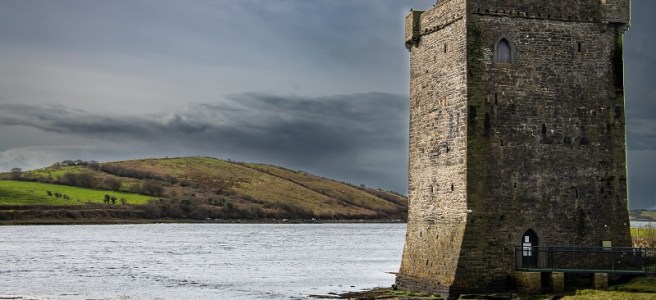
This is without a doubt one of the most impressive castles in Ireland! You ask WHY? Simply because it is an authentic and completely Irish tower castle! Tower house was built about the middle of the 16th century on an inlet off of Clew Bay near Rockfleet Castle (Carrick-a-Howley/Carraig-an-Cabhlaigh), which was one of Grace O’Malley’s strongholds. There is a tower house known as Rockfleet Castle or Carrickahowley Castle located in County Mayo, Ireland, close to Newport. It was constructed about the middle of the fifteenth century and is most well known for being connected to Grace O’Malley, who was known as the “pirate queen” and was the leader of the Clan O’Malley. It has been hypothesized that her body was discovered in the castle.

Where exactly is the castle of Grace O’Malley?

During her rule, she was able to gain a number of additional castles via conquest and marriage. These castles were Doona on Blacksod, Kildavnet on Achill Island, the O’Malley Castle on Clare Island, and Rockfleet in Clew Bay.

The Pirate Queen’s Life 

Her life had been fashioned and shaped by the sea and the wild beaches of western Mayo, and her existence expressed a passionate commitment to independence as queen of the sea, queen of her clan, and queen of Mayo. Her life had been created and shaped by the water and the wild shores of western Mayo. Grace O’Malley, in the words of the concluding lines of the poem written by Sir Samuel Ferguson: ‘Such was the life the lady chose, Such choosing, we commend her.’

Why we celebrate International Talk Like a Pirate Day?

The 19th of September is designated as International Talk Like a Pirate Day, often known as #ITLAPD. It is a satirical holiday that was established in 1995 by John Baur (Ol’ Chumbucket) and Mark Summers (Capn Slappy) of Albany, Oregon, United States. They declared that September 19th of each year should be observed as the day on which people all around the globe should speak in a pirate accent. Arghhhhh!

What do you say on Talk Like a Pirate Day?

You should brush up on your nautical vocabulary and spend the day talking like a pirate. All hands on deck and avert your gaze, mateys! To the harbor! To starboard!

Next

 The Historical Importance of the Bagpipe in Celtic Culture

Related Posts

  1. The Dullahan, the Irish Headless Horseman
  2. The Origins of Halloween Costumes and Dressing Up for Halloween
  3. The Pooka In Irish Folklore
  4. Irish Halloween Folklore
  5. Celtic Autumn Equinox