Bramback for Halloween: A Spooky Delight with Ancient Origins

Halloween, celebrated on the 31st of October, is synonymous with costumes, trick-or-treating, and of course, scrumptious treats. Among the plethora of Halloween goodies, there’s one that stands out not just for its taste but also for its rich history – the Barmbrack, or as it’s traditionally known in Irish, “bairín breac“. Let’s delve deep into the origins of this delightful dish, understand the customs surrounding it, and learn how to make it.

Origins of Barmbrack

The origins of Barmbrack can be traced back to the ancient Celtic festival of Samhain. Celebrated at the end of the harvest season, Samhain marked the beginning of winter, a time associated with death. The Celts believed that on the night of October 31st, the boundary between the worlds of the living and the dead became blurred, allowing spirits to roam the Earth.

To appease these spirits and ensure a good harvest for the following year, the Celts would light bonfires and offer food. Barmbrack, a dense fruitcake, became one of the traditional offerings. Made with treacle, dried fruits, and spices, it was believed that eating Barmbrack would ward off evil spirits and bring good luck.

Customs Surrounding Barmbrack

Over the years, various customs have been associated with Barmbrack. The Irish term for this, Bairín Breac, means ‘speckled bread’ indicating that the fruit was scarce in the loaf. The Druidic tradition is one of the most popular traditions. It is about the inclusion of small objects in the cake, each symbolizing a different fortune. For instance:

  • A ring: Symbolizing marriage or romance in the coming year.
  • A coin: Indicating wealth or good fortune.
  • A thimble: Suggesting a life of thrift and diligence.

It’s believed that the person who finds these objects in their slice of Barmbrack will experience the corresponding fortune in the upcoming year.

Barmbrack Recipe

Ingredients:

  • 225g self-raising flour
  • 110g butter
  • 110g brown sugar
  • 1 egg
  • 225g mixed dried fruit (raisins, currants, sultanas)
  • 1 tsp mixed spice
  • 200ml milk
  • 2 tbsp treacle or molasses

Instructions:

  1. Preheat your oven to 180°C (350°F). Grease and line a round cake tin.
  2. In a large mixing bowl, rub the butter into the flour until the mixture resembles breadcrumbs.
  3. Add the brown sugar, mixed spice, and dried fruit to the bowl and mix well.
  4. In a separate bowl, beat the egg and then add it to the dry mixture.
  5. Warm the milk slightly and dissolve the treacle or molasses in it. Add this to the main mixture and stir until you have a smooth batter.
  6. Pour the batter into the prepared cake tin.
  7. Bake for 1-1.5 hours or until a skewer inserted into the center comes out clean.
  8. Allow the cake to cool in the tin for a few minutes, then transfer to a wire rack to cool completely.

Remember, if you’re including the traditional objects in your Barmbrack, ensure they’re clean and wrapped in parchment paper. Add them to the batter just before baking.

In Conclusion

Barmbrack is not just a cake; it’s a slice of history, rich with traditions and customs. This Halloween, as you savor its flavors, remember the ancient Celts and the significance of this delightful treat. Happy baking and Happy Halloween!
Mysteries of the Celts: Unveiling the Secrets of Celtic Witchcraft

The ancient Celts, a group of tribal societies that once spread across Europe, have left behind a rich tapestry of myths, legends, and spiritual practices. Among these traditions, Celtic witchcraft stands out as a unique and enchanting system of magic and spirituality. Rooted in the natural world and the cycles of the seasons, Celtic witchcraft is a practice that draws its power from the land, the ancestors, and the ancient deities of the Celtic pantheon.

Origins of Celtic Witchcraft

Celtic witchcraft, often referred to as “Celtic Wicca” or “Druidic witchcraft,” is deeply intertwined with the history and mythology of the Celtic people. The Celts revered nature and saw divinity in everything around them, from the mightiest oak tree to the smallest brook. This reverence for the natural world is a cornerstone of Celtic witchcraft.

The Druids, the priestly class of the Celts, played a significant role in shaping the spiritual practices of the time. They were the keepers of knowledge, lore, and the mysteries of the universe. While not all practitioners of Celtic witchcraft were Druids, the teachings and practices of the Druids heavily influenced the evolution of Celtic magical traditions.

The Celtic Pantheon

Central to Celtic witchcraft is the veneration of deities. The Celtic pantheon is vast, with gods and goddesses overseeing various aspects of life, nature, and the cosmos. Some of the most prominent deities include:

  • Brigid: Goddess of fire, poetry, and healing. She is celebrated during Imbolc, a festival marking the beginning of spring.
  • Cernunnos: The horned god of nature, animals, and fertility. He is often depicted with antlers, symbolizing his connection to the wild.
  • The Morrigan: A trio of goddesses representing war, fate, and death. They are powerful figures often invoked for protection and guidance in battle.

Sacred Spaces and Tools

Celtic witches often create sacred spaces, known as altars, to perform their rituals and spells. These altars are adorned with symbols of the elements (earth, air, fire, water), representations of the deities, and various magical tools. Some of the essential tools in Celtic witchcraft include:

  • Cauldron: Symbolizing the womb of the goddess, it’s used for brewing potions and scrying.
  • Wand: A tool for directing energy, often made from yew, oak, or ash.
  • Pentacle: A protective symbol representing the five elements.

Rituals and Festivals

The Celtic calendar is marked by eight major festivals, known as Sabbats, which celebrate the changing seasons and significant events in the agricultural cycle. These festivals include:

  • Samhain: Celebrated on October 31st, it marks the Celtic New Year and is a time to honor the ancestors and the spirits of the deceased.
  • Beltane: Held on May 1st, it celebrates fertility, love, and the fire of the coming summer.

The rituals performed during these festivals often involve offerings to the deities, lighting bonfires, and various forms of divination.

The Role of Nature

Nature plays a pivotal role in Celtic witchcraft. The Celts believed that everything in nature had a spirit, from the tallest mountain to the tiniest pebble. This animistic worldview is reflected in their magical practices. Spells and rituals often involve the use of herbs, stones, and natural elements. The moon, with its ever-changing phases, also holds significant importance, with many spells and rituals timed according to the lunar cycle.

Conclusion

Celtic witchcraft is a rich and diverse tradition that offers a deep connection to the past, the land, and the cosmos. Its practices, rooted in ancient beliefs and customs, provide a pathway to understanding the mysteries of the universe and our place within it. Whether you’re drawn to the tales of the ancient gods or the magic of the natural world, the Celtic witch offers a unique and enchanting journey into the realm of the mystical.

Happy St. Patrick’s Day: Celebrating Ireland’s Patron Saint in Gaelic and Beyond

St. Patrick’s Day, a cultural and religious celebration held on the 17th of March, is a day that honors St. Patrick, the patron saint of Ireland. But how do you convey your festive greetings in the native tongue of the Emerald Isle? And what are the traditions surrounding this vibrant holiday? Let’s dive in!

Saying “Happy St. Patrick’s Day” in Irish

If you’ve ever wondered, “How do you say ‘Happy St. Patrick’s Day’ in Irish?”, you’re not alone. The phrase in Irish Gaelic is “Lá Fhéile Pádraig Sona Duit!” (pronounced: Law Ale-yeh Pawd-rig Sunna Ditch). This translates directly to “Happy St. Patrick’s Day to you!”

For those who are particularly keen on getting the pronunciation just right, the phrase “Lá Fhéile Pádraig Sona Duit” can be broken down as follows:

  • Lá (Law) – Day
  • Fhéile (Ale-yeh) – Festival
  • Pádraig (Pawd-rig) – Patrick
  • Sona (Sunna) – Happy
  • Duit (Ditch) – to you

The Significance of St. Patrick’s Day

St. Patrick’s Day is more than just wearing green and hunting for four-leaf clovers. It’s a day that commemorates St. Patrick, who is credited with bringing Christianity to Ireland. The day is celebrated with parades, wearing of green attire, and public festivals.

A St. Patrick’s Day Blessing

A popular Irish blessing often shared on this day goes: “May the road rise up to meet you, May the wind be always at your back, May the sun shine warm upon your face, And the rains fall soft upon your fields, And until we meet again, May God hold you in the palm of His hand.”

Celebrating St. Patrick’s Day in 2021 and Beyond

While 2021 saw many St. Patrick’s Day celebrations go virtual due to global events, the spirit of the holiday remained undiminished. Whether celebrated in person or online, the essence of St. Patrick’s Day — unity, pride, and a touch of Irish luck — remains constant.

Conclusion

Whether you’re saying “Happy St. Patrick’s Day” in Gaelic, sharing blessings, or simply donning your favorite green attire, the day is a celebration of Irish culture, heritage, and the indomitable spirit of the Irish people. So, the next time someone asks, “Do you say ‘Happy St. Patrick’s Day‘?”, you can confidently respond in Irish Gaelic and share the rich traditions that accompany this festive day. Sláinte!

Behind the Banshee’s Cry: Unraveling Ireland’s Most Haunting Legend

The haunting wail of the banshee is a sound that has echoed through the annals of Irish folklore for centuries. This ethereal figure, often depicted as a woman in white, is deeply rooted in the cultural and mythological tapestry of Ireland. But who is the banshee, and what is the story behind her mournful cry? Let’s delve into the origins and superstitions surrounding this iconic Irish specter.

Origins of the Banshee

The term “banshee” is derived from the Old Irish words “ben” (woman) and “sídhe” (fairy or spirit), which together mean “woman of the fairy mound” or “fairy woman.” The banshee is believed to be a supernatural being, a messenger from the Otherworld, who appears to forewarn impending death.

The story of the banshee can be traced back to ancient Celtic traditions. In these early tales, the banshee was often seen as a protective spirit or guardian who watched over families and clans. Over time, her role evolved, and she became more associated with the harbinger of death.

Physical Appearance of the Banshee

The banshee’s appearance varies across different tales and regions. She is often depicted in three primary forms:

  1. The Young Woman: A beautiful maiden with long, flowing hair, often seen combing it with a silver brush. This form is believed to represent the spirit of a young woman who died tragically or before her time.
  2. The Matron: A mature woman, representing motherhood and maturity. This form of the banshee is seen as a symbol of the circle of life and the inevitability of death.
  3. The Old Hag: An elderly, wizened woman, sometimes with rotten teeth and claw-like hands. This portrayal is the most feared, as it represents the end of life and the decay that follows.

The Banshee’s Cry

The most distinguishing feature of the banshee is her mournful wail. This cry, often described as a mix between a scream and a lament, is said to be heard in the dead of night, especially when someone is about to die. The sound is so piercing that it can shatter glass and is believed to carry for miles.

There are varying interpretations of the banshee’s cry. Some believe it is an expression of sorrow for the dying, while others see it as a warning for the living to prepare for an impending loss.

Superstitions and Beliefs About the Banshee

Several superstitions surround the banshee:

  • Comb on the Ground: It’s believed that if you find a comb on the ground, you should never pick it up. The banshee is often depicted combing her hair, and picking up her comb might attract her attention.
  • Protective Measures: Some tales suggest that wearing a gold object, something like a gold Claddagh ring, or having a gold item in the house can ward off the banshee and her ominous cry.
  • Family Connection: The banshee is often linked to specific Irish families, known as the “Five Great Gaelic Families.” If a member of these families is about to die, the banshee’s cry will be heard as a forewarning.

Five Great Gaelic Families Who Hear the Banshee’s Cry

The legend of the banshee being particularly connected to certain families is a fascinating aspect of Irish folklore. The “Five Great Gaelic Families” traditionally believed to be associated with the banshee are:

  1. The O’Neills: One of the most powerful and influential families in Irish history, the O’Neills trace their lineage back to Niall of the Nine Hostages, a legendary High King of Ireland. Their ancestral lands are primarily in the regions of Ulster.
  2. The O’Briens: Originating from the province of Munster, the O’Briens are descendants of Brian Boru, one of the most celebrated High Kings of Ireland, known for his efforts to unite the country and his victory at the Battle of Clontarf in 1014.
  3. The O’Connors: With roots in the province of Connacht, the O’Connors have a storied history, with several members having claimed the title of High King of Ireland over the centuries.
  4. The O’Gradys: Another prominent family from Munster, the O’Gradys are considered to be of noble lineage and have a long-standing association with the region.
  5. The Kavanaghs: Originating from the province of Leinster, the Kavanaghs have a rich history intertwined with the early medieval period of Ireland. They are descendants of Donal Kavanagh, son of Dermot MacMurrough, the King of Leinster.

It’s believed that the banshee’s connection to these families stems from their ancient and noble lineages. The banshee, as a guardian or watcher of these families, would lament the impending death of a family member with her mournful cry, serving as a premonition for the family. This association underscores the deep roots of the banshee myth in the cultural and historical fabric of Ireland.

Conclusion

The Banshee is more than just a ghostly figure in Irish folklore. She embodies the Irish people’s deep connection to their ancestors, the land, and the mysteries of life and death. Whether seen as a protector, a harbinger, or a mourner, the banshee remains a poignant symbol of Ireland’s rich cultural heritage.

Samhain’s Sight: Ancient Celtic Ways of Foreseeing the Future

Celtic Halloween, commonly known as Samhain (pronounced “sow-in”), is a festival that marks the end of the harvest season and the beginning of winter. It is celebrated from sunset on October 31st to sunset on November 1st. Samhain is considered one of the four major Celtic festivals, along with Imbolc, Beltane, and Lughnasadh. It was believed that during Samhain, the veil between the living and the spirit world was at its thinnest, allowing for easier communication with the deceased.

Divination played a significant role in the Samhain celebrations, as it was a time when people sought guidance for the coming year and tried to predict future events. Here are some of the traditional Celtic divination practices associated with Samhain:

  1. Apple Bobbing: This is perhaps one of the most well-known Samhain divination games. Apples would be floated in a tub of water, and participants would try to catch one using only their teeth. It was believed that the first person to bite into an apple would be the next to marry.
  2. Nut Divination: People would place nuts in a fire, representing themselves and their loved ones or potential suitors. The behavior of the nuts in the fire (whether they popped, burned quietly, or jumped away from each other) was interpreted to predict the outcome of relationships.
  3. Mirror Divination: Young women would sometimes look into a mirror in a darkened room, hoping to catch a glimpse of their future husbands. However, there was also a belief that if they saw a skull, it meant they would die before they married.
  4. Dream Divination: It was believed that dreams on Samhain night were prophetic. To encourage dreams about future spouses, some young women would place a sprig of rosemary and a silver coin under their pillows.
  5. Egg Whites in Water: A method called “alectromancy” involves dropping egg whites into a glass of water. The shapes that formed were interpreted to predict the future.
  6. Tossing Shoes: Some would toss a shoe over their shoulder and predict the future based on the shoe’s landing position.
  7. Apple Peels: Another apple-related divination involved peeling an apple in one continuous strip and tossing the peel over one’s shoulder. The shape the peel took upon landing was believed to form the initial of a future spouse’s name.
  8. Candles and Shadows: In some traditions, individuals would light a candle and stand in front of a mirror in a dark room. They would then look at their shadow to try and interpret signs or omens.
  9. Meal Stones: Stones would be hidden in the food, especially in bannocks (a type of bread). The person who found the stone in their portion was believed to have special experiences or events in the coming year.
  10. Divination with the Dead: Given the belief that the spirits of the deceased were more accessible during Samhain, some would attempt to communicate directly with the dead to gain insights or messages about the future.

It’s essential to approach these traditions with respect and understanding, recognizing their cultural and historical significance. While many of these practices are seen as fun and playful today, they were taken seriously in their time and are deeply rooted in Celtic beliefs and customs.

Black Cats and Celtic Lore: The Enchanting Link to Halloween

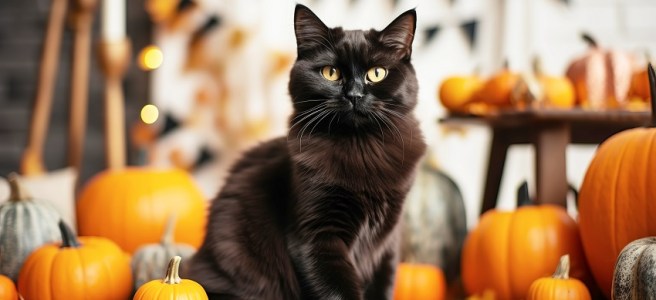
The sleek, shadowy figure of a black cat slinking through the night is an image synonymous with Halloween. These mysterious felines, often associated with witches and bad luck, have a deeper, more enchanting origin rooted in Celtic folklore. Beyond modern superstitions, the black cat’s connection to the fairy realm offers a captivating tale that intertwines with the spirit of Halloween.

Celtic Folklore and the Fairy Realm

The Celts, with their rich tapestry of myths and legends, believed in the existence of the “Otherworld” – a realm parallel to our own, inhabited by a myriad of mystical beings. Among these beings were the fairies, or the “Aos Sí.” These entities were not the diminutive, winged creatures of modern depictions but powerful and sometimes capricious spirits connected to nature and the land.

Fairies were believed to have the ability to shape-shift, taking on the forms of various animals to move unnoticed in the human realm. One of their favored forms was that of the black cat. This transformation served multiple purposes: to observe human activities without detection, to carry out tasks in the mortal realm, or simply to cause mischief.

The Enigma of the Black Cat

In Celtic regions, encountering a black cat was considered a sign – but whether it was fortuitous or ominous depended on the circumstances. A black cat crossing one’s path could be a fairy in disguise, observing or testing the individual. Treating the cat with kindness could result in blessings or good fortune while causing it harm could lead to misfortune or the wrath of the fairy realm.

During Samhain, the ancient precursor to Halloween, the veil between the human world and the Otherworld was believed to be at its thinnest. This made it the ideal time for fairies to cross over, often in the form of black cats, to partake in the festivities, play tricks, or even to guide lost souls to the afterlife.

The Evolution into Halloween

As time progressed and cultures merged, the significance of the black cat evolved. With the rise of witch trials in Europe, black cats became associated with witches, believed to be their familiars or even the witches themselves in disguise. The old beliefs of fairies shape-shifting into black cats merged with the newer, more sinister tales of witchcraft, further embedding the black cat into the spooky tapestry of Halloween.

Modern Halloween celebrations, with their tales of witches riding broomsticks and black cats as their loyal companions, owe a nod to the ancient Celtic beliefs. The image of the black cat, with its arched back and glowing eyes, serves as a reminder of the enchanting and mystical world of the Celts, where fairies walked amongst mortals, and the boundaries between realms blurred.

Protecting Cats on Halloween: Proactive Steps for Safety

While urban myths abound, there are practical measures you can adopt to ensure your beloved cats experience a secure and joyful Halloween. As a mom of a beloved 22lb black cat named “Care Bear,” I recommend this guide on Halloween Cat Safety, providing you with actionable insights to prevent any Halloween mishaps or undue stress for your feline friend.

Here are our top three recommendations:

  1. Choose Decorations Wisely: Synthetic spider webs, while atmospheric, are not only detrimental to the environment but can also pose ingestion risks to cats and other pets. Traditional jack-o-lanterns with actual candles can be a fire hazard if toppled. Moreover, natural decorations like cornstalks or pumpkins might upset a cat’s stomach if consumed. Consider placing your decorations thoughtfully or exploring safer alternatives.
  2. Designate a Calm Space for Your Cats: The sudden appearance of trick-or-treaters or the noise from a lively gathering can startle cats. Designate a serene spot in your home for them, equipped with essentials like a litter box, food, water, and their favorite toys.
  3. Prioritize Microchipping: In the event your cat or kitten makes a swift exit while you’re distributing treats, a microchip can be instrumental in ensuring a safe reunion.

Conclusion

This Halloween, as you encounter decorations, costumes, and tales featuring black cats, remember the deeper, magical lore from which they spring. These enigmatic felines once believed to be fairies in disguise, carry with them the mysteries of the Celtic Otherworld. They serve as a bridge between the ancient past and the present, reminding us of a time when magic was a part of everyday life and the line between the mortal realm and the fairy world was but a whisker’s breadth away.

Samhain: The Ancient Origins, Traditions, and Evolution into Halloween

The flickering glow of jack-o’-lanterns, the rustling of costumes, and the eerie tales that surround Halloween are all too familiar to many. But beneath the modern festivities lies an ancient festival that predates Halloween by centuries: Samhain. This age-old Celtic celebration, rich in tradition and mysticism, is the true predecessor of the Halloween we know today.

Origins of Samhain

Samhain, pronounced “sow-in,” is an ancient Celtic festival celebrated from October 31st to November 1st. Rooted in the agrarian calendar, it marked the end of the harvest season and the onset of winter. For the Celts, who lived in what is now Ireland, the UK, and northern France, this time of year signified both an end and a beginning. As the days grew shorter and the nights longer, the Celts believed that the boundary between the realms of the living and the dead became blurred.

Traditions and Beliefs

At its core, Samhain was a fire festival. Grand bonfires were lit in communal spaces, serving multiple purposes. They were a source of warmth and light in the encroaching darkness, a tool to ward off malevolent spirits, and a means to honor and connect with ancestors. Families would extinguish the hearths in their homes and relight them with a flame from the communal bonfire, symbolizing unity and protection.

Costumes and disguises were also an integral part of Samhain. The Celts believed that wandering spirits could be appeased or warded off by donning costumes, often made of animal skins. By disguising themselves, they could avoid harm from the spirits and, in some cases, even communicate with them.

Divination played a significant role during Samhain. With the veil between worlds at its thinnest, it was believed to be the most auspicious time for predicting the future. Various forms of divination, from reading apple peels to interpreting the patterns of nuts burning in a fire, were practiced.

Feasting was another essential aspect of Samhain. Communities would come together to share the bounty of the harvest. This was also a time to slaughter livestock for winter provisions. Some of these meats would be offered as sacrifices to the gods, ensuring the community’s protection and prosperity in the coming year.

The Evolution into Halloween

As the Roman Empire expanded its territories, it began to assimilate and influence the cultures it conquered. Two Roman festivals, Feralia (a day to honor the dead) and a day to honor Pomona (the goddess of fruit and trees), were incorporated into the Celtic celebrations of Samhain. The apple, a symbol associated with Pomona, might explain the tradition of apple bobbing that we see today.

The most significant transformation of Samhain came with the spread of Christianity. In the 8th century, Pope Gregory III designated November 1st as All Saints’ Day, a time to honor all saints and martyrs. The evening before, once the traditional night of Samhain, began to be called All Hallows’ Eve, and eventually, Halloween.

Early Christian missionaries endeavored to reframe Samhain’s pagan rituals within a Christian context. Bonfires, for instance, were still lit, but now for Christian reasons. Costuming transitioned from disguising oneself from spirits to reenacting the lives of saints. Yet, the core essence of connecting with the otherworld remained.

Trick-or-treating, a staple of modern Halloween, has its roots in the medieval practice of “souling.” Poor individuals would visit homes, offering prayers for the household’s deceased in exchange for “soul cakes.”

Conclusion

Today’s Halloween, with its candy, costumes, and spooky tales, is a far cry from the ancient festival of Samhain. Yet, the essence of that age-old celebration — the reverence for the dead, the embrace of mysticism, and the communal coming together — still lingers. As we carve pumpkins and don costumes, it’s worth remembering the deep history and rich traditions that have shaped this beloved holiday. In the echoes of the past, we find a connection to our ancestors and a reminder of the ever-present cycle of life, death, and rebirth.

The Symbolism of Celtic Engagement Rings

The Celts, an ancient group of people who once populated much of Europe, have left behind a rich tapestry of symbols, myths, and traditions. Among these symbols, the designs found in Celtic engagement rings stand out for their deep meaning and timeless beauty. These rings, often characterized by intricate knots and patterns, are not just pieces of jewelry; they are a testament to a culture’s understanding of love, commitment, and eternity.

Celtic Engagement Rings: A Journey of Love and Tradition

When one thinks of an engagement ring, the image that often comes to mind is a sparkling diamond set on a band. However, Celtic engagement rings offer something different. They are a blend of history, art, and symbolism, each telling a unique story of love and unity.

The Irish Jewelry Company, a renowned name in the world of Celtic jewelry, offers a curated collection of Celtic engagement rings that embody the rich history and romantic traditions of Celtic heritage. Each ring is a masterpiece, showcasing intricate designs and premium materials that narrate a tale of love, unity, and enduring bonds.

Key Celtic Engagement Ring Styles and Their Symbolism

Celtic Knot Engagement Rings: One of the most recognizable symbols in Celtic design is the Celtic knot. These knots, which have no beginning or end, symbolize eternity, continuity, and the interconnectedness of life and love.

Trinity Knot Engagement Rings: Also known as the Triquetra, the Trinity Knot comprises three interlocked loops. It represents the concept of triplicity in unity, often interpreted as the Father, the Son, and the Holy Spirit in Christian symbolism. In the context of love, it can symbolize the past, present, and future of a relationship.

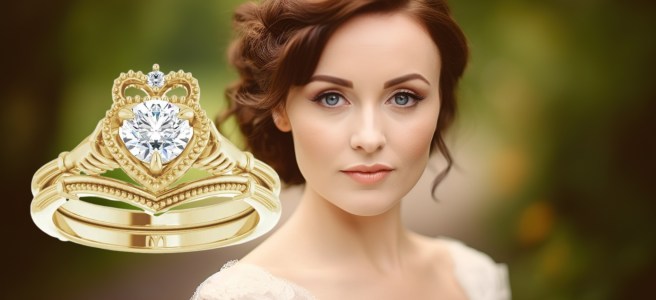
Claddagh Engagement Rings: Perhaps the most famous Irish ring, the Claddagh features two hands holding a heart topped with a crown. The hands denote friendship, the heart symbolizes love, and the crown stands for loyalty.

Emerald and Diamond Rings: Emeralds, with their deep green hue, are reminiscent of the lush landscapes of Ireland. When paired with diamonds in a ring, they symbolize a love that’s vibrant, pure, and enduring.

Lab Grown Diamond Rings: A modern twist to traditional designs, these rings offer ethically sourced diamonds set in age-old Celtic patterns, merging the old with the new.

Halo Style Celtic Rings: These rings feature a central gemstone surrounded by a ‘halo’ of smaller stones, often combined with Celtic knots or other traditional designs, symbolizing a love that’s radiant and infinite.

Conclusion

Celtic engagement rings are more than just pieces of jewelry. They are a bridge to a bygone era, a nod to ancient traditions, and a symbol of a love that’s as profound as the symbols engraved on them. Whether you prefer a classic engagement ring or one steeped in symbolism, the rich tapestry of Celtic designs offers the perfect choice for every couple.

If you’re looking to begin the journey of a lifetime with a ring that resonates with your love story, exploring the world of Celtic engagement rings is a journey worth taking.

The Symbolism of Celtic Engagement Rings

The Celts, an ancient group of people who once populated much of Europe, have left behind a rich tapestry of symbols, myths, and traditions. Among these symbols, the designs found in Celtic engagement rings stand out for their deep meaning and timeless beauty. These rings, often characterized by intricate knots and patterns, are not just pieces of jewelry; they are a testament to a culture’s understanding of love, commitment, and eternity.

Celtic Engagement Rings: A Journey of Love and Tradition

When one thinks of an engagement ring, the image that often comes to mind is a sparkling diamond set on a band. However, Celtic engagement rings offer something different. They are a blend of history, art, and symbolism, each telling a unique story of love and unity.

The Irish Jewelry Company, a renowned name in the world of Celtic jewelry, offers a curated collection of Celtic engagement rings that embody the rich history and romantic traditions of Celtic heritage. Each ring is a masterpiece, showcasing intricate designs and premium materials that narrate a tale of love, unity, and enduring bonds.

Key Celtic Engagement Ring Styles and Their Symbolism

Celtic Knot Engagement Rings: One of the most recognizable symbols in Celtic design is the Celtic knot. These knots, which have no beginning or end, symbolize eternity, continuity, and the interconnectedness of life and love.

Trinity Knot Engagement Rings: Also known as the Triquetra, the Trinity Knot comprises three interlocked loops. It represents the concept of triplicity in unity, often interpreted as the Father, the Son, and the Holy Spirit in Christian symbolism. In the context of love, it can symbolize the past, present, and future of a relationship.

Claddagh Engagement Rings: Perhaps the most famous Irish ring, the Claddagh features two hands holding a heart topped with a crown. The hands denote friendship, the heart symbolizes love, and the crown stands for loyalty.

Emerald and Diamond Rings: Emeralds, with their deep green hue, are reminiscent of the lush landscapes of Ireland. When paired with diamonds in a ring, they symbolize a love that’s vibrant, pure, and enduring.

Lab Grown Diamond Rings: A modern twist to traditional designs, these rings offer ethically sourced diamonds set in age-old Celtic patterns, merging the old with the new.

Halo Style Celtic Rings: These rings feature a central gemstone surrounded by a ‘halo’ of smaller stones, often combined with Celtic knots or other traditional designs, symbolizing a love that’s radiant and infinite.

Conclusion

Celtic engagement rings are more than just pieces of jewelry. They are a bridge to a bygone era, a nod to ancient traditions, and a symbol of a love that’s as profound as the symbols engraved on them. Whether you prefer a classic engagement ring or one steeped in symbolism, the rich tapestry of Celtic designs offers the perfect choice for every couple.

If you’re looking to begin the journey of a lifetime with a ring that resonates with your love story, exploring the world of Celtic engagement rings is a journey worth taking.

The Term “Irish Twins”: Unpacking History, Meaning, and Origins

The term “Irish Twins” has woven itself into the fabric of colloquial expressions, bearing a history rich with cultural nuances and a spectrum of emotions. While it refers to siblings born less than 12 months apart, it carries with it a deeper story rooted in history. In this article, we unravel the layers behind this term, answering the most frequently asked questions about its origins, meaning, and the sensitivities surrounding its use.

The Genesis of the Term “Irish Twins”

What is the origin of the term “Irish Twins”?

The phrase Irish Twins originated in the late 19th century, a time marked by a significant wave of Irish immigration to the United States. It was coined as a derogatory term to mock Irish Catholic families who had children in quick succession, often due to a lack of access to birth control. The term played into the stereotypes associated with the Irish immigrant population, who were largely poor and had large families.

Understanding the Meaning

What does it mean to be “Irish Twins”?

Being “Irish Twins” refers to siblings who are born less than 12 months apart. While it underscores the close age gap, it also highlights the special bond that such siblings share, growing up almost side by side and experiencing life’s milestones almost simultaneously. Over time, for many families, it has evolved to become a term of endearment, emphasizing the unique connection between the siblings.

Sensitivities Surrounding the Term

Is the term “Irish Twins” considered offensive?

The term Irish Twin carries a dual connotation. While it has become a term of affection in many circles, it is rooted in historical prejudice and mockery targeted at Irish immigrant families. It is essential to approach the term with sensitivity, recognizing its potential to offend due to its association with discriminatory attitudes of the past.

Age Gap and Unique Bond

How close in age are “Irish Twins”?

“Irish Twins” are siblings born less than 12 months apart. This close age gap often fosters a deep bond, with the siblings sharing experiences closely and growing up almost together. The term highlights this unique relationship, emphasizing the near-twin status bestowed upon them due to the short interval between their births.

Delving into the Historical Context

What is the historical context behind the term “Irish Twins”?

The term “Irish Twins” emerged in a historical context marked by societal prejudices and stereotypes directed at Irish immigrants in the 19th century. It was a reflection of the discriminatory attitudes prevalent during that era, which often mocked the fertility of Irish families and their economic status. Understanding this context is crucial to grasp the complex nuances of the term, which carries a history of both affection and prejudice.

Conclusion

The term “Irish Twins” stands as a testimony to the evolving nature of language, carrying with it a rich and complex history. As we navigate its usage in modern times, it is imperative to approach it with a nuanced understanding, recognizing its historical baggage while also appreciating the deep bonds it can signify today.

By answering the most frequently asked questions about the term, we hope to shed light on its multifaceted nature, encouraging a sensitive and informed approach to its usage. Whether used to describe a unique sibling bond or analyzed as a term with a troubling background, it remains a phrase rich with history, offering a window into the societal dynamics of the past and the transformative power of language.