Saint Patrick’s Day History and Tradition

As that old saying goes “Everyone is Irish on St. Patrick’s Day“. Saint Patrick’s Day is one of the most popular Irish holidays celebrated world wide by the Irish and non Irish a like. Saint Patrick’s Day is actually the Feast day of Ireland’s patron saint known as Saint Patrick (Irish: Lá Fhéile Pádraig, also widely known as “the Day of the Festival of Patrick”). St. Patrick’s Day for the Irish is a popular cultural celebration as well as a religious celebration held on 17 March.  The feast day of St. Patrick is the traditional death date of Saint Patrick (c. AD 385–461). Saint Patrick is the foremost patron saint of Ireland.

Who was Saint Patrick? 

Saint Patrick was a Christian missionary and is regarded as the patron saint of Ireland. St. Patrick lived from AD 373–493, and ministered mostly in Northern Ireland from AD 433 until his death. Irish legend credits Patrick with banishing snakes from the island of Ireland although Ireland never actually had snakes. Let’s just chalk that up to some poetic license. It has however been suggested that snakes referred to the serpent symbolism of the pagans also called the Druids. Saint Patrick is also credited with teaching the Irish about the Holy Trinity by showing people the shamrock and a three-leaved clover. Legend also says St. Patrick, while preaching Christianity, drew a cross through a Celtic circle symbolic of the moon Goddess. Hence the Celtic cross was born. Today the circle of the cross is viewed as a of God’s endless love.

New York City’s St. Patrick’s Day Parade

Irish-American immigrants brought Saint Patrick’s Day to the United States. The first civic and public celebration of Saint Patrick’s Day took place in Boston, Massachusetts in 1737. The first celebration of Saint Patrick’s Day in New York City was held at the Crown and Thistle Tavern in 1756. Saint Patrick’s Day is celebrated by Irish and non-Irish alike. Regardless of ethnic background, everyone wears green-colored clothing and items. Traditionally, those who are caught not wearing green are pinched. The NYC St. Patrick’s Day parade has become the largest Saint Patrick’s Day parade in the world, outside Ireland. In 2006 more than 150,000 marchers participated in it, including Irish bands, Irish firefighters, Irish military and Irish police groups, county associations, Irish emigrant societies, Emerald Societies, and social and Irish cultural clubs, and it was watched by close to two million spectators lining the streets.

Why do we wear green on St Patrick’s Day?

Old Irish folklore says that wearing green makes one invisible to mischievous creatures like leprechauns, fairies who pinch those not wearing the green.  As a matter of superstition people began pinching anyone not wear green as a reminder that leprechauns were lurking about.

The origin of the “wearing of the green” dress code for St Patrick’s Day dates can be dated to the 1798 Irish Rebellion, the major uprising against the British in Ireland. It was during this rebellion when the shamrock, a three leaf clover became a symbol of Irish nationalism.

Today many people adorn themselves with lucky shamrock jewelry on St. Patrick’s Day. Saint Patrick’s Day jewelry such as Shamrock jewelry including shamrock earrings, and an Irish necklace like a shamrock necklace makes the perfect Irish accessory for the festive holiday.

Another symbol of Irish pride worn on St. Patrick’s Day is the Irish Harp. Irish harps are worn as Irish harp brooches and Irish harp necklaces. The Irish harp, although not as renowned as the shamrock is the official emblem of Ireland. TheIrish harps status as the official insignia of Ireland dates centuries and the elegant instrument’s history tells much about the history of the Emerald Isle.

Five Most Admired Irish Symbols in Jewelry Loved Worldwide

The Irish Jewelry Company Collection

Irish jewelry is steeped in Irish tradition and Celtic symbolism. It is full of mysticism and deep spiritual meaning, representing love, life cycles and faith.  Irish symbols in Irish jewelry can be traced back directly folklore’s told through the centuries and ancient Celtic manuscript drawings. The popularity of Irish jewelry around the world has really taken off in recent years as many people taken an interest in the deeper meaning of talismans, objects of faith and symbols of life.  Irish jewelry isn’t just for the Irish anymore.

The Celtic Tree of Life

The Celtic Tree of Life meaning varies. Rebirth is one of the most popular meanings for the Tree of Life.  The belief stems from theory that trees experiences renewal throughout the changing of the seasons. Its leaves fall in autumn and regrow in spring is symbolic of rebirth. Another meaning of the Celtic Tree of Life is that it is also a symbol of wisdom and strength. The most sacred of trees was the oak, called ‘daur’ in Celtic. It is where the modern word ‘door’ is derived. So, the oak tree, literally would have been the door to the other world.

Celtic Cross Meaning

The Celtic cross is a cross with equal rays, enclosed in a circle. The rays can slightly protrude outside the circle. Sometimes a Celtic ornament is located along the cross and in a circle. Although this form of the cross is inherent in many ancient peoples, including the Slavs, the cross in a circle is firmly established in the minds of people as Celtic.

The Christian interpretation of the cross is simple: the circle means eternity and union, and the cross itself means the love and sacrifice. It is difficult to say how the ancient Celts themselves interpreted this symbol: there is no information about this. But historians suggest that the cross as understood by the ancient Celts could symbolize fertility, abundance, and protection. It is also called the solar symbol because its facets suggest the unity of earth, air, sun and water.

Nowadays, the  Celtic cross is worn by both Christians and pagans: it is not tied to a particular religion, and different denominations perceive it as a symbol of their spiritual views.

Claddagh Ring

The Claddagh Ring is a legendary jewelry item that epitomizes timeless values. The legacy design cues hands on either side of a heart and a crown on top. The classic Claddagh ring shows the wearer’s family situation. Thus, a heart looking out the fingertips means you are single, whereas this element pointing towards the wrist means that the owner is taken. Claddagh rings symbolize friendship, love and loyalty.

Today, this ring has a huge number of design variations, but the main three elements have remained intact. This jewelry item is presented to girls and women as a symbol of companionship or as a Claddagh engagement ring.

Trinity Knot also Known as the Irish Love Knot  

The Celtic love knot is a modern-day Irish tradition. Also know as the trinity knot, it is a religious symbol with both pagan and Christians heritage. In Celtic mythology, knots especially Celtic love knots symbolize the sacred geometry of the universe and being. It is customary to give a loved one a gift with the trinity knot, or Celtic Love Knot,  like a necklace or ring, to embody feelings of love.

Celtic Sisters Knot

The Celtic Sisters Knot is a symbol of sisterhood and the strong, eternal bond we share with our sisters and friends. … The stylized triquetra or triple spiral, a sister symbol woven within the Celtic Sisters Knot heart symbolizes the three stages of woman.

Where are you and your sisters on the spiral of life? Celebrate the powerful, lifelong bond of friendship between women with a symbol for sisters. One day we will all be in some part of all 3 stages of life. First, the youth of our childhood. Second, the mothering spirit of our years. Third, our wisdom that we pass on to the new generation of women. We may not all be related, but we all share a bond of love, compassion, and perseverance. There are few symbols for sisters like the Celtic Sisters Knot that captive the soul and beauty of sisterhood.

The Celtic Tree of Life Symbolism and Meaning

The Celtic Tree of Life

In Celtic myth, trees played a central role in daily life. The Celts believed the Irish wooded landscape was full of spirits. They also associated the spirit or heart of the great oak with fertility and centered with wisdom. Often Celtic clans gathered socially underneath the mighty oak to discussing clan issues like a meeting of public officials today. Like Native Americans the Celts revered nature and the cycle of life. They valued their relationship to the earth and gathered within nature in honor of it instead of building great temples of stone. The Celts love of nature and its bond to the earth lead to their many beliefs revolving around trees.

What does the Celtic Tree of Life Symbolize?

The commemorated oak tree also called the Celtic Tree of Life has been an ancient symbol of life, fertility and wisdom revered by many cultures like the Greeks, and Romans in addition to the Celts since ancient times. There are many symbols of the oak tree with spiritual meaning.

Tree of Life in Gaelic

The Celtic tree of life in Gaelic is called “Crann Bethadh”. The Tree of Life is a complex element of Irish culture and customs. The Celtic Tree of Life is amongst one of the most admired and recognizable Celtic symbols. The tree of life symbolically important in both history and religion. It symbolizes faith, the strength of coherence and stability.

The Meaning of the Celtic Tree of Life

The Celtic Tree of Life meaning varies. Rebirth is one of the most popular meanings for the Tree of Life.  The belief stems from theory that trees experiences renewal throughout the changing of the seasons. Its leaves fall in autumn and regrow in spring is symbolic of rebirth. Another meaning of the Celtic Tree of Life is that it is also a symbol of wisdom and strength. The most sacred of trees was the oak, called ‘daur’ in Celtic.  It is where the modern word ‘door’ is derived. So, the oak tree, literally would have been the door to the other world.

The Celtic Tree of Life has been an inspiration to various artists for centuries. Remember that great scene in Game of Thrones. The one where Bran, Hodor and Elllie are in the cave root system of the weirwood tree when Bran was becoming the Three-Eyed Raven?  I believe it was kind of symbolic of the tree of life, the all-knowing tree. Remember then while they were escaping the cave root system, Ellie shouted to Hodor to “hold the door to give them a chance to escape. The words flashed back to the past, causing Wylis to fall to the ground seizing while yelling “hold the door!” repeatable, until brain damage set in and the phrased “Hold Door” slurred into one: “Hodor.” Are you seeing the connection?  

Knowledge of the fundamental meaning of the Tree of Life symbol gives an insight to ancient Celtic. Celtic Tree of Life Knot has roots and branches woven into a Celtic knot together without end, illustrating the uninterrupted cycle of life on earth. The Celtic Tree of Life knot is a popular design for tapestries, throws, Celtic jewelry and tree of life tattoos because of its positive energy.

Six Fascinating Mythical Celtic Women of Irish Folklore

Mysterious Celtic woman

Ancient Irish folklore has many stories of beautiful and strong Irish women of the past. Celtic women have often been depicted as holding positions of great importance, highly valued in a very male dominated Celtic tribal society. Irish women have been venerated as a goddess, saint, as a warrior even royalty and at the same time they have been portrayed as someone to fear. I am sure the truth about ancient Irish women in Irish mythology lies somewhere between fantasy and reality.   

Grace O’Malley, the 16th Century Pirate Queen of Ireland…

Grace O’Malley was born in Ireland in around 1530. She was the daughter of Owen O’Malley. O’Malley was a wealthy nobleman and sea trader. When O’Malley died Grace inherited his large shipping and trading business. Grace O’Malley commanded a dozen ships and thousands of men. Grace’s vast empire of ships stretched from Connaught on the Irish coast to Africa. Through the daring of her piracy, Grace nearly bankrupted the English treasury-and her outright defiance brought embarrassment to Queen Elizabeth I.

International Talk Like a Pirate Day or ITLAPD is on September 19. It is a parodic holiday created in 1995 by John Baur (Ol’ Chumbucket) and Mark Summers (Cap’n Slappy), of Albany, Oregon, U.S. Remember Grace O’Malley on September 19th, International Talk Like a Pirate Day and give her an Arghhhh!

Aoife, the Wife of King Lir and the Children of Lir….

The Children of Lir… Long ago there lived a King named Lir who lived with his four children, Fionnuale, Aodh, Fiachra and Conn and his beloved wife who would son die. After grieving for his wife King Lir married Aoife. Aoife was very jealous of King Lir’s love for his four children. She used her magic to turn the children into swans. As swans they were condemned to spend 300 years at Lough Derravaragh, 300 years at the Sea of Moye and 300 years on the waters of Irrus Domann. The only way to break the spell was a blessing from a monk. Finally, after 900 years of suffering they heard church bells and returned to shore. There the spell was finally broke by St. Patrick. Unfortunately, they were so old they died soon after the spell was broken and joined their parents in heaven. The story of the Children of Lir is one about the strength of the parental child bond.

The Legendary Irish Princess Isolde …

The Irish princess, Iseult of Ireland (also Iseult La Belle or Iseult la Blonde, “Iseult the Fair”), is the daughter of King Anguish of Ireland and Queen Iseult the Elder. She is a main character in the Tristan poems of Béroul, Thomas of Britain, and Gottfried von Strassburg and in the opera Tristan und Isolde by Richard Wagner. Iseult is first seen as a young Irish princess who heals Tristan from his wounds.

According to Arthurian legend, Iseult (also “Isolde”) was the adulterous lover of Sir Tristan. Sir Tristan was a handsome Knight of the Round Table. Iseult was an Irish Princess who fell hopelessly in love with Tristan. But Sir Tristan was sent on behalf the King of Cornwall to win Iseult’s hand in marriage for King Mark of Cornwall. This romantic tragedy was used as the basis of “Tristan and Isolde” by Richard Wagner, an acclaimed opera.

The Banshee …

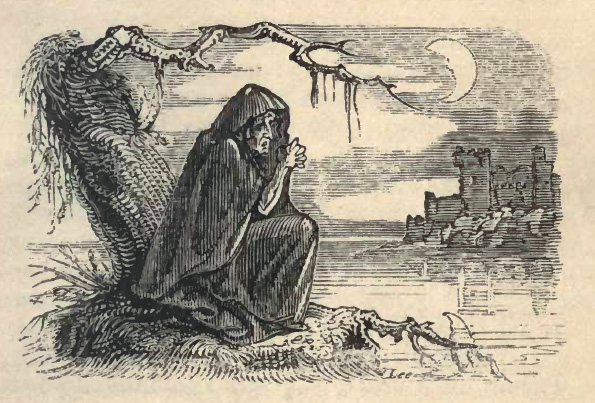
The Banshee, bean-sidhe (woman of the fairy may be an ancestral spirit appointed to forewarn members of certain ancient Irish families of their time of death. According to tradition, the banshee can only cry for five major Irish families: the O’Neills, the O’Briens, the O’Connors, the O’Gradys and the Kavanaghs. Intermarriage has since extended this select list.


Whatever her origins, the banshee chiefly appears in one of three guises: a young woman, a stately matron, or a raddled old hag. These represent the triple aspects of the Celtic goddess of war and death, namely Badhbh, Macha and Mor-Rioghain.) She usually wears either a grey, hooded cloak or the winding sheet or grave robe of the unshriven dead. She may also appear as a washerwoman and is seen apparently washing the blood-stained clothes of those who are about to die. In this guise she is known as the bean-nighe (washing woman).
Although not always seen, her mourning call is heard, usually at night when someone is about to die.

Saint Brigid – The Patron Saint of Ireland …

Saint Brigid was born Brigit, and shares her name with a Celtic goddess from whom many legends and folk customs are associated. St. Brigid, also known as “Mary of the Gael“, is a patroness Saint of Ireland. Born the daughter of a powerful Irish Chieftain St. Bridget or also spelled Brigid became a nun completely devoted to relieving the misery and hardship of the poor.

The Saint Brigid’s Cross

The traditional woven cross is said to have originated during a visit St. Bridget made to a dying Chieftain in which she wove it from rushes on the floor to show the significance of Christian faith. The woven rush cross has become synonymous with St. Bridget known as the Saint Brigid’s Cross.

Saint Brigid is also the Patron Saint of the LAOH. The LAOH stand for THE LADIES ANCIENT ORDER OF HIBERNIANS. The Ancient Order of Hibernians is an Irish order, and it was organized in The United States of America in New York City in the year of 1836. Her feast day, known as St. Brigid’s day is February first.

Celtic Goddess Brigid…

The Celtic Goddess Brigid is an Irish goddess of spring, dating back to pre- Christian Ireland.  She is a venerated deity whose name means exalted one derived from ancient Gaelic word brig.  Her name is also said as Brighid or Brighit. Brigid is the daughter of the Dagda, and therefore one of the Tuatha de Dannan. The Tuatha Dé Danann, the people of the Goddess Danu, also known by the earlier name Tuath Dé “tribe of the gods”, were one of the great ancient tribes of Ireland. She is known as the Goddess of Healers, Poets, Smiths, Childbirth, and is the Inspiration for the Goddess of Fire and Hearth and a patron of warfare or Briga. Brigid said to be gentle, yet she is extraordinarily strong and stern.  

The History and Origins of Celtic Jewelry

Historians believe Celtic clans first settled in Germany and Austria from near 1,200BC. The clans were a society of agriculturalists and soldiers. It is believed around the time of the 4th and 3rd centuries BC, the Celts migrated south across France and to the Iberian Peninsula. It was around 500BC when the Celts first arrived in Britain and Ireland. Over hundreds of years the Celts spread throughout the Ireland’s countryside. In the fifth century by the time Christianity came to Ireland the Celtic language, traditions and culture were the dominant force in Ireland.

Men’s Celtic Jewelry Collection by The Irish Jewelry Company

Celtic Art of The La Tene Period

With the Celtic language and culture flourishing in Ireland their style of artwork would soon take hold in Irish culture as well.  Celtic artists started to demonstrate a more advanced type of artwork. The Celtic form of art during this time is called the La Tene style[JD1] .  Named after the town of La Tène in Switzerland. The Celtic art called La Tène is characterized by curves and spirals. There is little Representative art of the human seen. The style is more defined by abstract geometric design such as the Celtic knot and the common triple spiral design known as the triskelion or triskele.

Celtic Knots are a popular Celtic symbol but there are many types of Celtic Knots. Celtic knots are like circles and loops interwoven with no beginning or end. A symbol of eternity and the cycle of life. Celtic symbols are widely popular in Celtic Tattoos and in Celtic Jewelry. Celtic symbols have a variety of Celtic Knot meanings representing family, strength, protection, love and more.

While the exact origins of Celtic Knots are lost to time historians believe these Celtic symbols date to around 500 BC. Celtic knots have been found carved into ancient Celtic architecture, art and in illuminated manuscripts.  Celtic Jewelry is thought to date back to around 2000 BC to around 550 AD. This was the period in which historian believe Celtic craftsman began using silver and gold to craft beautiful Celtic jewelry adorned with Celtic symbols and knots. The exact meaning of the Celtic knot has unfortunately been lost in through the centuries and are left to interpretation.

Common styles of Celtic jewelry during this time included torcs, likely worn as a status symbol since they considered jewelry to be decorative rather than practical. Another type of Celtic jewelry found with torcs during this period is the Celtic cloak brooch. The famous and impressive Tara Brooch made of silver-gilt and decorated with fine filigree interlaced design. The Tara Brooch is a magnificent Celtic cloak brooch. This style of Celtic brooch is repeated throughout Celtic jewelry.

Celtic knotwork designs are embossed on large Celtic stone crosses all over Ireland that have with stood the test of time and are depicted in metal work and Celtic jewelry on ancient riches like the Ardagh Chalice part of the Ardagh Hoard on display at National Museum of Archaeology in Ireland in Dublin along with the famous Tara brooch.

Celtic Jewelry is so highly sought after and admired throughout the world. Tourists to Ireland often wonder about the local crafts the country is famous for creating. Ireland is famous for a variety of crafts including wool sweaters and its famous world-renowned Celtic Jewelry.

What jewelry is Ireland known for?

Ireland is known for beautiful Celtic Jewelry inspired by the ancient Celtic philosophy . Celtic jewelry is steeped in culture from Ireland with symbols of love, family, faith, and friendship passed for generations. Celtic jewelry has timeless appeal and is a wonderful representation of the vibrant Irish culture and people.

Celtic jewelry is high quality and handcrafted inspired by all things Irish and made from the finest material by expert Irish jewelers. When a customer buys a piece of Celtic jewelry such as a Claddagh Ring, or Celtic Trinity Knot they are not only getting a beautiful piece of jewelry they are also passing on traditional Celtic culture and custom.

The Dullahan – The Irish Headless Horseman

Kierand LLC's avatarThe Irish Jewelry Company's Blog

The Irish legend of the Dullahan, or English translation “dark man” is unnerving. The Headless Horseman or Dullahan is the Irishdullahan the irish jewelry company foreteller of death. The Dullahan rides a jet black horse with flames shooting from its eyes, carrying his head under one arm. Irish folklore says that when he stops riding, a human dies.


There are many versions of this scary tale. Some say that the Dullahan throws buckets of blood at people he passes, while other say he simply calls out the name of the mortal that will soon die.
But as with most evil entities the Dullahan has a weakness. The Dullahan can not stand the sight of GOLD. So you would be wise when traveling on this Halloween to carry a wee bit of in case you have a run-in with this headless horror!

View original post

Irish Fairies and Anti Fairy Measures

Kierand LLC's avatarThe Irish Jewelry Company's Blog

In Ireland there are fairies, good natured and there are FAIRIES. If you’ve ever traveled at night on the winding Irish back roads in the countryside of Ireland you would know it is a kind of eerie darkness that puts fear in your very heart. One can easily imagine something moving over the moors or hearing the forlorn screech of a dammed fairy.

celtic fairyAs a child in Ireland you are warned to not play inside a fairy fort because the fairies don’t like it and might curse you or worse they might fancy you. Fairy forts are mounds or hills found all over Ireland. They are the ruins of circular mound dwellings in which people lived during the Iron Age such as Newgrange.

‘Away with the fairies’is an old Irish expression referring to someone whose mind is elsewhere. It originated with the belief in the folklore that mischievous…

View original post 158 more words

The Banshee | Scream of the Banshee

Kierand LLC's avatarThe Irish Jewelry Company's Blog

The Banshee…. bean-sidhe (woman of the fairy may be an ancestral spirit appointed to forewarn members of certain ancient 220px-BansheeIrish families of their time of death. According to tradition, the banshee can only cry for five major Irish families: the O’Neills, the O’Briens, the O’Connors, the O’Gradys and the Kavanaghs. Intermarriage has since extended this select list.
Whatever her origins, the banshee chiefly appears in one of three guises: a young woman, a stately matron or a raddled old hag. These represent the triple aspects of the Celtic goddess of war and death, namely Badhbh, Macha and Mor-Rioghain.) She usually wears either a grey, hooded cloak or the winding sheet or grave robe of the unshriven dead. She may also appear as a washer-woman, and is seen apparently washing the blood stained clothes of those who are about to die. In this guise she is known as the…

View original post 21 more words

IRISH HALLOWEEN TRADITIONS and Samhain History

Kierand LLC's avatarThe Irish Jewelry Company's Blog

Samhain greeting card

The Celts celebrated Halloween as Samhain, ‘All Hallowtide’ – the ‘Feast of the Dead’, when the dead revisited the mortal world. The celebration marked the end of Summer and the start of the Winter months.

During the eighth century the Catholic Church designated the first day of November as ‘All Saints Day’ (‘All Hallows’) – a day of commemoration for those Saints that did not have a specific day of remembrance. The night before was known as ‘All Hallows Eve’ which, over time, became known as Halloween.

Here are the most notable Irish Halloween Traditions:

Colcannon for Dinner:
Boiled Potato, Curly Kale (a cabbage) and raw Onions are provided as the traditional Irish Halloween dinner. Clean coins are wrapped in baking paper and placed in the potato for children to find and keep.

The Barnbrack Cake:
The traditional Halloween cake in Ireland is the barnbrack which is a fruit bread…

View original post 727 more words