Embrace the Magic: Traditional Irish Folklore Comes Alive in Jewelry

Ireland, the land of myth and legend, boasts a rich tapestry of folklore that has woven its way into the hearts of generations. These captivating stories and beliefs have been passed down through the ages, reflecting the spirit and culture of the Emerald Isle. In this blog post, we will explore the enchanting world of traditional Irish folklore and how it finds expression in the intricate designs of Irish folklore jewelry, as offered by The Irish Jewelry Company.

The Origins of Irish Folklore

The Land of Myth and Magic

The Irish landscape is adorned with ancient landmarks, from dolmens and fairy forts to sacred wells and mystical hills, all of which have inspired a wealth of folklore and tales. We’ll explore how these sites are deeply rooted in Irish culture and have given birth to enduring legends.

The Celtic Influence

The Celtic traditions and beliefs have played a significant role in shaping Irish folklore. Delve into the mystical world of Celtic mythology and its characters, such as the Tuatha Dé Danann and the legendary heroes like Cú Chulainn and Finn McCool.

3 Types of Traditional Irish Folklores

Irish folklore is a treasure trove of enchanting tales, encompassing a diverse range of themes and elements. Among the most captivating aspects are the creatures of Irish folklore, where fairies and the Sidhe reign supreme. The Good People, as fairies are often called, are believed to dwell in fairy forts and mounds, bestowing blessings or curses upon those they encounter. Banshees and other supernatural beings add an air of mystery to the folklore, evoking both fear and fascination. Legends of love and romance are another cherished part of Irish folklore, with the timeless tale of Diarmuid and Gráinne leaving an indelible mark on hearts. Furthermore, the Otherworld, particularly the land of Tir na nÓg, captivates imaginations with its promise of eternal youth and beauty. Irish folklore, like the jewelry inspired by it, serves as a celebration of heritage and a reminder of the enduring magic that continues to weave its spell across generations.

1. Creatures of Irish Folklore

The Fairies and Sidhe

In the enchanting realm of Irish folklore, The Fairies, and Sidhe reign as mystical beings shrouded in mystery and wonder. Also known as the “Good People,” the fairies are believed to reside in magical realms, hidden from mortal eyes. With their ethereal beauty and supernatural powers, fairies are often associated with both benevolence and mischief. The Sidhe, a term used to refer to the fairy folk, dwell in ancient fairy forts and mounds, and their presence is deeply ingrained in Irish culture and traditions. From granting blessings to bestowing curses, the fairies, and Sidhe have long been revered and respected by the Irish people, inspiring a plethora of folklore and tales that continue to weave their spell on hearts across generations.

The Banshee and Other Supernatural Beings

In the rich tapestry of Irish folklore, The Banshee and Other Supernatural Beings hold a place of profound fascination. The Banshee, known as the “bean sí” in Irish, is a mythical female spirit believed to be a harbinger of death. Her chilling wail, heard in the dark of night, foretells the passing of a loved one. In addition to the Banshee, Irish folklore is replete with an array of supernatural beings, such as changelings, pookas, and leprechauns. These captivating creatures add an air of mystery and wonder to Irish folklore, captivating imaginations and inspiring countless tales passed down through generations. The enduring allure of these supernatural beings continues to captivate both believers and enthusiasts of Irish folklore worldwide.

The Merrow

In Irish folklore, the Merrow, also known as the “Mermaid of the Sea,” is a captivating creature believed to inhabit the waters surrounding Ireland. Described as beautiful and alluring, the Merrow possesses both fish-like and human-like features, with a fishtail and the upper body of a woman. These enchanting beings are known for their mesmerizing singing voices and are said to have a fondness for music and dancing, luring sailors with their charm and captivating melodies.

The Celtic Cat

The Celtic cat is a symbol of mystery and independence in Celtic folklore. It is often associated with the goddesses of the Celtic pantheon, reflecting the cat’s enigmatic nature and its ability to move between the spiritual and physical realms with ease. In Celtic mythology, cats are seen as protectors and bringers of good luck, further cementing their significance in ancient Celtic beliefs.

The Celtic Stag

The Celtic stag, an emblem of strength and majesty, holds a significant place in Celtic folklore and symbolism. Representing nobility and spiritual guidance, the stag is often associated with the Celtic god Cernunnos, the lord of the forest and protector of the animal kingdom. As a symbol of the wild and untamed, the Celtic stag embodies the connection between the physical and spiritual realms, leading seekers on a journey of self-discovery and transformation. Adorned in Celtic art and jewelry, the stag becomes a powerful talisman, reminding us of the eternal bond between nature and humanity, and the wisdom that lies within the heart of the wilderness.

Leprechauns

In the realm of Irish folklore, the leprechaun stands as one of the most beloved and enduring mythical creatures. These mischievous and elusive beings are believed to be shoemakers for the fairies, residing in hidden places throughout the Irish countryside. Leprechauns are often depicted as small, bearded men dressed in green, wearing buckled shoes and a distinctive hat. They are notorious tricksters, known for their skill in evading capture and their penchant for hiding pots of gold at the end of rainbows. Captivating imaginations with their playful nature and their association with good fortune, leprechauns have become a quintessential symbol of Irish culture and a cherished emblem of St. Patrick’s Day celebrations worldwide.

2. Legends of Love and Romance

The Claddagh Ring:

A Symbol of Love and Devotion The Claddagh ring is a timeless emblem of love, loyalty, and friendship. We’ll delve into the romantic legend behind this iconic ring and how it continues to be a cherished token of affection.

The Legend of Diarmuid and Gráinne

Explore the tragic love story of Diarmuid and Gráinne, an epic tale of forbidden love, pursuit, and heartbreak that has been immortalized in Irish folklore.

The Children of Lir

The Children of Lir is a poignant Irish legend that tells the tragic tale of four siblings cursed to live as swans for 900 years. Transformed by their stepmother out of jealousy, they endure their fate with grace and resilience, their story becoming a symbol of endurance and the enduring bond of family love in the face of adversity.

The Legendary Irish Princess Isolde

The legendary Irish Princess Isolde, also known as Iseult or Isolt, is a captivating figure in Celtic folklore and medieval romances. This exquisite necklace embodies the essence of Isolde’s enchanting tale of love, passion, and tragedy. Crafted with intricate Celtic knotwork designs, the necklace symbolizes the eternal bond between Isolde and her beloved Tristan. The graceful crown pendant pays homage to Isolde’s regal heritage and her captivating beauty. With meticulous craftsmanship and attention to detail, this necklace brings to life the spirit of the mythical Irish Princess, making it a cherished keepsake for those who appreciate the allure of ancient Celtic legends. Own a piece of Irish history and let the Irish Princess Necklace infuse your every moment with the magic of romance and folklore.

3. The Sidhe and the Otherworld

The Fairy Abductions

Discover the tales of mortals who were taken to the Otherworld by the Sidhe, and the challenges they faced upon their return, if they returned at all.

The Land of Tir na nÓg

Unearth the fabled land of eternal youth and beauty, Tir na nÓg, and the stories of those who sought to find it. The Niamh of Tír na nÓg Pendant is crafted in dazzling sterling silver that evokes the beauty and wonder of the legend of Tír na nÓg. Inspired by the Tír na nÓg legend. Enbarr of Manannan is the magical silver horse that rides the waves to the fabled realm of Tír na nÓg, an otherworldly island of endless youth, beauty, and love.

The Wishing Tree

In the enchanting tradition of the Wishing Tree, people around the world partake in a magical ritual to express their deepest desires and hopes. Found in various cultures and locations, the Wishing Tree serves as a conduit between the earthly realm and the spiritual world. Visitors write their wishes or dreams on ribbons or pieces of paper, and with great reverence, tie them to the branches of the tree. The belief is that the tree’s energy will carry these heartfelt wishes upward, conveying them to the divine or to benevolent spirits. This beautiful practice fosters a sense of hope, unity, and interconnectedness among people, as they come together to share their aspirations and dreams, all under the watchful embrace of the Wishing Tree. The beautiful Wishing Tree Necklace is a symbol of hope and good luck. Our Wishing Tree Necklace is a stunning piece that encapsulates the enchantment and folklore of Ireland’s Wishing Trees. 

The Power of Irish Folklore in Jewelry

Irish Folklore Jewelry:

A Celebration of Heritage The Irish Jewelry Company offers a collection of exquisite Irish folklore jewelry that pays homage to the rich traditions and beliefs of Ireland. We’ll showcase some of the stunning designs, such as Claddagh rings, Celtic knots, and symbols of fairies and other mythical creatures.

Wearing the Stories:

Unique Irish Folklore Jewelry

Embark on a wondrous journey with our exclusive collection of Irish folklore jewelry, where the essence of cultural beliefs comes alive. Our carefully crafted pieces allow customers to embrace their heritage and connect with the captivating stories of the old. Each unique design serves as a cherished keepsake, reminding wearers of the tales heard and the magic of Ireland’s folklore that still captivates hearts today. From the enchanting symbols of fairies and mythical creatures to the enduring love stories etched in our designs, owning our Irish folklore jewelry is an immersive experience in the rich tapestry of Irish culture and history. Embrace the joy of adorning yourself with these meaningful pieces that evoke the spirit of Ireland, a treasure to be cherished for generations to come.

Conclusion

The enthralling world of traditional Irish folklore continues to enchant and inspire, weaving its magic through the generations. The Irish Jewelry Company’s Irish folklore jewelry beautifully captures the essence of these timeless tales, allowing wearers to carry a piece of Ireland’s rich heritage with them. Embrace the beauty and power of Irish folklore and explore the captivating collection of Irish folklore jewelry, keeping the spirit of Ireland alive in every piece.

Next

 Unlock the Magic of August Birthstone: The Timeless Elegance of Peridot Jewelry

Related Posts

  1. The Banshee’s Cry: Exploring the Mysterious Legend of the Banshee
  2. Have you Ever Heard of the Legend of the Celtic Cat?
  3. Grace O’Malley: The Pirate Queen of Connacht and Her Swashbuckling Legacy
  4. Wishing Trees and Fairy Tree Traditions in Ireland: Unraveling the Enchanting Beliefs and Customs
  5. Merrow: Unraveling the Enchanting Irish Mythology of Sea Maidens

Merrow: Unraveling the Enchanting Irish Mythology of Sea Maidens

In the emerald isle of Ireland, where the crashing waves of the Atlantic meet the rugged coastline, lies a captivating mythology of sea maidens known as the Merrow. These mystical beings, part-human and part-fish, have been woven into the tapestry of Irish folklore for centuries. In this blog post, we embark on a journey to explore the enchanting world of the Merrow, uncovering their origins, legends, and enduring allure within the rich tapestry of Irish mythology.

The Origins of the Merrow

The Merrow, also known as Mermaids or Mermen, have their origins in ancient Celtic and Irish mythology. The word “Merrow” is derived from the Gaelic word “muir,” meaning sea, and “oigh,” meaning a young woman. In Irish folklore, these mystical sea creatures are often depicted as beings of great beauty, grace, and allure, with long flowing hair and shimmering scales.

Legends of Merrow Encounters

Irish legends are replete with tales of encounters with Merrows along the coastal cliffs and shores. Stories tell of fishermen and sailors who spot these ethereal beings lounging on rocks or combing their hair with golden combs. It is said that Merrow’s enchanting song can enthrall those who hear it, drawing them irresistibly towards the sea.

The Merrow’s Dual Nature

A striking aspect of Merrow mythology is their dual nature. While they are capable of assuming human form, their true essence remains bound to the sea. When in human guise, Merrows may walk among mortals, even forming relationships and marriages. However, their hearts always yearn for the depths of the ocean, and they must return to the sea regularly to maintain their vitality.

Merrow Transformation

A central theme in Merrow legends is the transformative power of water. Merrows are believed to have a magical red cap or “cohuleen druith,” which enables them to dive deep into the ocean and change from their human form to their sea-dwelling form. The Merrow’s cap holds her enchantment and ensures she can return to the sea when she wishes.

Merrow Marriages and Relationships

Legends abound of Merrow marriages and relationships with humans, often portrayed as bittersweet romances. If a human discovers and hides a Merrow’s cohuleen druith, the Merrow becomes bound to her human spouse. However, if the cap is found, she will be irresistibly drawn back to the sea. These stories explore themes of love, sacrifice, and the eternal pull of the natural world.

Merrows as Guardians of the Sea

In Irish mythology, Merrows are believed to possess an intimate knowledge of the ocean’s mysteries and currents. Some legends portray them as protectors of the sea’s creatures and guardians of maritime secrets, warning fishermen of impending storms or guiding lost sailors back to safety.

The Merrow’s Song and Music

Merrow mythology is deeply intertwined with the power of music and song. It is said that their captivating melodies can both soothe troubled waters and ensnare the hearts of those who hear them. The Merrow’s songs embody the allure and enchantment of the sea, evoking a sense of longing and nostalgia for its boundless depths.

What are the Irish water spirits?

The Irish water spirits are a fascinating array of mythical creatures that inhabit the coastal waters of Ireland, weaving their enchanting stories into the rich tapestry of Irish folklore. Among them are the merrow, alluring mermaids known for their captivating beauty and haunting melodies that lure sailors to the depths of the sea. Then there are the selkies, mesmerizing beings that can transform from seals into humans, often entwined in poignant tales of love and longing. Lastly, the kelpie, a water spirit frequently depicted as a horse, embodies both allure and danger, enticing unwary travelers to ride on its back, only to be drawn into the depths of the waters. These legendary water spirits encapsulate the profound connection between the Irish people and the vast ocean, inspiring wonder and awe for generations to come.

Who are the sirens in Irish mythology?

In Irish mythology, the Merrow are mystical sea creatures akin to mermaids, known for their enchanting beauty and captivating songs. Similar to the Sirens of Greek mythology, the Merrow used their melodic voices to entice and allure humans, drawing them irresistibly towards the sea. These alluring songs were known to mesmerize sailors and travelers, beckoning them to venture closer to the Merrow’s realm. While generally benevolent, the Merrow could occasionally exhibit a temperamental nature, lashing out at those who startled them or posed a threat to their world. Despite their occasional unpredictable behavior, the Merrow remain enduring symbols of the allure and mysteries of the sea, captivating the hearts and imaginations of those who hear their haunting melodies.

Merrow in Moonlight Pendant

Introducing the captivating “Merrow in Moonlight Pendant” from The Irish Jewelry Company – an enchanting piece that embodies the allure of Irish folklore. Crafted with exquisite attention to detail, this pendant features a mesmerizing Merrow, a mystical sea maiden, gracefully gliding through the moonlit waters. Her ethereal beauty is accentuated by shimmering gemstones that reflect the moon’s luminous glow. Wear this pendant as a symbol of the deep connection between humanity and the sea, evoking the mystery and allure of Irish mythology. Embrace the enchantment of the Merrow and let this pendant be a cherished reminder of the boundless magic found within the realm of the sea. Perfect for all lovers of Irish folklore and those seeking to add a touch of mythical beauty to their jewelry collection. Dive into the world of the Merrow with the “Merrow in Moonlight Pendant” and embrace the timeless allure of Irish legends.

The Merrow’s Place in Modern Culture

The enduring appeal of Merrow mythology continues to captivate modern culture. From literature and art to film and music, the allure of these enchanting sea maidens permeates various forms of creative expression. Their timeless beauty and the poignant dichotomy between land and sea offer a powerful metaphor for exploring themes of identity, freedom, and the connection between humanity and the natural world.T

he myth of the Merrow is a testament to the enduring allure of Irish folklore and its intimate connection to the land and sea. These enchanting sea maidens, with their mesmerizing beauty and haunting songs, continue to captivate the hearts and imaginations of those who hear their stories. As the waves crash upon the shores of Ireland, the legend of the Merrow lives on, reminding us of the profound mysteries of the ocean and the enduring power of myth and storytelling.

Grace O’Malley: The Pirate Queen of Connacht and Her Swashbuckling Legacy

In the annals of history, certain figures stand out as icons of defiance and courage. Grace O’Malley, known as the Pirate Queen of Connacht, was one such remarkable woman. Born in 1530, Grace defied societal norms and rose to prominence as a powerful leader, fearless seafarer, and cunning diplomat. This blog post delves into the life and adventures of Grace O’Malley, uncovering her fascinating journey through the tumultuous seas of the 16th century.

Who was Grace O’Malley? Her Early Life and the Sea’s Call

Grace O’Malley was born into the proud O’Malley clan, known for their seafaring prowess and legendary status along the rugged western coast of Ireland. From a young age, Grace was drawn to the sea, enchanted by the tales of her father and grandfather’s maritime exploits. In a time when women were confined to traditional roles, Grace defied convention and embraced her destiny as a captain of her own destiny.

As she came of age, Grace O’Malley took command of her own fleet of ships, becoming a force to be reckoned with on the high seas. Her naval expertise and strategic brilliance made her a formidable adversary to both English and Irish rivals. Grace led daring raids on merchant vessels and coastal settlements, amassing a considerable fortune and establishing herself as the Pirate Queen of Connacht.

Grace O’Malley’s Encounter with Queen Elizabeth I

Grace’s exploits soon caught the attention of Queen Elizabeth I of England. Despite their differences, the two formidable women found mutual respect for each other’s tenacity and intelligence. In 1593, Grace met with the Queen to discuss matters of state and secure the release of her sons, who were imprisoned by English forces. The audacity and courage displayed by Grace in standing up to the most powerful woman in the world earned her the admiration of the Queen.

Diplomacy and Alliances

Grace O’Malley was a savvy political tactician. Beyond her daring escapades, Grace O’Malley proved to be a shrewd diplomat. She formed alliances with other chieftains and pirate leaders, uniting against common enemies. Her network of connections spanned from Ireland to Scotland and even as far as the Barbary Coast. Grace leveraged these alliances to strengthen her position and protect her people from external threats.

Legacy and Folklore of Grace O’Malley

The legacy of Grace O’Malley continues to live on in the hearts and minds of people worldwide. Her story has been immortalized in folk songs, poems, and tales that have been passed down through generations. In Irish folklore, she is celebrated as a symbol of Irish resistance against foreign domination and an embodiment of female empowerment.

What became of Grace O’Malley?

Sir Richard Bingham was the target of a plot in September 1595; he escaped to England and was imprisoned there. Sir Conyers Clifford was chosen to serve as Connaught’s governor. Though the exact date and location of O’Malley’s death are contested, it is most probable that she passed away in Rockfleet Castle in or around 1603, the same year of Elizabeth’s passing.

Grace O’Malley’s Impact on Maritime History

Grace O’Malley’s impact on maritime history cannot be understated. As a female pirate captain in a male-dominated world, she shattered barriers and demonstrated that courage and leadership know no gender boundaries. Her exploits inspired countless women to challenge societal norms and pursue their dreams, regardless of the obstacles.

Pirate Queen Pendant

Grace O’Malley, known as the Pirate Queen of Connacht, served as the inspiration for this delicately designed Pirate Queen Pendant made of sterling silver. A ship’s anchor made of sterling silver that has been highly polished and has gold-plated knots woven into it evokes the spirit of exploration that Grace’s heart personified throughout her era and grabs the attention.

It goes without saying that her reputation endured, and now she is venerated all over the world as a symbol of unyielding female might. This is the ideal pendant for someone who is fearless and self-reliant, as well as for people who have an exploratory and unconquerable spirit.

Conclusion

Grace O’Malley, the Pirate Queen of Connacht, left an indelible mark on history. Her daring adventures, unwavering determination, and unyielding spirit continue to captivate and inspire people to this day. As a fearless leader and fearless seafarer, she embodies the essence of what it means to be truly free and courageous. Grace O’Malley’s legacy serves as a reminder that, with courage and determination, one can overcome any obstacle and sail beyond the horizon of possibility.

St. Brigid’s Day – A Celebration of a Celtic Goddess and Saint

St. Brigid’s Day, which marks the beginning of spring in Ireland according to Celtic tradition and occurs on February 1st, is quickly approaching. This year, the celebration of Saint Brigid’s Day will be elevated to the status of a nationally recognized bank holiday in Ireland to honor her. In Ireland, this national holiday marks the first time a woman has been honored with a public holiday in her own right. So who exactly was Saint Brigid? Was she a goddess from the ancient Celts or a holy person from the Christian religion?

A Holy Person in Christianity

St. Brigid of Kildare, according to legend, was born into servitude in Dundalk, Ireland, in the year 451 AD. She became a nun, an abbess, and the founder of various monasteries, the most notable of which was in Kildare, as a result of her assiduous efforts and laser-like focus.

A depiction of Saint Brigid offering protection to the monastery at Kells is considered to be one of the most significant parts of her legacy. She declined an arranged marriage so that she might devote her life to helping others, and as a result, she educated hundreds of women who would have been illiterate otherwise.

The St. Brigid’s Cross

There are several versions of the tale that surrounds the beautiful cross that bears her name. In the version that has become the most well-known, Brigid is said to have woven a cross out of rushes that were carpeting the floor at the bedside of a dying pagan chieftain, who, in some versions of the story, is her father. Her words comforted the dying man, and he was moved to be baptized before passing away in peace as St. Brigid explained the meaning of the cross to him.

St. Brigid’s Day – Lá Fhéile Bríde

On the first of February in the year AD 523, it is stated that Saint Brigid died away in a calm and serene manner. In the years that followed, Irish people have commemorated her and the ancient Imbolc who came before her by constructing and displaying rush crosses to bless their homes each year on this day. This practice dates back to when the festival was first observed. Currently, Saint Brigid is considered to be one of the three patron saints of Ireland, together with Saint Patrick and Saint Colmcille. Her feast day was effectively recognized as a national holiday in 2023 as a result of a campaign that occurred not long ago.

Brigid the Celtic Goddess

Brigid was an ancient Celtic goddess who was associated with poetry, healing, fertility, domestic animals, and the forge. She existed eons before the saint. Goddess Brigid, the strong and well-liked goddess, was the daughter of the Dagda, the monarch of the faraway Tuatha Dé Danann. She was revered by her people.

Imbolc and the Feast of Saint Brigid

The festival of Imbolc is also known as the Feast of Saint Brigid. Imbolc, which occurs around halfway between the winter solstice and the spring equinox, was traditionally celebrated by paying homage to Brigid with feasts and bonfires in the expectation that the upcoming growing season would be prosperous. In old Irish, the phrase “Imbolc” literally translates to “in the belly,” and the holiday’s history is documented in both mythology and medieval writings.

In the Celtic calendar, the feast day of Brigid signified the beginning of spring and the beginning of fresh life. Rush crosses of many shapes and sizes, most often with three arms, and miniature statues of Brigid, also known as Brídeóg, were crafted and hung in homes and stables in order to preserve the health of humans and animals.

The Cross of Saint Brigid is a symbol of Ireland.

The St. Brigid’s cross, along with the shamrock and the harp, is a magnificent emblem of Ireland that can trace its roots back to Celtic mythology. The harp is another sign of Ireland that has its origins in Celtic mythology. The cross is weaved from left to right, following the path of the sun, and is made from rushes or straw that was gathered from the earth on the evening of January 31, which is the eve of Saint Brigid’s Day. In the middle of it is a layered square, and spreading out from there are four arms, each of which is linked at the ends.

Saint Brigid’s Blessing

A traditional Irish blessing for your St. Brigid Cross …

“May the blessing of God and the Trinity be on this cross and where it rests and on everyone who looks at it.”

Where do you put a St.Brigid’s cross?

The Brigid’s Cross is used to safeguard a home and ward off dangers like hunger, fire, and evil.  They are usually hung by the entry doorway and in the rafters of homes to protect the house. It is also said to be a symbol of peace and friendliness, and in the past, it was used to protect animals and encourage cows to produce more milk when it was kept in cowsheds.

When do we make St Brigid’s cross?

On the evening of January 31, which is known as Saint Bridget’s Eve, people used to build a St. Bridget’s cross by weaving rushes or straw together. In order to pay homage to the saint and to ask for her protection over the household and its animals, the crosses were nailed to the walls of homes and, on occasion, of cowsheds and stables as well.

Making a Saint Brigid’s Cross

In Ireland, it is traditional to make a St. Bridget’s Cross. Rushes, also known as Juncus effusus, are used to construct the St. Bridget’s Cross, which is hung over the doors of homes in an effort to summon the assistance of St. Bridget in the prevention of sickness. St. Bridget’s Day is observed annually on February 1st, and the crosses are often crafted in conjunction with this holiday. Rushes were the typical material used in the construction of the St. Bridget’s Cross. These were retrieved from marshes and then hacked into pieces measuring between 8 and 12 inches in length. Rushes might be difficult to come by, but regular drinking straws made of paper or pipe cleaners can serve as an acceptable and even preferable alternative. You may secure the loose ends using rubber bands.

If You Can’t Get Rushes You Will Need

  • 9 paper drinking straws or pipe cleaners
  • 4 small rubber bands

How to Make Your Own Brigid’s Cross

  1. Hold one of the straws vertically. Fold a second straw in half as in the diagram.
  2. Place the first vertical straw in the center of the folded second straw.
  3. Hold the center overlap tightly between the thumb and forefinger.
  4. Turn the two straws held together 90 degrees counterclockwise so that the open ends of the second straw are projecting vertically upwards.
  5. Fold a third straw in half and over both parts of the second straw to lie horizontally from left to right against the first straw. Hold tight.
  6. Holding the center tightly, turn the three staws 90 degrees counterclockwise so that the open ends of the third staw are pointing upwards.
  7. Fold a new straw in half over and across all the staws pointing upwards.
  8. Repeat the process of rotating all the straws 90 degrees counterclockwise, adding a new folded straw each time until all nine straws have been used up to make the cross.
  9. Secure the arms of the cross with elastic bands. Trim the ends to make them all the same length. The St Bridget’s Cross is now ready to hang.

A cross of Saint Brigid necklace to be cherished for all of time.

If you are looking for a St. Brigid’s day gift, try our collection of Brigid’s Cross necklaces and St. Brigid Earrings, and Brigid’s Cross brooch to choose an item that you will always cherish and can wear throughout the year. St. Brigid’s Cross Jewelry is one of the most stunning and enchanted pieces of Irish religious jewelry. It is worn as a strong Irish religious symbol to protect the heart and the house.

The Origins of Valentine’s Day and its Ties to Ireland

Valentine’s Day is a holiday that is observed as a time for love and affection in Ireland, as it is in a large number of other countries. Celebrations of Valentine’s Day all around the Emerald Isle include a variety of romantic traditions that provide an Irish flavor to the holiday. For example, the Claddagh ring tradition is practiced by many Irish couples when they exchange Claddagh rings as gifts with one another. Around the time of Valentine’s Day, love fills the air in Ireland. And there is no better way to enjoy the holiday than by spending time with the people you care about and partaking in some traditional romantic Irish activities.

Why is Valentine’s Day celebrated on February 14?

St. Valentine was the patron saint who inspired the name of this holiday. Many people think that the customs associated with Valentine’s Day may be traced back to the Roman festival of Lupercalia, which celebrated fertility. People also believe that Valentine’s Day commemorates the anniversary of Saint Valentine’s death, which occurred on February 14, 270 AD. Saint Valentine passed away on February 14.

Who was Saint Valentine?

In the first version of the story, which is the one that is most recognized and accepted, Saint Valentine worked as a priest in Rome during the third century. Valentine began performing clandestine weddings for couples who were courting after Emperor Claudius II outlawed marriage on the grounds that it was too distracting for his soldiers.

A second legend claims that Valentine was the first person to write a love letter signed “From your Valentine,” so initiating a practice that would go on to define romance for many years to come.

Even though there are a number of different stories about Saint Valentine, there are common threads that run through them, such as his unshakable belief in love, empathy, and passion.

The History of Valentine’s Day Celebrations

The history of Valentine’s Day is fraught with several myths and legends that contradict one another. Some people think that the day commemorates the death of Saint Valentine, while others believe that the Christian Church introduced the feast to replace the pagan Lupercalia celebration. Both of these theories are discussed in the following paragraphs.

Historically celebrated on the 15th of February, Lupercalia is a holiday dedicated to fertility that heralds the arrival of spring. It included a variety of rituals that were performed in honor of Rome’s progenitors, Romulus and Remus, as well as the Roman god of agriculture (Faunus).

In the year 498 A.D., Pope Gelasius issued an edict designating February 14 as Saint Valentine’s Day, so superseding the former pagan celebrations held by the Church on that day. Since that time, we have made a point of commemorating Valentine’s Day in a proper manner.

Ireland’s Connection to St. Valentine

Interestingly, Ireland has a bond with Saint Valentine that is unlike any other country in the world. In the year 1836, a distinguished Irish priest named Father John Spratt delivered a sermon in Rome that was met with universal acclaim and respect from members of the Christian world.

Many people expressed their appreciation for him by giving him a variety of presents, the most noteworthy of which came directly from Pope Gregory XVI himself. The gift consisted of a relic of Saint Valentine along with a note stating that the relic came from an authentic source.

He was given these magnificent holy treasures at the Carmelite Church in Dublin City, which is located on Whitefriar Street (which was once known as Aungier Street), and that is where they continue to be kept today.

The public is welcome to visit the shrine, which is known to possess relics of Saint Valentine. It creates an indelible connection between Ireland and the saint who is revered as the patron of lovers and the festival that is observed by millions.

Ireland and Valentine’s Day

The celebration of Valentine’s Day in Ireland has always been a wonderful match. The Irish people have come up with some very intriguing traditions in order to commemorate this romantic holiday over the years. It is a day packed with romance, from ladies writing love poetry to their spouses to proposing to one another. And let’s not forget the famous romantic, Irish tradition the Claddagh ringGiving a Claddagh ring on Valentine’s Day is without a doubt the most significant Irish custom, which is observed by many people across the world.

The Best Valentine’s Day Gift

The endearing Claddagh ring has gained popularity and recognition all over the world as a symbol of love. There are three distinct components that make up a Claddagh ring, and each one conveys a different message. A heart that has been crowned and is being grasped by two hands. In terms of symbolism, the heart is a representation of love, the crown is a symbol of devotion, and the hands are a symbol of friendship.


Next

 Romantic Ireland – Irish Leap Day Proposal Tradition

Related Posts

  1. Romantic Ireland – Irish Leap Day Proposal Tradition
  2. Romantic Ireland – Lisdoonvarna Irish Matchmaking Festival
  3. Choosing A Romantic Celtic Wedding Ring Design as a Couples Ring
  4. The Romantic Translation of Mo Anam Cara: Pronunciation and Meaning of Mo Anam Cara
  5. The Romantic Legend of the Luckenbooth

A Guide To 12 Infamous Celtic Gods And Goddesses

The ancient Celtic mythology included more than 400 Celtic gods and goddesses, and their roles ranged from presiding over rivers to leading armies into battle. Worship of the Celtic gods was not widespread throughout Europe throughout the Iron Age, with the possible exception of Lugh. Instead, it was often confined to only a few provinces or a particular area.

Who are some of the most well-known gods and goddesses from Celtic mythology?

The legends that accompany each god and goddess of Celtic mythology are rich and varied, and often include tales of conflict, tragedy, and the exercise of supernatural or magical abilities.

Dagda – the good god…

Dagda is considered to be among the ‘good’ gods of Celtic folklore. He plays a significant role in Celtic mythology as a father figure. He is the father of Aengus, Bodb Derg, Cermait, Midir, and Brigit. His other children’s names are Midir and Brigit. In ancient times, Dagda presided over the powerful Tuatha Dé Danann clan of Celtic gods, which was said to travel all throughout the island of Ireland.

It is reported that Dagda possessed a number of potent weapons, one of which is a massive club that could kill ten people with a single strike. It also has the ability to bring the dead back to life. In addition, he possessed a cauldron that could be used to produce food and a harp that could be used to call the changing of the seasons. One of Dagda’s numerous lovers was the powerful Morrigan, the Celtic goddess of battle and fate. Dagda also had many more lovers.

Brigid – the enlightened one

There are still many people in Ireland who celebrate Saint Brigid’s Day. St. Brigid’s Day, also known as Imbolc, is observed beginning in the evening of February 1 and continuing through the evening of February 2. It is considered to be the first day of spring.

As a result, Brigid is recognized as one of the most popular Celtic goddesses in modern-day Ireland. Brigid is revered as the goddess of life, as well as springtime and fertility. She is also known as a skilled healer and poet. Brigid was a Celtic goddess who presided over the arts of poetry and prophecy, as well as healing, agriculture, and the element of fire. In reality, she was a member of the Tuatha de Danann and her father was Dagda.

It is thought that Brigid had a few domesticated animals at her home, including sheep, cats, and oxen among other creatures. Brigid was famous for three different facets of her life: as a poet, a healer, and a blacksmith. Some people think that Brigid was actually three gods in one.

Danu – the mother goddess…

Danu is one of the first legendary entities that have been associated with Ireland. This Celtic Goddess is typically shown as a stunning lady, and she is frequently linked to aspects of the natural world.

Danu is revered by her people as the embodiment of the holy mother (the tribe of Celtic Gods). Additionally, she embodies concepts related to rebirth, enlightenment, the afterlife, and wealth. Concerning the historical aspect of the situation, Danu was not only an important Celtic God in Ireland; her fame won her respect in Britain as well as in other parts of the world.

Lugh – a warrior god

In the Mythology of the Celts, this sun god of all trades and arts was indeed a prominent deity among the Celtic gods and goddesses, despite the fact that God Lugh was only sometimes referenced in inscriptions. Lugh was frequently depicted with his magic spear, Gae Assail, as well as his helmet and armor. He was also associated with ravens and thunderstorms. He was a fierce fighter who was responsible for the death of the one-eyed chief of the Formorii, the legendary Balor. One of the most celebrated heroes in Irish mythology was a warrior named Cuchulainn, and Lugh is said to have been his godfather, according to the tradition.

Badb – the Celtic Goddess of enlightenment…

Badb, the Celtic Goddess, was also thought to be a supernatural monster. She was Ernmas’ daughter and was revered by the Celts. According to Celtic eschatology, Badb is the one who will bring about the destruction of the world. According to the tale, she had the ability to foretell the destruction of the gods as well as the Great Famine that occurred in the 19th century. In Celtic mythology, the word “Crow” refers to Badb, who was also a goddess and whose name means “Crow.” Badb was the patroness of illumination, inspiration, life, and knowledge.

The Morrigan – the goddess of war

Morrigan, also known as the “Phantom Queen,” is revered as a potent female divinity who is linked with both the afterlife and the course of one’s life. The Morrigan is depicted in stories as both a singular being and a celestial triad consisting of three sisters who had the ability to morph into shrieking crows. The sight of the Morrigan was frequently seen as a warning that a soldier’s brutal end was near. As a result, the banshee figure from Irish legend is connected to her in some way.

The Morrigan is not only renowned as the Phantom Queen in Celtic mythology but she is also referred to as the “Goddess of War” and the “Queen of Demons.” According to the myth, she appeared on the battlefield in the appearance of a crow or a raven and watched over the action. The Morrigan was also capable of predicting who would emerge victorious from the conflict. She materialized in front of Cuchulainn, but he was unable to recognize her at first glance. Shortly after, C Chulainn was killed in a conflict. After he passed away, the Morrigan took the appearance of a bird and perched itself on his shoulder.

Cu Chulainn – the champion of Ulster

C Chulainn was the legendary hero of the Ulster Cycle in Irish mythology. He was also known by his original name, Setanta. Because he participated in so many fights, C Chulainn should be remembered as a valiant warrior by a great number of people. Cuchulainn was the protector of Ulster, and even today, he is considered to be the most well-known folk hero in all of Ireland. His deeds were valiant; yet, as indicated before, Cuchulainn was not able to recognize the goddess of battle, which ultimately led to his death. Many people know him as a warrior who gained his skills by training in Ireland and Scotland and went on to become one of the most formidable competitors of his era. Imagine him as Ireland’s version of the Greek hero Achilles.

Cailleach – the veiled One

Cailleach was also known as the Hag of Béara, and she possessed a really amazing power, which was the ability to control the weather as well as the seasons. Her legend is connected to the regions of Cork and Kerry, where she is said to have lived when she was one of the most powerful and oldest mythological entities in Ireland. According to the folklore, Cailleach took the shape of an elderly woman and was responsible for the development of several mountain landmarks in Ireland, including the Cliffs of Moher and Hag’s Head.

Cernunnos – the god of wild things…

Cernunnos is revered by a large number of people as the “god of wild creatures.” He was frequently considered to be the embodiment of nature. Julius Caesar linked the Celtic god Cernunnos with the Roman god Dis Pater, who represented the underworld.

Cernunnos was a horned god who was connected to nature, grain, riches, and creatures that had horns. Julius Caesar linked this fabled figure with the Roman god of the underworld, Dis Pater, and the Druids referred to him as the Honored God. Cernunnos held a reverence for a great variety of creatures, including horned serpents, bulls, stags, and ran. The fact that he is shown in ancient Celtic art as sitting nude in the lotus pose with either horns or antlers perched on his head is an interesting fact.

Aengus – the romantic…

The river goddess Bionn gave birth to Aengus, who was the son of the Dagda. He was the all-powerful deity of youth and love, and he was also known by the names Angus and Oengus of the Bruig. The tale of Aengus tells us how he traveled the length and breadth of the land in quest of a lovely young woman. He was fortunate enough to find one, and he decided to call her Caer. Since she was destined to become a swan along with the other 150 maidens, Aengus made the decision to change into a swan himself so that he may be united with the woman who had been the love of his life.

Medb Queen of Connacht

In Celtic legend, Medb, sometimes known as Maeve, was the queen of Connacht and the ruler of the western part of Ireland. As a powerful leader, she eventually came to govern a large portion of the island, and she frequently came into confrontation with the legendary hero of Ulster, Cu Chulainn.

Medb had a large number of partners, and she expected the same three things from each of her marriages and suitors. These were the fact that they do not feel fear, animosity, or jealousy toward her in any way. She was worshiped as a deity representing absolute power.

Eriu or Eire – the goddess of Ireland

It was impossible to compile a list of ancient Celtic gods and goddesses without including Eire, who is the personification of Ireland. After the Tuatha Dé Danann’s victory against the Milesians, Eire and her two sisters traveled to meet the victors, which is one of the reasons why Eire has come to represent their heritage. In exchange, they proposed to honor her by naming a nation after her.

Who are the best-known Celtic Mythology Gods?

Although there are a great number of gods and goddesses that are well known, DagdaBrigid, and Queen Mebh are probably the gods and goddesses that are the most well-known in modern times. In our expert opinion, the best-known Celtic Gods are as follows.

  • Brigid
  • Queen Mebh
  • Lugh
  • Badb
  • Dagda

Is there a Celtic Gods and Goddesses list?

  • Brigid
  • The Cailleach
  • Aengus
  • Queen Medb
  • Cernunnos
  • Cu Chulainn
  • The Morrigan
  • Badb
  • Lugh
  • Danu
  • Dagda

Who were the Tuatha de Dannan?

In Irish mythology, the Tuatha dé Dannan were a magical race of people who lived in Ireland before any of our Irish ancestors ever came to the island. This is according to the legends that have been passed down from generation to generation. According to the urban legend on the googleeeeeeeee, the progenitors of the magical race are said to be alive and well now in the shape of fantastic creatures.

The Meanings Behind Some Common Irish Proverbs

The art of storytelling as well as the Irish language has a long and storied history in the country of Ireland. The best example of this is seen in Irish proverbs and their meaning. This is the result of a confluence of events, the first of which is that our one-of-a-kind language, which was in use a very long time before the English language was developed, has demonstrated the significance of preserving one’s customs and culture.

Furthermore, prior to the invention of pen and paper, literacy, and television, the most popular form of entertainment in Ireland was the telling of stories. And last, the Irish people are known for their inherent sociability and friendliness, and they like nothing more than having a nice conversation.

Over the course of our lives, the confluence of all of these factors has resulted in a natural facility with language. Many of the most well-known authors in the history of the globe were of Irish descent; James Joyce and Oscar Wilde are just two particularly outstanding examples. Additionally, the Irish are credited with having coined a whole lexicon’s worth of idioms, Irish sayings, and Irish proverbs. If there is one thing that humans are particularly skilled at, it is the ability to devise the ideal proverb to fit any given circumstance.

Even though they are hundreds of years old, many of them are as relevant as ever today. Others appear to be more archaic and antiquated when contrasted with contemporary culture, and of course, there are those that just don’t make much sense regardless of the period in which they are spoken or the circumstances around them!

Irish Proverb Affirmation Bracelets

The following is a collection of our favorite old Irish proverbs. There’s a saying for every situation! Our Irish Proverb Affirmation Bracelets are inspirational. Live the Celtic life you have created. Live the life you love, and inspire the relationships and friendships that you cherish. Do what you are passionate about and practice what you preach. The life of the Irish is to be enjoyed, not endured. And these truthful short and pithy Irish sayings are the proof. So, follow your Celtic spirit and dreams, be open to new beginnings, and live life the way you love.

Irish Proverbs

  • Two thirds of help is to give courage – Irish Proverb – means words of inspiration can go far.
  • The best horse doesn’t always win the race – Irish Proverb – means a horse with conditions to suit the day will always be the most likely winner.
  • It’s easy to half the potato where there is love – Irish Proverb – means when you are in love you will share everything together.
  • It takes time to build castles – Irish Proverb  – means hard work and planning will reap rewards eventually.
  • No man is wise at all times – Irish Proverb – means everyone makes mistakes
  • Fierceness is often hidden under beauty – Irish Proverb – means don’t let looks deceive you.
  • May hinges of our friendship never go rusty – Irish Proverb – means may your bonds of friendship never break.
  • If God shuts one door he opens another – Irish Proverb – means that if one thing you do fails, you will soon have an opportunity to try to succeed at something else.
  • Idleness is the desire of a fool – Irish Proverb – means knowing the right thing to do and failing to do it persistently.
  • Wisdom exceeds strength – Irish Proverb – means a wise man is strong. A man of knowledge gains in strength.
  • Patience can conquer destiny – Irish Proverb – means good things come to those who wait.
  • If you don’t know the way walk slowly – Irish Proverb – means keep pushing towards your goal, one day, you will achieve it. 

The Book of Kells: Everything You Need to Know

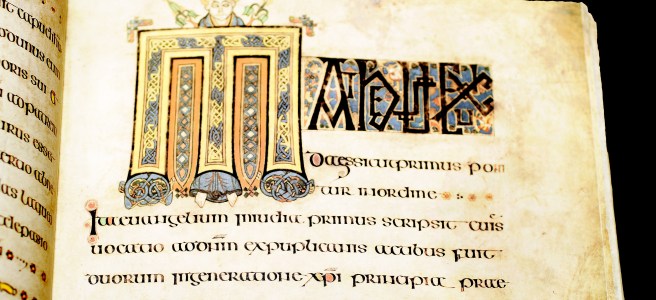
Ireland’s Republic of Ireland’s County Meath has the little town of Kells. The four New Testament gospels are included in the Book of Kells, also known as the Book of Columba, along with additional manuscripts.

The book’s uniqueness comes from the fact that it is an illuminated manuscript with intricate graphics and pictures that are thought to have been created around the year 800 AD.

Although it is not Irish writing, the illuminated manuscript known as the Book of Kells is recognized as a priceless piece of Irish history and may be found in Dublin, Ireland’s Trinity College Library.

ORIGIN OF THE ILLUMINATED MANUSCRIPT CALLED THE BOOK OF KELLS

While it is generally agreed that the monks of St. Columba were responsible for producing the Book of Kells, there is great disagreement as to where exactly they did it. It is thought that it was written by Celtic monks at the monastery’s scriptorium on the island of Iona, part of the Mull chain in western Scotland. Saint Columcille of Donegal established this monastery.

The Lindisfarne Gospels were written in Iona around 700 AD, and the Book of Kells’ design resembles those works, suggesting that Iona rather than Kells was where it was written. Viking invasions of coastal monasteries were a possibility around the start of the ninth century. The majority of this book is said to have been written on Iona and carried back to the Abbey of Kells for preservation.

The relics of Columcille have reportedly transported to Kells from his home County Donegal in the year 1090 AD, according to the Annals of Tigernach, another ancient Irish chronicle.

Two gospels were found among these artifacts, one of which was presumably the Book of Kells. The Book of Durrow is supposed to have been the second gospel. The church at Kells was destroyed in 1641 as a result of an Irish uprising. The English governor of Kells sent the book to Dublin for storage sometime around 1653.

A few years later, Henry Jones, a former soldier in Cromwell’s army, is said to have helped bring the Book of Kells to Trinity CollegeThe Long Room of the Old Library at Trinity College is where you may discover this masterpiece today in Dublin, Ireland. The 340 folios or leaves, each made of calfskin vellum, are bound together in a book that is around thirteen inches broad and ten inches thick. Although this might look substantial, the original was significantly bigger. But over time, thirty folios were lost, and even the ones that were still there had to be reduced for upkeep and rebinding.

Why Was the Book of Kells Created?

The book’s purpose was more ceremonial than practical, despite binding the gospels’ material together. It wasn’t intended to be read during mass. The creation and presentation of the material within the book itself are one of the main justifications for this notion. The text itself is haphazardly scrawled and scattered throughout the pages, in contrast to the carefully thought out and executed images and illustrations.

There is word and paragraph duplication, the omission of crucial phrases, and a lack of attempt to fix these serious mistakes. This book was admired for its decorations and exquisite pictures, not for its content.

The book’s authors appear to prefer the artwork and illustrations above the readings. In a nutshell, the appearance and aesthetics of the book took precedence over its practical utility.

What is the Vulgate?

The fourth-century Latin Vulgate is a translation of the Bible. According to legend, the gospels of the new testament were transferred directly from the Vulgate into the Book of Kells. However, as was already said, the scribes’ compositions were erratic and haphazard. There is the suggestion that they relied on their own memory of what they had previously read rather than copying their lines verbatim from the Vulgate.

The book has additional material in addition to the text, and each page of prose is accompanied by an image. These images feature meticulous details and vivid hues such, among others, purple, pink, green, and yellow.

The Book has Irish-Celtic themes and initials that were influenced by the Hiberno-Saxon style of the 7th century. Along with this, there is also the Anglo-Saxon custom of vibrant color and upbeat compositions. What distinguishes the book are its intricate designs and exquisite craftsmanship.

The illuminations are also another striking element of the book. They span 10 full pages and show small images of evangelical symbols. Some of these portrayals have survived.

The canon tables are given their own elaborately decorated pages in the Book of Kells, which may be found in Ireland. You will discover the emblems that represent each of the four evangelists, with Matthew being shown as a Man, Mark being represented by the Lion, Luke being linked to the Calf, and John being given the Eagle as his emblem.

Additionally discovered are the introductory passages of each of the Gospels. Breves causae are the names given to these condensed versions of the gospel tales. The Vulgate, which was finished by Saint Jerome in 384 AD, serves as the basis for this work, which is written in Latin and is dedicated to the four Gospels. There is also a picture of Christ, in addition to creative depictions of the Virgin Mary and the Christ Child.

The Book of Kells is Written on Vellum

Vellum, which was made from the skins of around 185 animals, was used rather than paper for the writing in the Book of Kells. The monks who lived in Ireland’s monasteries managed large herds of cattle not just to supply milk and food for themselves, but also as a source of vellum, which was the principal writing medium that the monks used. Following the hand stitching that was used to bind the vellum pages together, a protective cover was created out of either leather or wood.

The text of the book is written in an italicized script that is referred to as “insular majuscule.” The intricate knotwork and links that can be found in the images are well-known for the complexity of their design and the attention to detail that went into creating them. It is likely that the book was initially kept in a shrine, which is a jewel-encrusted casing made of gold that is used to contain treasures. Around the year 1000 A.D., the volumes were taken by thieves. It had been buried beneath the ground when it was discovered, but the priceless holder it had been holding was never found.

During the nineteenth century, the book went through a process called “rebinding,” during which the page margins were, regrettably, trimmed and gilded. In 1953, the book underwent yet another rebinding, which resulted in the creation of four distinct volumes. This was done with the intention of assisting in the preservation of its magnificent and rare pages. Two of the four volumes are currently on exhibit at Trinity College in Dublin, where they will remain there indefinitely. The first book has pages of text, whereas the second volume is solely dedicated to displaying illustrations on its pages.

The Book of Kells is an Irish Treasure

The Book of Kells was the most valuable artifact in all of medieval Europe. The Book of Kells is a stunning example of Irish artwork and is considered to be a national treasure. Each year, hundreds of people travel to the Trinity College Library in Dublin in the hope of catching a sight of the two volumes that are kept on exhibit there.

St. Brigid Blessings and Prayers

Saint Brigid’s cross made from straw stuck in window and blessed the house and protected it from fire and evil. Concept: religion, irish, traditional

A Traditional St. Brigid Blessing

Our wonderful Brigid’s Crosses were inspired by this beautiful heritage, imitating the delicate woven pattern of rushes in precious metals such as silver and gold. Also known as Bride, Bridget of Ireland, Bride of the Isles, and Mary of the Gael, she now reigns as one of the most recognized saints in Ireland.

May the blessing of God and the Trinity be on this cross and where it sits, and on everyone who looks at it,” is a customary blessing for St. Brigid Cross.

About the Brigid’s Cross

Brigid’s cross, like the shamrock and the harp, is a wonderful Irish symbol that may be traced back to Celtic folklore. The cross is weaved from left to right, following the position of the sun, on January 31st, the eve of St. Brigid’s day. It features a layered square in the middle and four arms extending out from it, each knotted at the ends.

St. Brigid’s Feast Day

St. Brigid’s Day is February 1st and traditionally the start of Spring in Ireland.

Prayer to St. Brigid

Dear St. Brigid, brilliant star of sanctity in the early days of our Irish faith and love for the omnipotent God Who has never forsaken us, we look up to you now in earnest, hopeful prayer. By your glorious sacrifice of earthly riches, joys and affections obtain for us grace to “seek first the Kingdom of God and His justice” with constant trust in His fatherly care. By your life of laborious charity to the poor, the sick, the many seekers for light and comfort, obtain for us grace to be God’s helpers to the utmost of our power during our stay on earth, looking forward, as you did, to our life with Him during eternity. By the sanctified peace of your death-bed, obtain for us that we may receive the fullness of pardon and peace when the hour comes that will summon us to the judgment seat of our just and most merciful Lord. Amen.

Published by The Irish Jewelry Company

We at The Irish Jewelry Company take pride in making the Irish gift giving experience modern and convenient. The Irish Jewelry Company celebrates their Celtic heritage and a love of Ireland through original Irish Jewelry design. Their beautiful Irish jewelry is steeped in Celtic symbolism and rich in Irish tradition. View all posts by The Irish Jewelry Company

Shamrocks: A Symbol of Ireland

WHAT IS THE MEANING OF THE SHAMROCK?

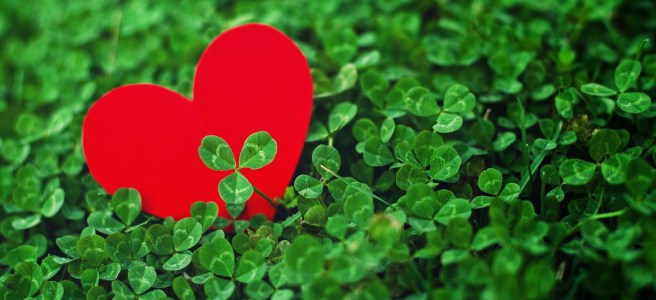
The Meaning of the Irish Shamrock, the symbol of Ireland. The word shamrock comes from the Old Irish “seamróg”, which can be translated as “little clover”. The Irish word for clover is “seamair”, and óg means “young” or “little”.

What is the difference between a shamrock and a clover?

The shamrock and the clover plants are often confused. Shamrocks are in fact a species of the clover plant.The shamrock is most common 3-leaf clover native to the beautiful Emerald Isle. A clover must have three leaves to be considered a shamrock. If the clover has more or less, then it is not a shamrock.

Why is the shamrock a symbol of Ireland?

The majestic shamrock that adorn Irish jewelry today was chosen as the national symbol of Ireland because Saint Patrick used the 3 leafed clover to teach the Holy Trinity to the pagan Celts. The Celts understood the significance of the shamrock forming a triad because they believed three was a mystical number. The Trinity is the idea that God is really three-in-one: The Father, The Son and The Holy Spirit. The word shamrock can be traced back to the Irish word seamróg or seamair óg, meaning “little clover”. The tradition of wearing a Shamrock on Saint Patrick’s Day can be traced back to the early 1700s. The Irish have long considered shamrocks as good-luck symbols and today people of many other nationalities also believe they bring good luck. Shamrock jewelry has gained in popularity in recent times.  In Ireland shamrocks and shamrock jewelry are traditionally worn at weddings for good luck. Often tucked in a bouquet or used as filler with a boutineer.

What is the meaning of a 4 Leaf Clover?

According to Irish lore, each leaf represents: Love, Respect, Wealth, and Health. To find a four-leaf clover is a rare thing making it very lucky  to find.

Shamrock Necklaces Popularized in Irish Jewelry

Erin Go Bragh Pendant and the Irish Hard Pendant by The Irish Jewelry Company

Shamrock necklaces, inspired by Ireland’s national symbol. Get the Luck of the Irish with a traditional shamrock pendant! The shamrock is believed to bring good luck and not just to the Irish. In Ireland shamrocks are traditionally worn at weddings for good luck. Brides sometimes pin a shamrock charm to their bouquet.

About us: The Irish Jewelry Company was founded by award-winning designer Jennifer Derrig.  The Irish Jewelry Company collection offers classic and contemporary Irish Jewelry including Claddagh rings, all handcrafted.

Explore The Irish Jewelry Company Claddagh ring collection today and start your own Irish tradition today.